


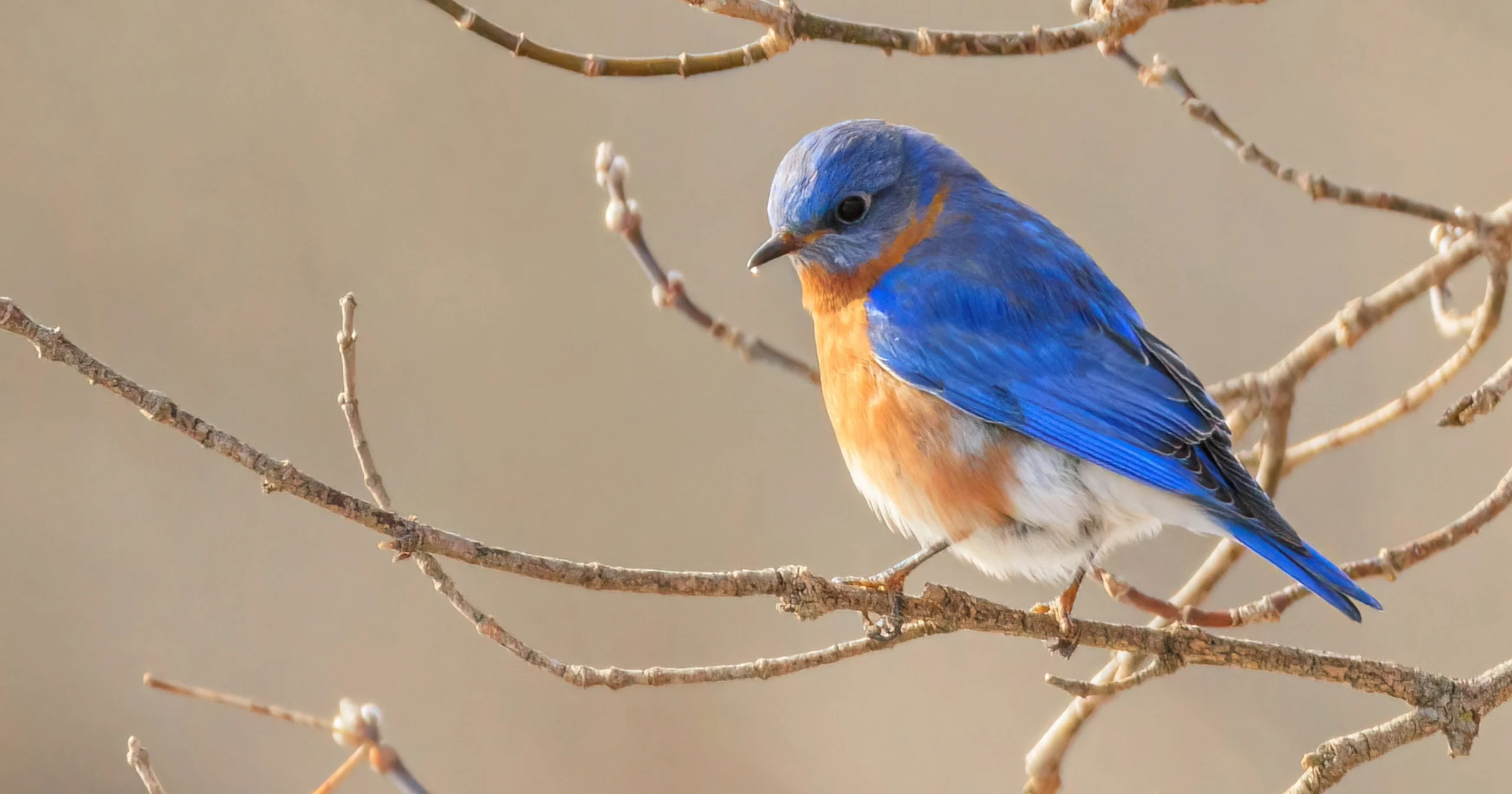
Connie Spotts, president of Jackson Audubon Society and longtime Michigan Audubon and Michigan Bluebird Society member, is always looking for ways to help birds successfully raise their young. After watching a film that offered a glimpse inside a bluebird nest box, she began wondering whether a little extra space could make a difference. That curiosity led her to experiment with larger nest boxes featuring multiple entrance holes, with promising results.
Rethinking Bluebird Nest Boxes
After watching the Michigan Bluebird Society’s film The Secret Lives of Bluebirds, which shows everything that goes on inside a bluebird nest box, Connie was surprised by just how cramped the nestlings were. As the young birds approach fledging, they take turns flapping their wings to strengthen them and get a feel for moving them in preparation for flight. Their siblings crouch out of the way while each bird practices, knowing they will eventually get their own turn. Watching this process raised an important question: Could a larger nest box give these growing birds more room to stretch and exercise?
Connie began looking for an alternative to the traditional nest boxes she had been using. She found a two-hole design originally created by Linda Violett for the larger Western Bluebird and saw it as a promising starting point. With help from her friend Jeff Hammond, she modified the design and developed both two-hole and three-hole versions.
Two-hold box dimensions:
- Two sides: 7¼” wide by 10” high
- Front and back: 7 1/8” wide
- Roof: 9” x 11”
- Two holes: 1½” diameter
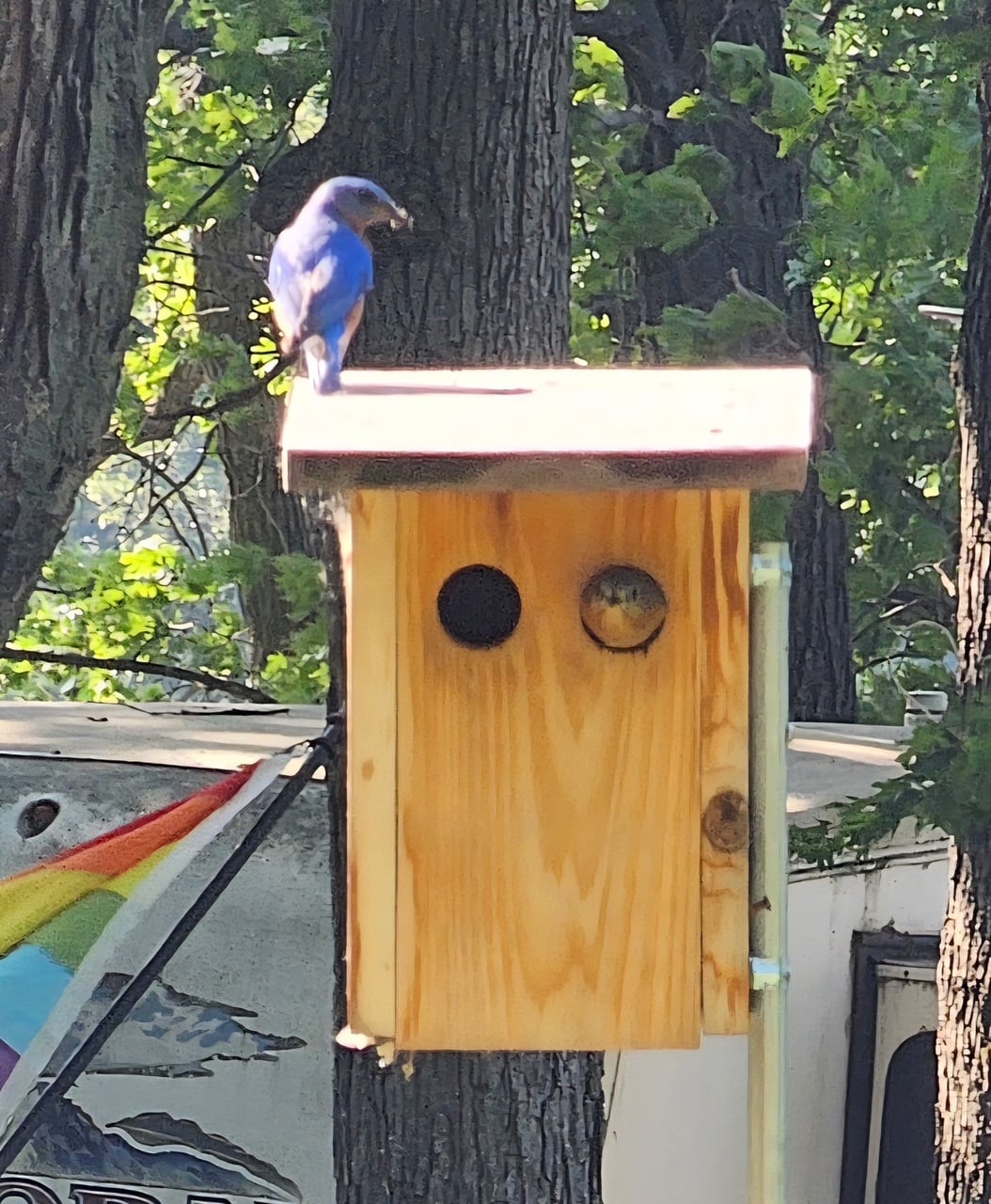
Two-hole Box. Photo by Mary Lou Siwarski
Three-hole mansion:
- Two sides: 7¼” wide by 10” high
- Front and back: 9” wide
- Roof: 11½” x 9¼”
- Three holes: 1½” diameter
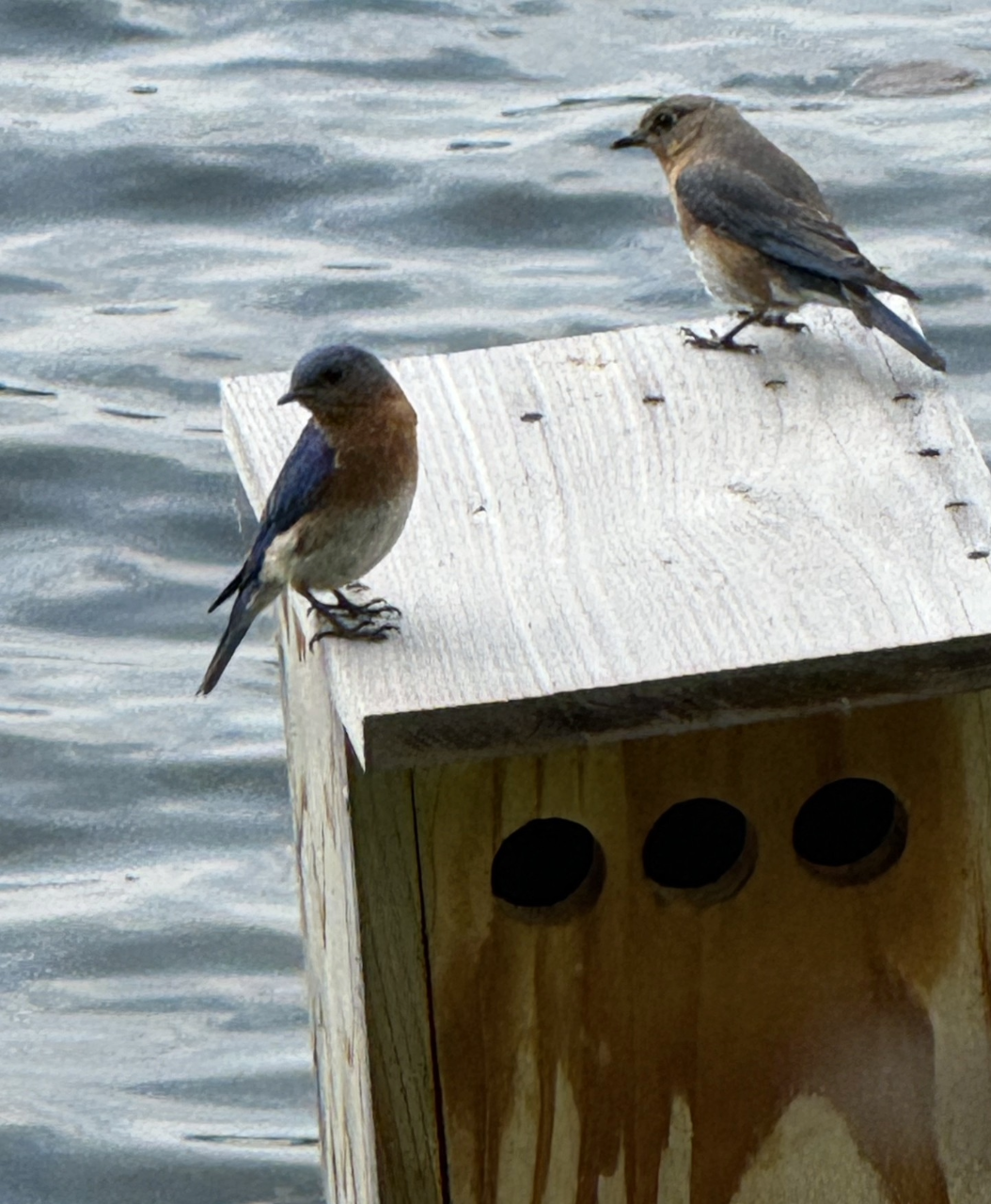
Three-hole box. Photo by Connie Spotts
The results were encouraging from the start. Connie gave one of the two-hole boxes to Lynn Ward, former Michigan Bluebird Society president and Jackson County coordinator, to try in her yard. In 2024, Ward successfully fledged two Tree Swallows from the box. Connie had similar success on her five-acre property in southern Jackson County, where four bluebirds fledged from a box in her butterfly garden in 2025.
The larger boxes offer several potential benefits. Bluebird expert Marcia Van Horn notes that a two-hole box provides improved ventilation, more room for nestlings to stretch and exercise their wings, and easier access for parents feeding their young. An additional entrance hole also provides an escape route if a House Sparrow enters the box.
With these potential advantages in mind, Connie was eager to see how the boxes would perform during a full breeding season.
A Successful 2026 Breeding Season
In 2026, Connie set up three two-hole boxes and two three-hole boxes to evaluate their success. The results exceeded her expectations. All three two-hole boxes housed Eastern Bluebirds, with every egg hatched and every nestling fledged. Of the two three-hole boxes, one fledged bluebirds and the other fledged House Wrens.
Based on this experience, Connie believes the larger boxes with multiple entrances offer advantages over traditional nest boxes with smaller interiors and a single entrance hole. Male House Sparrows can block a nest box entrance with their bodies, preventing a bluebird from escaping before attacking it. A second or third entrance provides another possible escape route. Although the bluebird may still lose her eggs to an aggressive House Sparrow, the additional opening could save her life.
After such a successful season, Connie plans to use her two-hole and three-hole designs exclusively going forward. What began as a simple question about giving nestlings more room has inspired a new approach to providing homes for bluebirds.
An Unexpected Experiment: Floating Mallard Nests
Connie’s interest in finding creative ways to help birds extends beyond bluebird nest boxes. At her home on Crispell Lake in southern Jackson County, she enjoys watching the Mallards that frequent the lake. For years, however, she was saddened to see raccoons and other predators find the nests Mallards built along the shore and eat their eggs.
Wanting to give the eggs a better chance of hatching, Connie once again enlisted Jeff’s help. Together, they developed a floating nest designed to keep Mallard eggs away from shore-based predators. Jeff rolled up a length of wire fencing, securing three to four inches of straw or hay inside as he went. They placed the coiled fencing onto a four-foot-by-four-foot float made from four-inch-thick foam insulated between two sheets of quarter-inch plywood. Getting the float into position was the final challenge. Using a pulley system, they placed it in the lake 35 feet from shore, hoping the distance would discourage raccoons from reaching the nest.
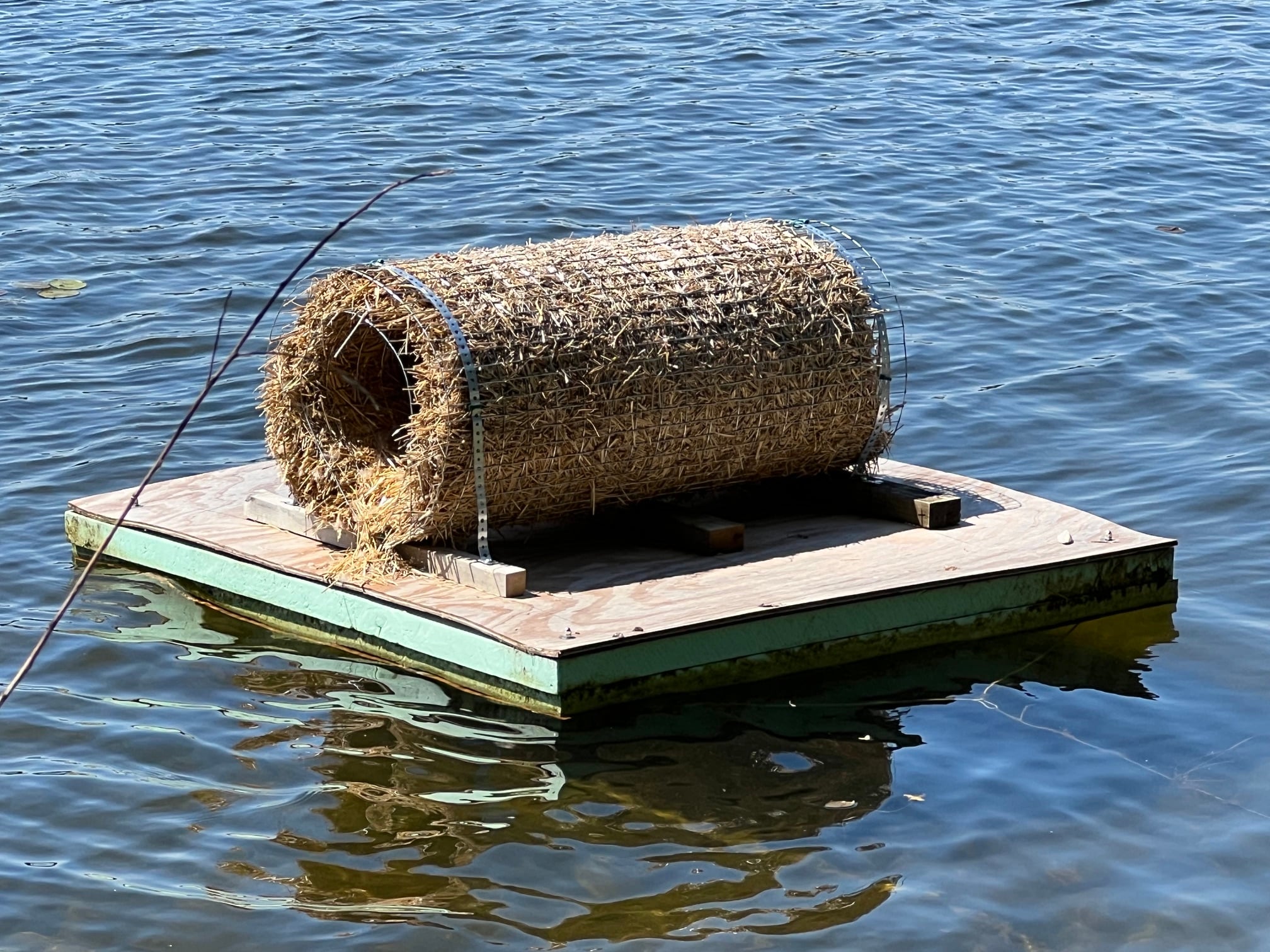
Floating Mallard nest. Photo by Connie Spotts
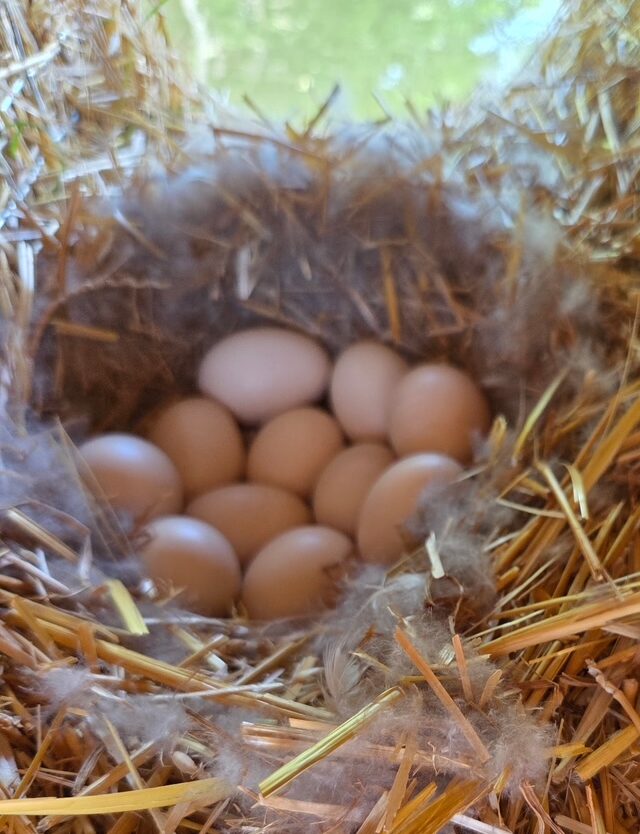
11 Mallard eggs. Photo by Connie Spotts
Their plan worked. Within 30 days, a female Mallard began laying eggs in the unconventional nest. All 11 eggs hatched, and Connie was able to enjoy watching the proud parents swim around the lake with their ducklings paddling behind them. The floating nest became another successful example of how a little ingenuity can make a difference for nesting birds.
Finding New Ways to Help Birds
For Connie, attracting bluebirds and other native birds is about more than enjoying their presence. It is also about helping them successfully raise their young. Her experiments demonstrate how observing birds closely and looking for creative solutions can inspire new ways to support them.
Featured Photo: Eastern Bluebird by Deb Lambesis