


Conservation Manager Chad Machinski, M.S., manages the stewardship of MA’s sanctuaries and engages with our dedicated volunteers. To help you stay connected with the work being done, he will be presenting regular online updates about activities going on at them: birds seen or heard, conservation work, improvements, interesting plants, and more.
If April came and went and you wondered where the Conservation Blog was, I apologize! April (and May) have been exceptionally busy and so this blog will cover both months. But fear not, I won’t write a novel and will just focus on some of the highlights.
PRESCRIBED FIRE
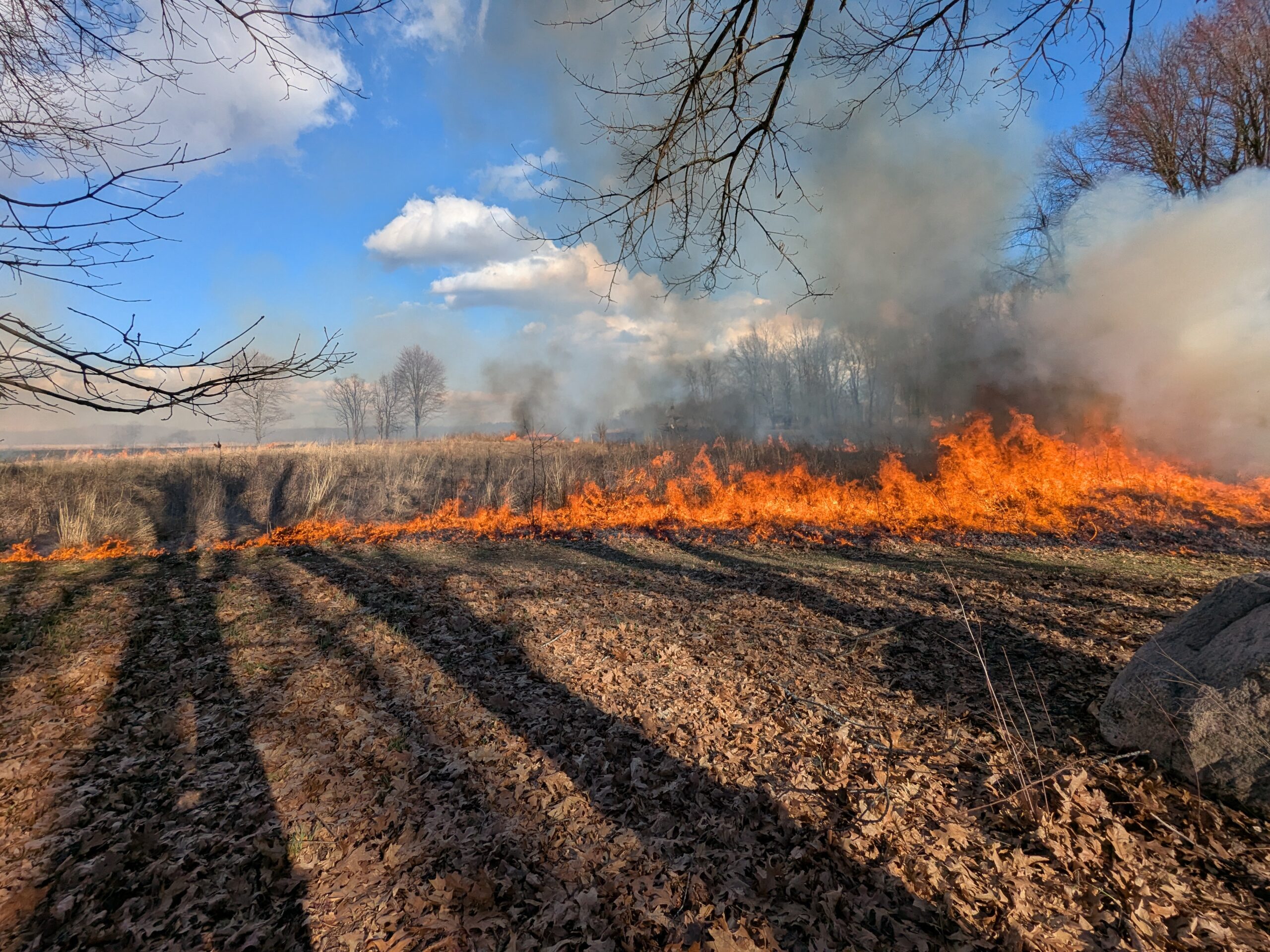
We contracted out two prescribed burns this spring: one at Otis Farm Bird Sanctuary and the second at Phyllis Haehnle Memorial Sanctuary. At Otis, we burned a little over eight acres of our grassland there, well, really more like seven since there is a stronghold of Autumn Olive covering much of one of the hillsides. Eventually, we will get through that Autumn Olive and have a complete burn of this area!
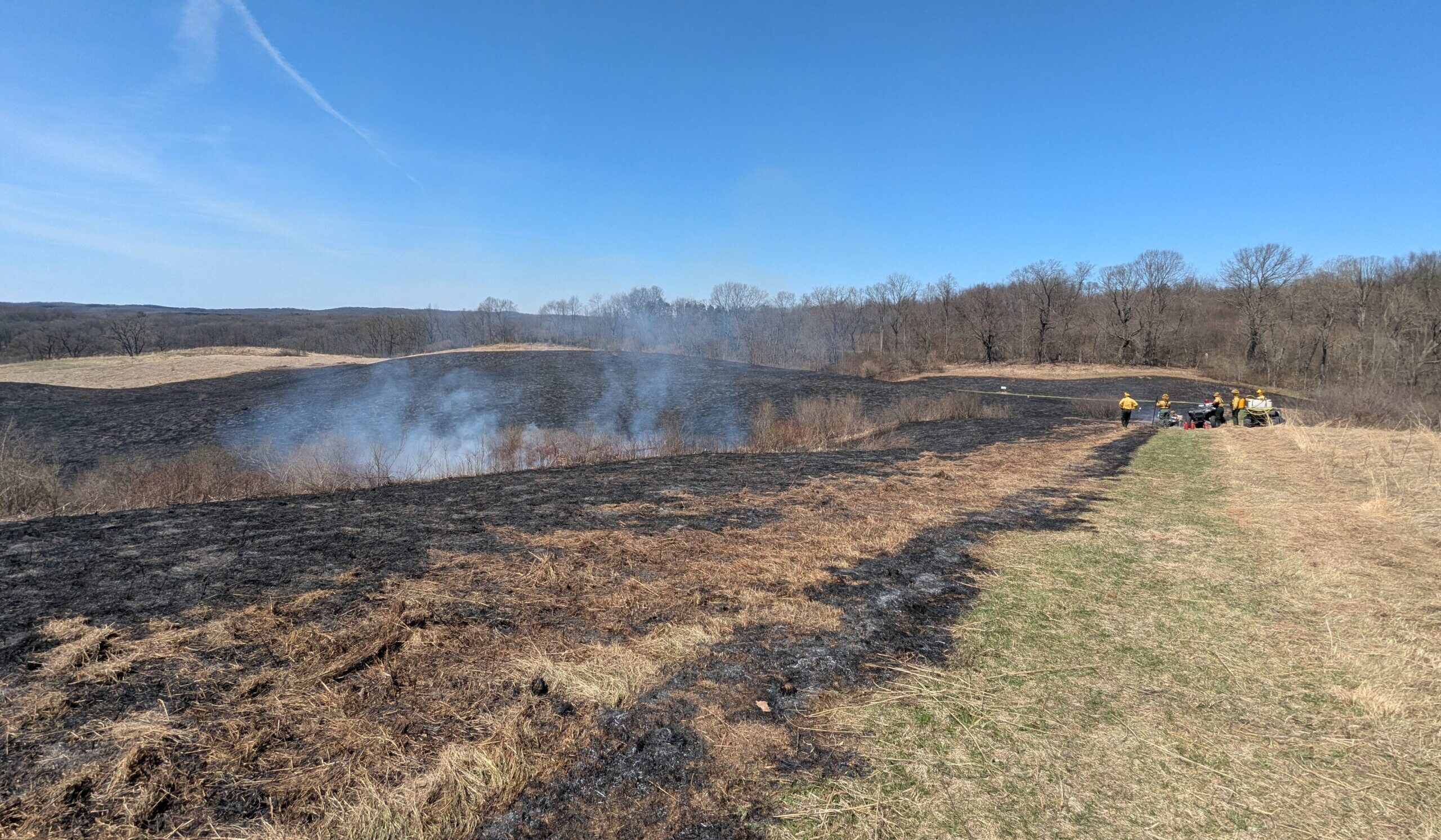
Prescribed burn at Otis Farm Bird Sanctuary, looking northeast from Firebreak Trail. Burn crew work along the trail. Photo by Chad Machinski
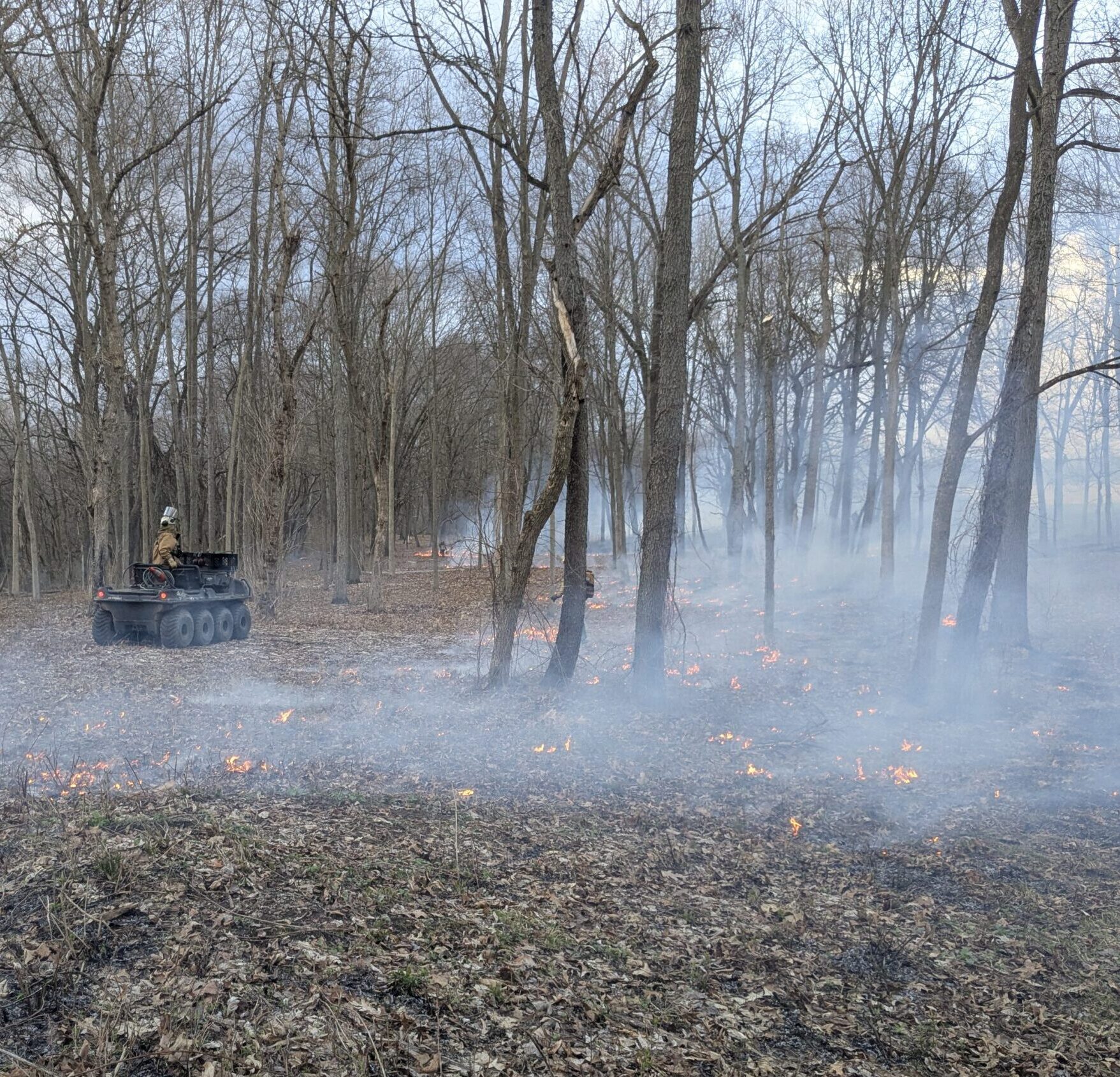
Phyllis Haehnle Memorial Sanctuary from southern edge looking north. Photo by Chad Machinski
At Haehnle, we burned approximately 15 acres, primarily grassland, along with several acres that we have been working to restore to Oak Savanna. This was very exciting because introducing fire to this area was one of the goals of the 2023-2025 Wildlife Habitat Grant. While parts of the area had burned previously, much of it had not seen fire since coming under Michigan Audubon ownership. While the grasslands burned extremely well, the savanna did not carry fire as well as hoped. Fine fuel is limited in this space because we have not yet introduced significant amounts of native seed, and much of the existing vegetation was woody material. The only thing to burn were oak leaves, which should burn well; however, they were not as dry as expected. Crews used drip torches to ignite most of the area at dusk, but the fire never spread well. As we put more native seed into the site and continue to thin trees, it is anticipated that burns in this space will only improve!
MILDRED HARRIS BIRD SANCTUARY
April is the one month of the year where instead of going to Martha Mott Bird Sanctuary, I head to our other Kalamazoo-area Sanctuary, Mildred Harris Bird Sanctuary. Mildred Harris has no trails and is not technically open to the public, but is comprised of two very distinct halves: one half being an old field that is filling in with various woody plants, and the second being a very stunning Mesic Southern Forest. This sanctuary has some of the best spring ephemerals I have seen. Not only are the native wildflowers stunning, but so are the large Beeches, Tulip Trees, and Sugar Maples. In addition, the invasive plants there are quite minimal, something I attribute to there not being trails through it.
However, each April, I take a handful of volunteers over to Mildred Harris to walk transects back and forth, pulling as much Garlic Mustard as we can find. While we always find some, the amount we find for the area we cover is quite minimal. We will always end up missing some and finding it the following year, but hey, I’m not going to complain about spending the afternoon in such a stunning forest.
One unfortunate thing about this sanctuary is that we keep finding small patches of the invasive plant Lesser Celandine (Ficaria verna). This plant dominates the banks of the Grand River in Lansing during the spring and is typically limited to waterways and yards. What’s odd about it being at Mildred Harris is that neither of those things exist at the sanctuary; not even the immediate neighbors really have yards. My belief is that it was dumped as yard waste along the road (where I first found it two years ago) and may have spread via shoes into the Sanctuary. We will continue to dig it up, treat it, and survey for it so we do not lose the Dutchman’s Breaches, Squirrel Corn, Wild Leeks, Spring Beauties, and more.
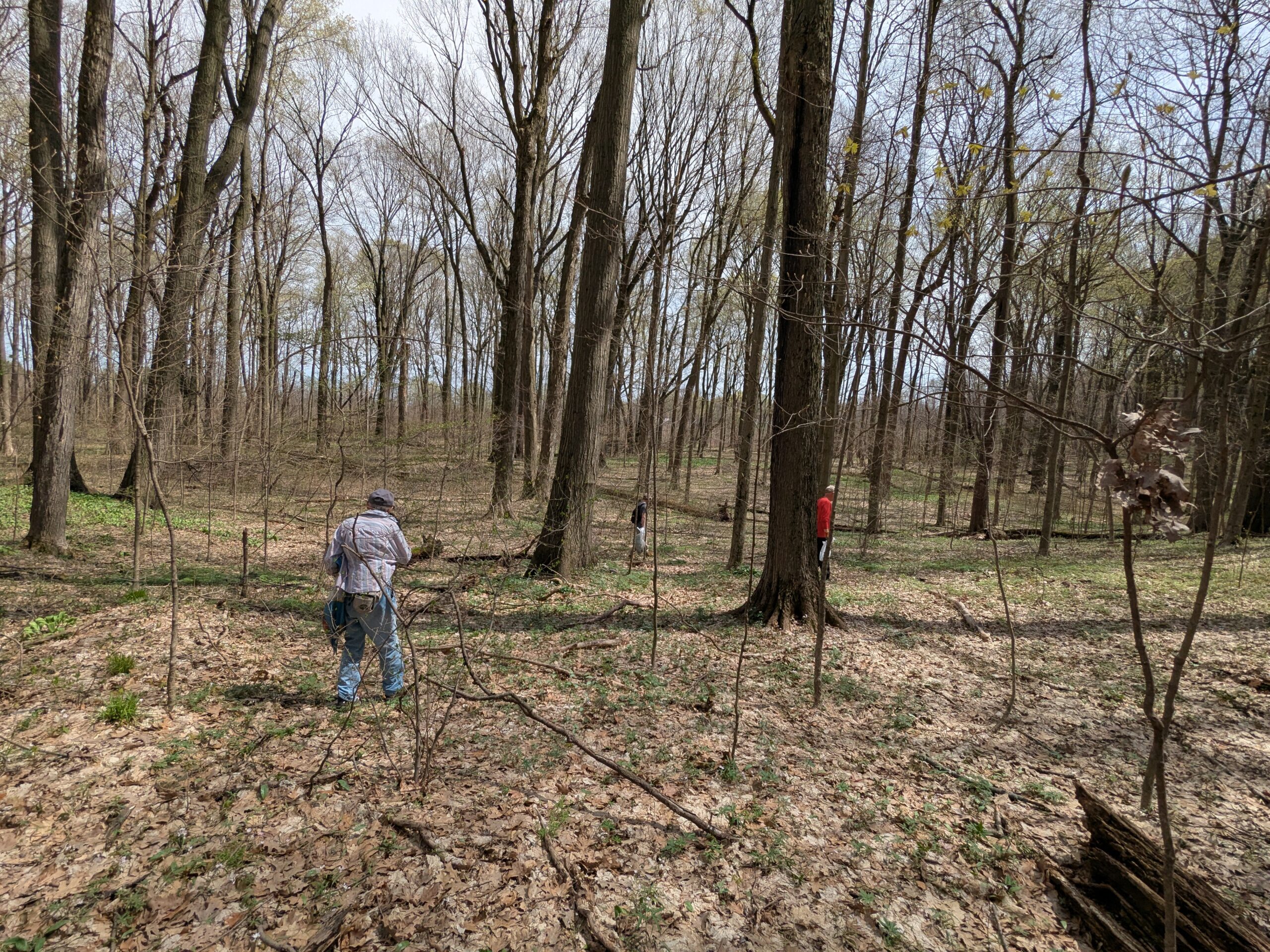
Volunteers at Mildred Harris Bird Sanctuary. Photo by Chad Machinski
CHIMNEY SWIFTS
With our week long Swift Night Out event beginning May 4th, I began to panic when I hadn’t seen or heard a single Swift in Lansing. They had been reported to eBird in the Lansing area, but not many reports and not many birds. It was 20 minutes before I was set to head over to Smith’s Floral, one of the more well-known roosting sites in Lansing, when I heard that familiar chittering that I hadn’t heard since last fall. A HUGE wave of relief washed over me, despite the fact that there was still no guarantee these birds would make their way over to the brick monolith at Smith’s. It turned out to be a fantastic night for a Swift Night Out, with the weather remaining favorable and approximately 500 Swifts performing their much anticipated “tornado” as they entered the chimney.
The rest of the week was much more variable, as the weather got cooler and Swifts began entering earlier than the 8 p.m. start time, but continuing to enter until 9p.m. Kristy, our Events & Outreach Manager, shared hosting responsibilities with me this year and was able to have the high count of the week on Wednesday, May 6th, with 1,287 Swifts entering over the course of almost 2 hours.
As always, it’s a great pleasure to be present for people’s first time watching hundreds of Chimney Swifts enter the chimney; it’s a memory that a person won’t forget. Swifts are continuing to migrate and will still be showing up at a chimney near you, so get out and watch! Don’t know where to watch?? Check out our map on roosting sites (blue dots), potential roosting sites (orange), and nesting sites (green), the latter of which may still be roosting sites for birds until they get settled to breed.
PURPLE MARTINS
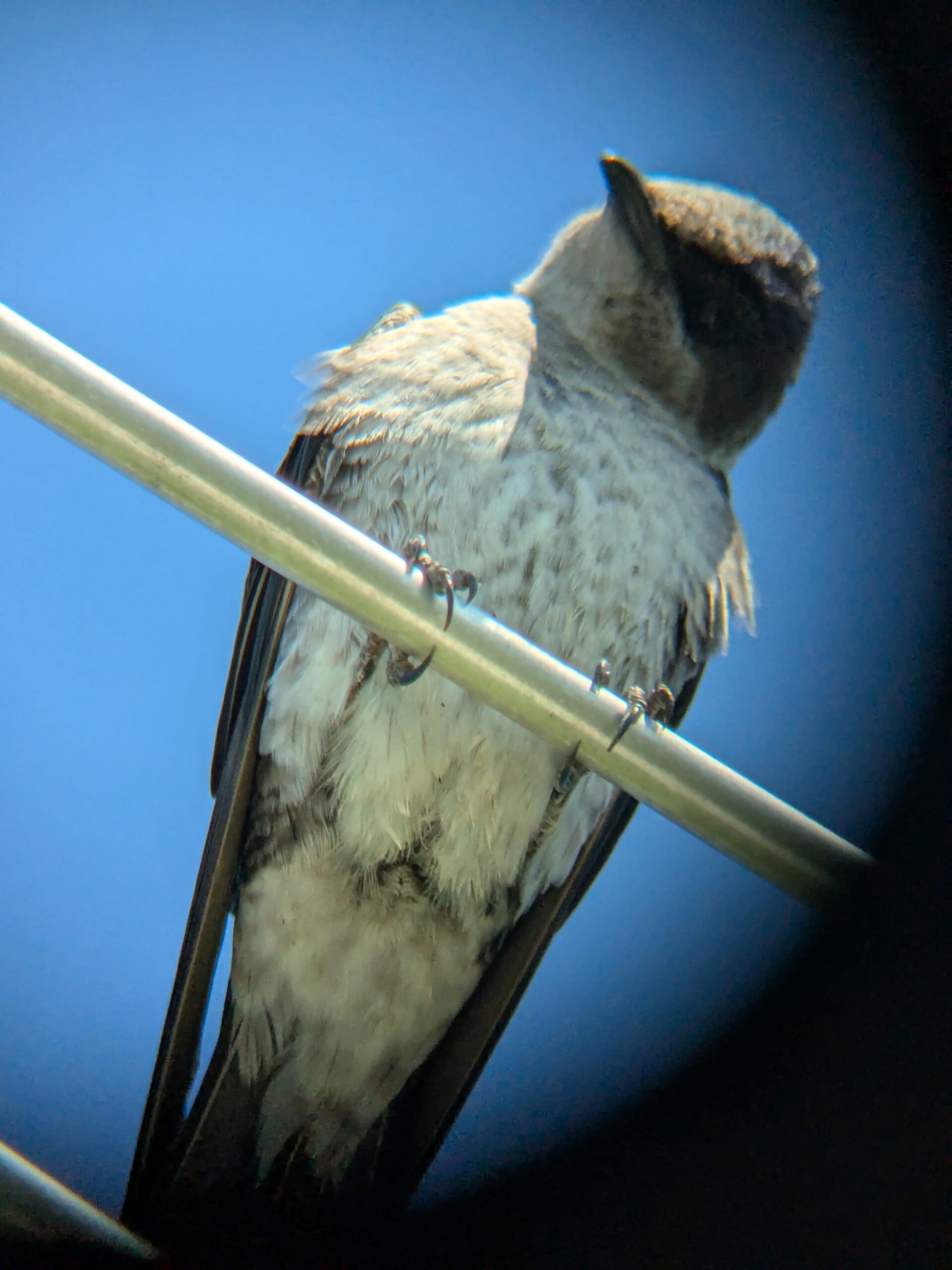
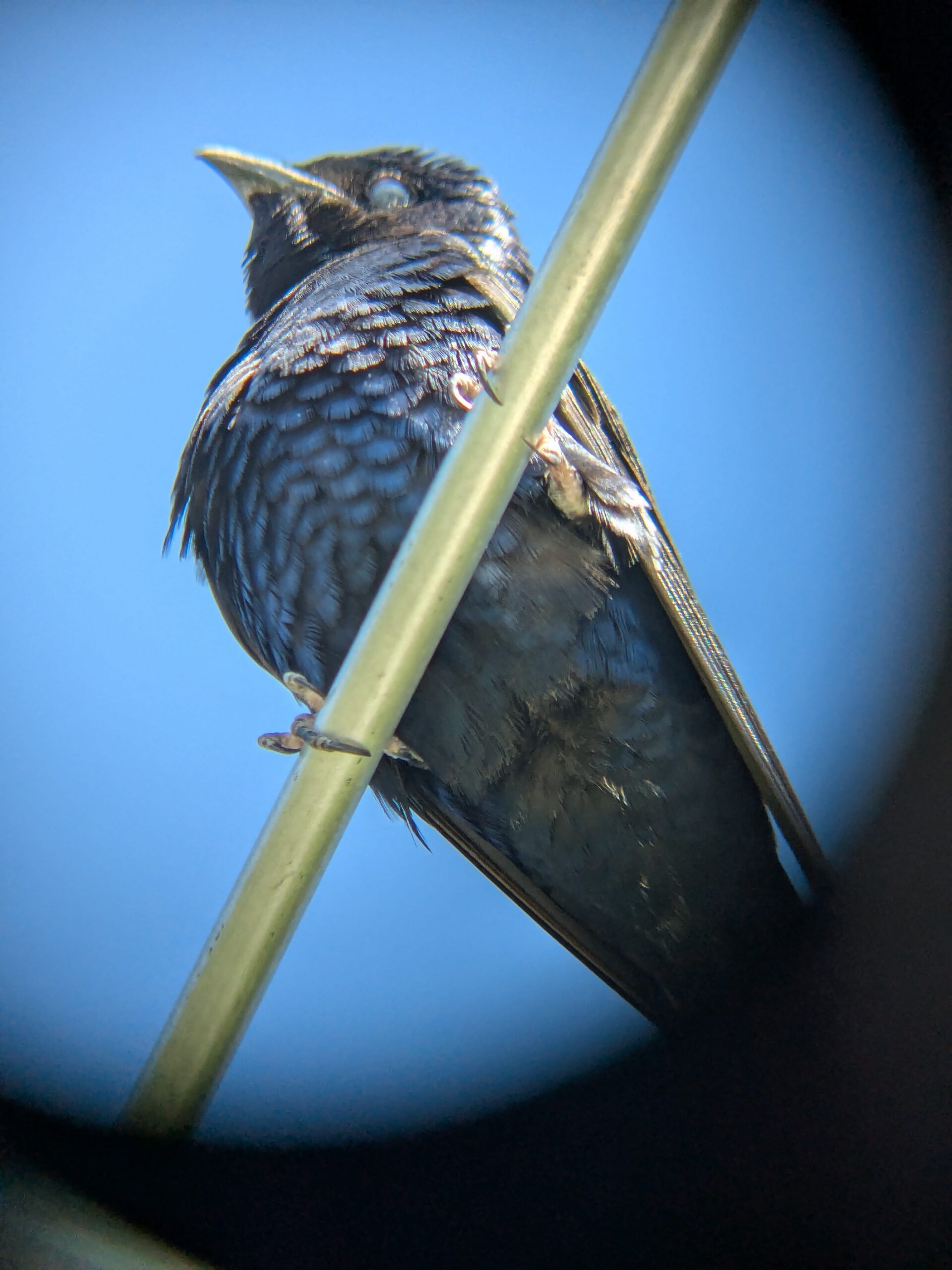
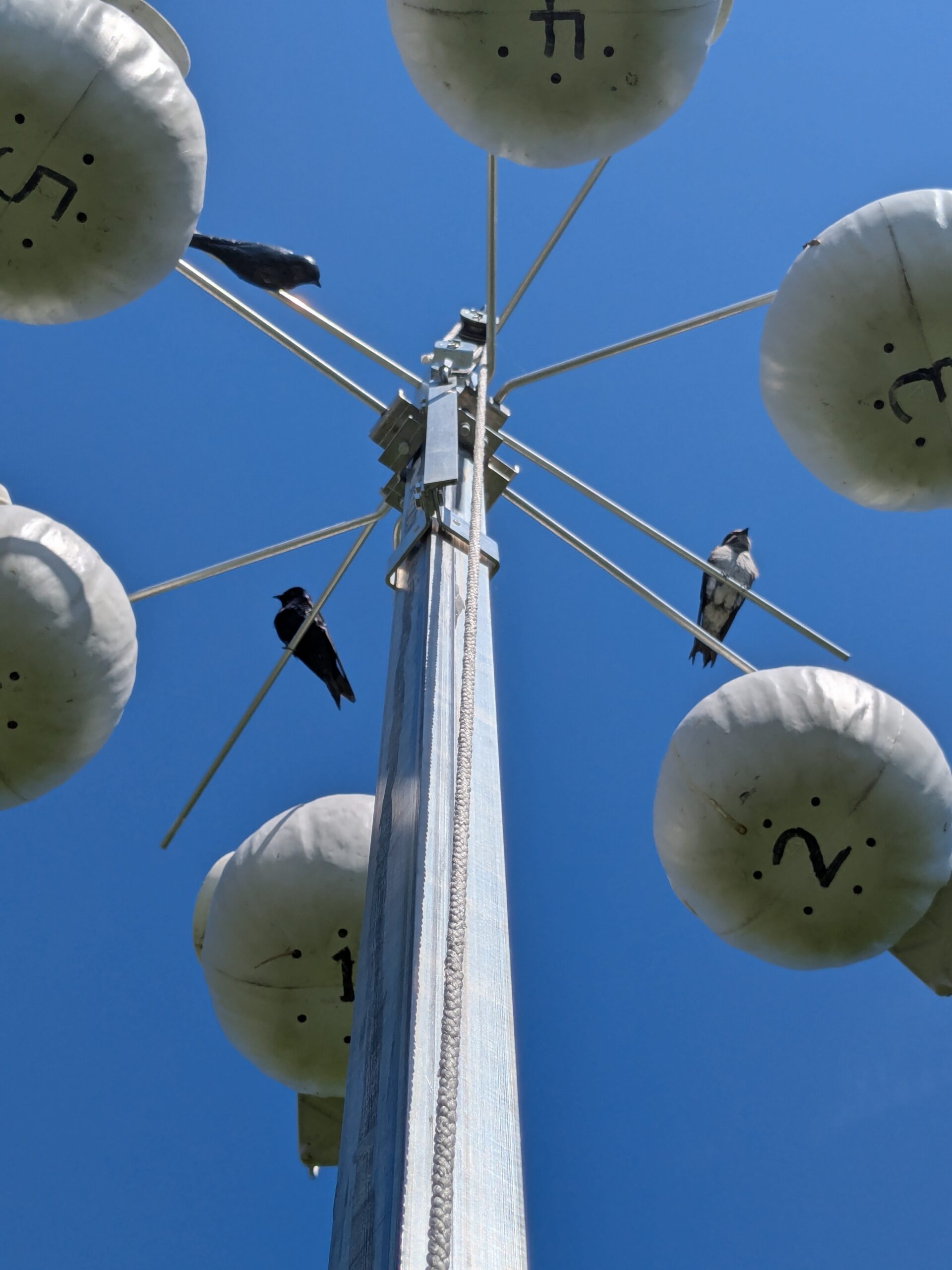
Purple Martins began making their way back into Michigan in early to mid-April, but I did not see them
at our Lake Lansing colonies until May 4th. Our housing was put up on April 12th, so it was ready and waiting for their arrival. The cool and damp spring seems to have delayed their arrival in many places in Michigan, and may be for the best. Last season, we had several dead Purple Martins at our colony after an extended period of cold and wet weather. On May 11th, a pair was seen going in and out of a few different gourds at one of the colonies. Hopefully the pine needles in there are to their liking! Nest checks will happen twice a week through much of the season and have already been happening, primarily to remove House Sparrow nests, as they are are fierce, non-native competitors with Purple Martins.
We are looking forward to what this season bring us!
To learn more about Michigan Audubon sanctuaries, visit michiganaudubon.org/conservation/bird-sanctuaries. If you want to volunteer at a Michigan Audubon sanctuary, please complete the Sanctuary Volunteer Interest Form.

Chad Machinski, MS
Conservation Manager
While Chad’s first love is botany, he doesn’t deny the intertwining nature of birds, plants, insects, and all other organisms we share the world with. His passion for the natural world began in his undergraduate time at the University of Michigan, taking several different forms along the way. His graduate studies at the University of Michigan allowed him to more closely examine the natural communities of Michigan and further understand the complex nature of ecosystems. His work as a Nichols Arboretum Caretaker while in school further enabled him to be directly involved in conservation work as he led workdays removing invasive plant species, performed trail maintenance, and guided tours. Chad can usually be found out in a park in a few ways: binoculars glued to his face, hunched over looking at plants, or flipping logs looking for snakes and salamanders.