


Conservation Manager Chad Machinski, M.S., manages the stewardship of MA’s sanctuaries and engages with our dedicated volunteers. To help you stay connected with the work being done, he will be presenting regular online updates about activities going on at them: birds seen or heard, conservation work, improvements, interesting plants, and more.
It’s June and that means it’s nesting season! We have many breeding birds on the Michigan Audubon Sanctuaries, but insight into the progress of nests can be challenging, unless of course, you look at our nest boxes. Let’s see how the nests at our Purple Martin colonies are progressing and the nest boxes at some of our Sanctuaries.
PURPLE MARTINS
Our Purple Martin colonies at Lake Lansing are progressing nicely! As I mentioned in last month’s blog, the Purple Martins had a bit of a late arrival to the housing there. This had me expecting a later date for the first eggs to appear, however this was not the case. At our Mack Avenue colony, in 2025, our pair laid their first egg on June 17th, but this year our pair laid around June 1st. I can’t give an exact date this year because this pair has gotten in the habit of covering their eggs with leaves which resulted in me missing the first egg during one nest check. The colony at the Lake Lansing Boat Launch, had its first egg of 2025 on June 5th, while this year the first egg was laid on May 31st. So despite the late arrival, nesting happened faster than last year!
In total, this year we have 11 eggs. This is two fewer than 2025, however, we also only have two pairs between the colonies this year whereas last year we had three. We are disappointed that the colonies have not grown, but in fact shrunk by one pair. We are hoping that this trend will not continue next year. We will continue to monitor the sites through the nesting period a few times a week to remove House Sparrow nests, document the nesting progress, and to do nest changes if parasite loads necessitate that. All nest checks are recorded in Cornell’s NestWatch during the season. A final report will be submitted to the Purple Martin Conservation Association, and we will report to ourselves the nesting summary for the colonies.
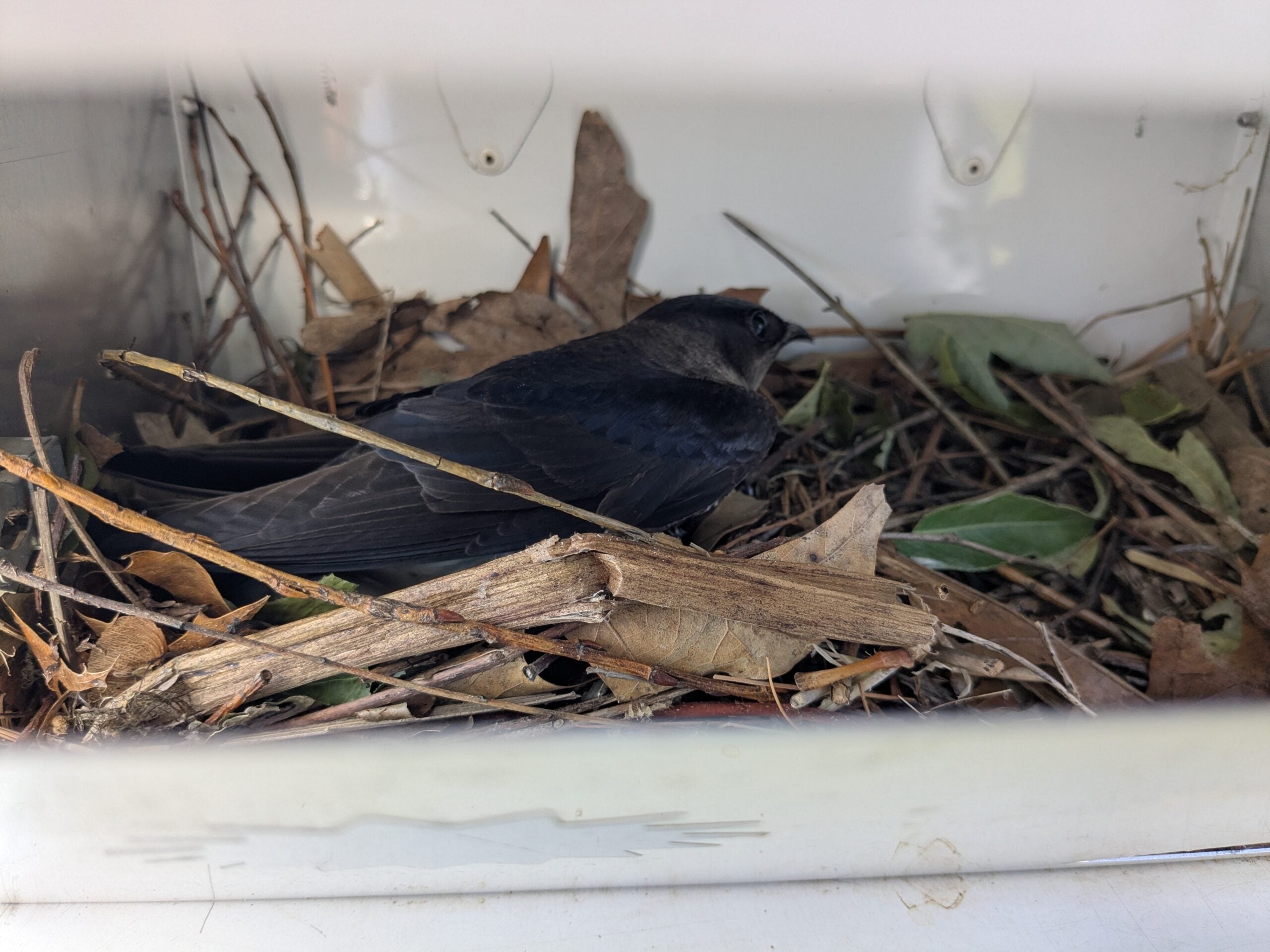
Female Purple Martin on nest at Lake Lansing Boat Launch. Photo by Chad Machinski
MARTHA MOTT
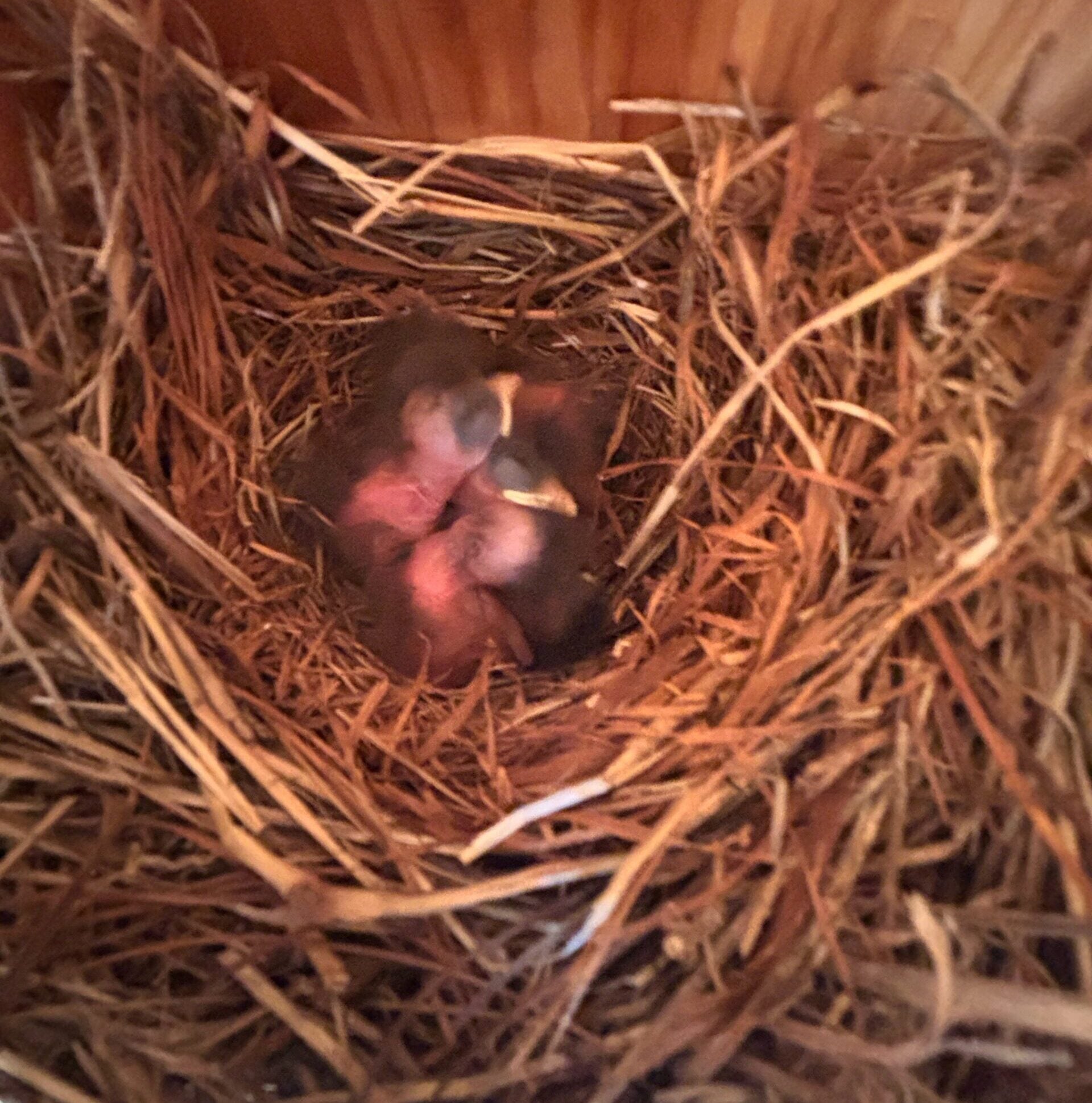
Eastern Bluebird hatchlings at Martha Mott. Photo by Derek Haroldson
At the Martha Mott Bird Sanctuary in Mattawan, we have seven nest boxes available to songbirds and they have been chugging right along. Three Bluebird pairs have already successfully raised a total of 15 young, one of these boxes is now on to their second brood. One Northern House Wren has raised seven young and another pair is still raising a brood. One Tree Swallow pair has fledged six young, and another pair has an active nest. We have experienced failed nests from both House Wrens and Tree Swallows; the Tree Swallow nest likely failing due to a House Wren. Two Wood Duck boxes were also placed at Martha Mott in 2025. Thus far these boxes have not been used. I would suspect that there are sufficient natural cavities for Wood Ducks on this site that may be more attractive than a box. But we will keep these boxes up in hopes that Wood Ducks may one day use them!
OTIS
The Otis Farm Bird Sanctuary saw a big change to its nest boxes this spring which was documented in my March update where 17 new, larger boxes were installed. Of the 38 nest boxes on site, 36 of them either have already fledged birds or currently have active nests in them. All of the 17 new boxes that were installed have been used! Predominantly, the new boxes are filled with Tree Swallows, but Bluebirds have found use in some of these boxes as well. Based on the fact that all the new boxes are occupied, I’d say that the layout we used to minimize territorial disputes seems to have paid off! In a few of our other boxes near brushier edges we of course have Northern House Wrens.
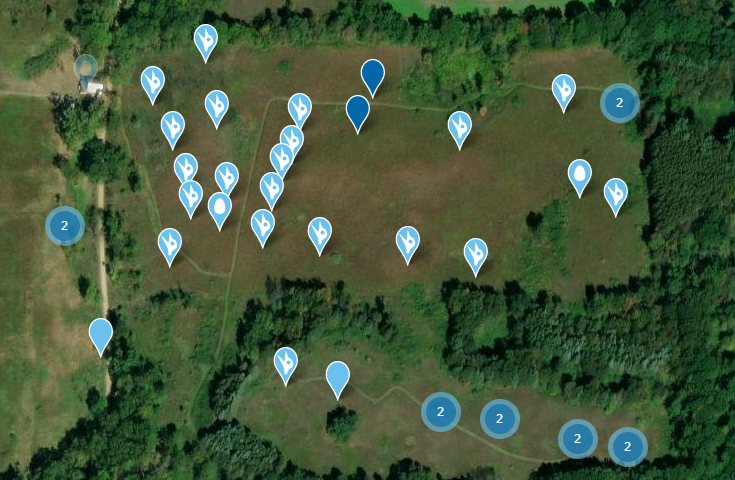
Screenshot of NestWatch map of Otis Sanctuary showing all current nestlings in nest boxes
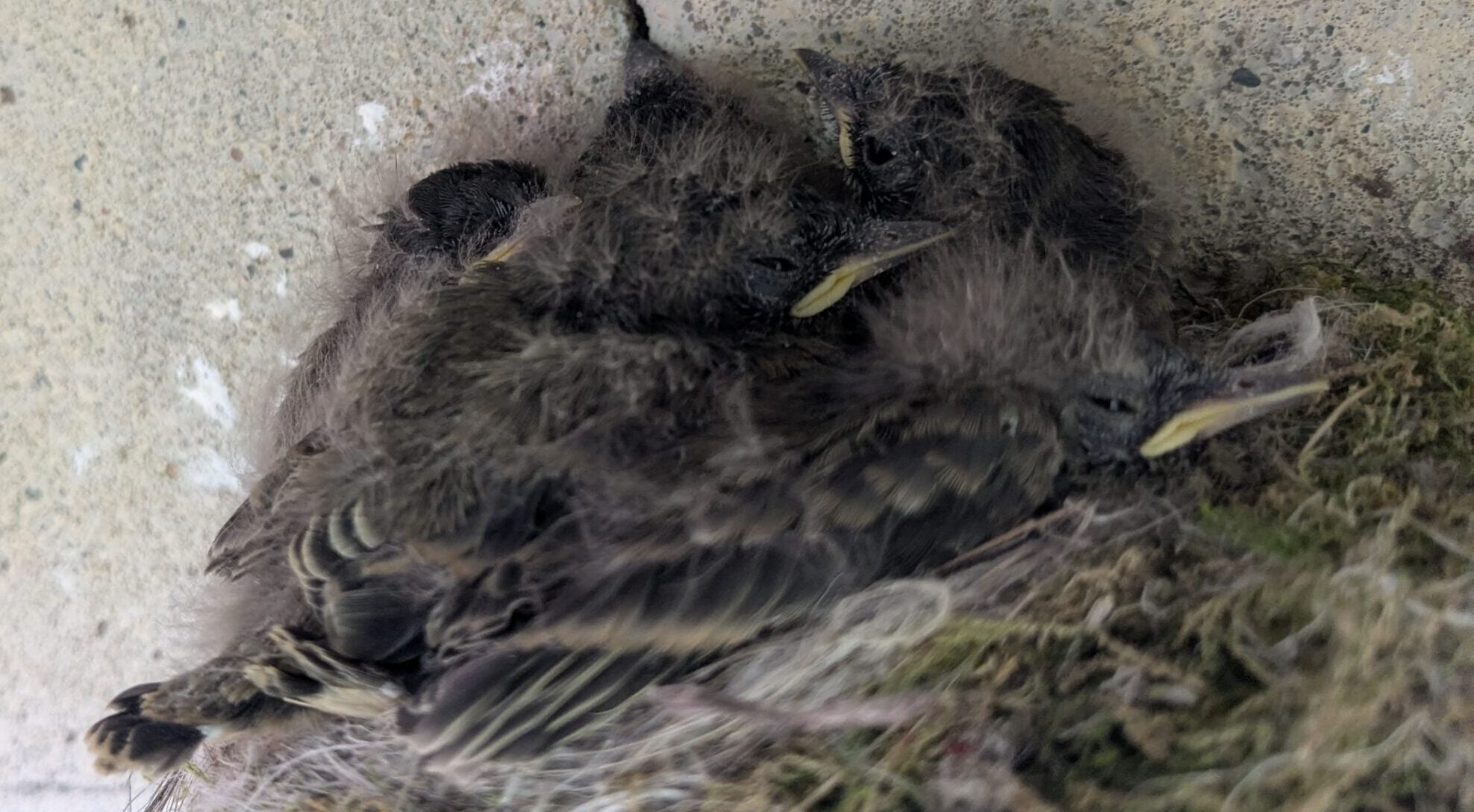
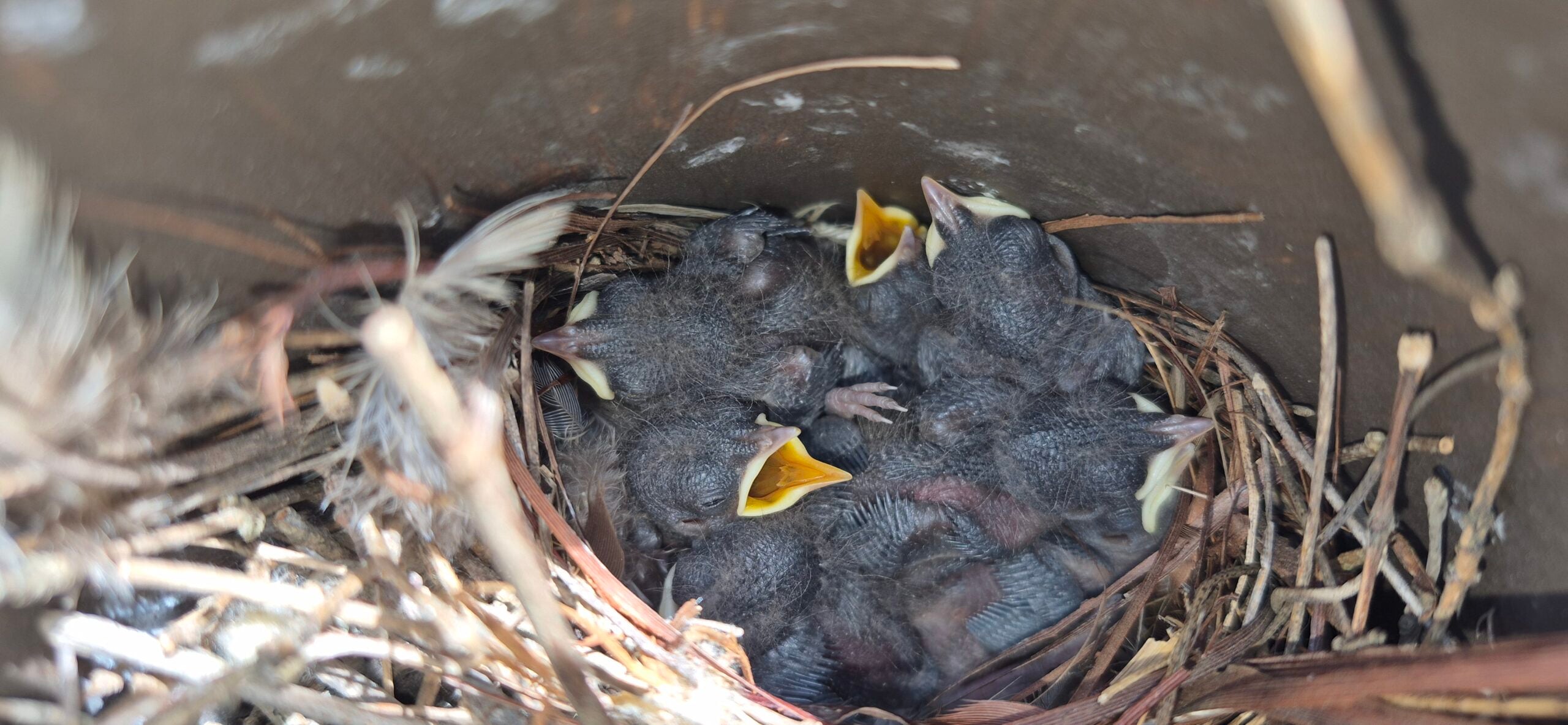
Four Eastern Phoebe nestlings at Otis. Photo by Chad Machinski
Outside of our nest boxes, we also keep an eye on an Eastern Phoebe that nests behind a light on one of the outbuildings. Since at least 2023, this pair has successfully raised multiple broods each year at the site. They are now working on their second brood of 2026.
CAPITAL CITY
At our Capital City Bird Sanctuary here in Lansing, the nest boxes have swung in favor of Bluebirds this year, with 19 fledged birds and another brood in progress. Typically Tree Swallows have nested in some of our boxes in the meadow, however, there are none nesting on site this year. This is despite Tree Swallows being on site earlier this spring. In addition to Bluebirds, we have an active House Wren nest, and Black-capped Chickadees that have already fledged.
BERNARD BAKER
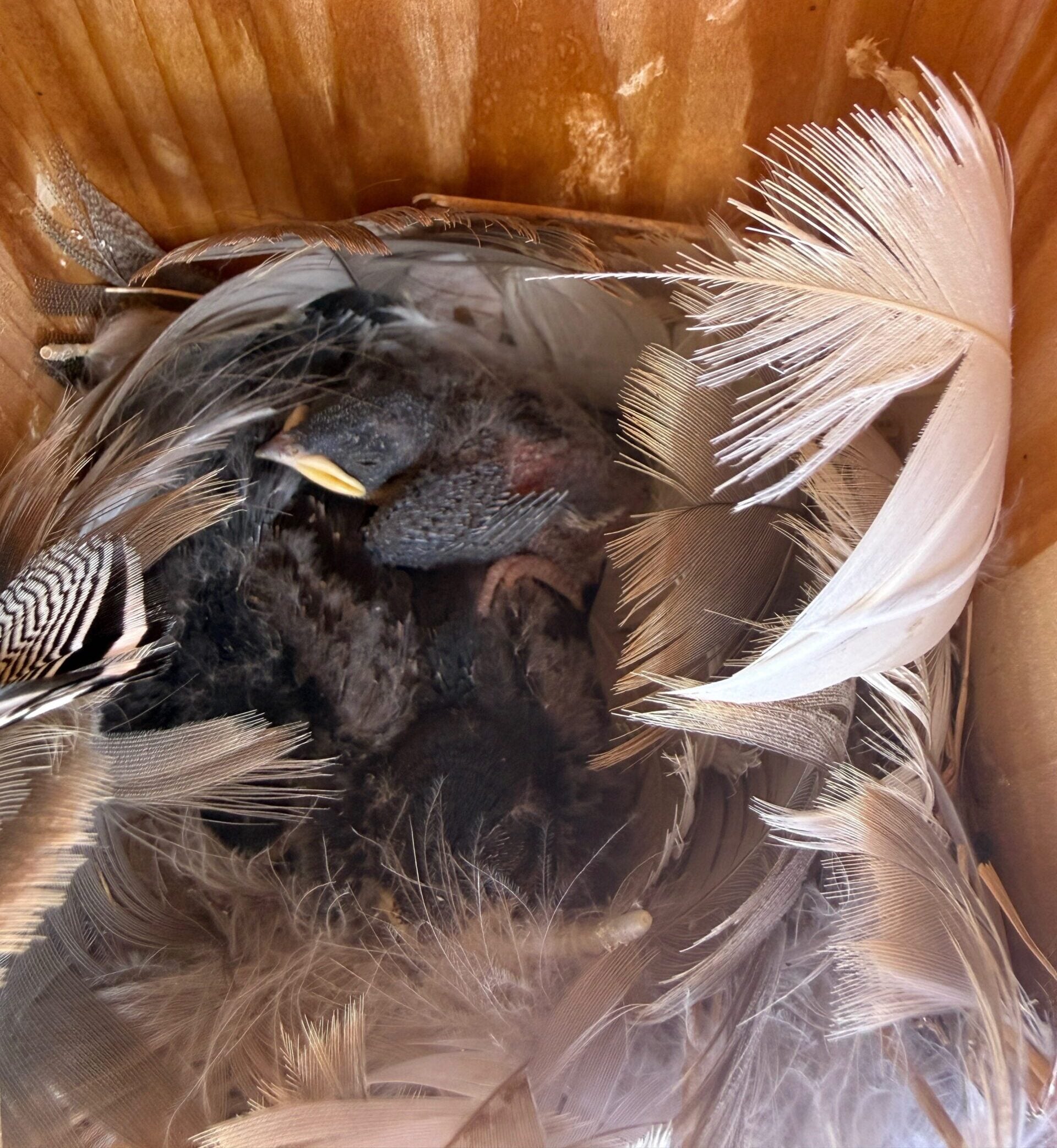
Tree Swallow nestlings at Baker. Photo by Alex Johnson
At the Bernard Baker Bird Sanctuary in Bellevue, we have 16 nest boxes available to songbirds, PLUS one Wood Duck box that was being used by a pair of very lucky Tree Swallows. So far, nine Tree Swallows have fledged, but we have five more active nests in action. Bluebirds meanwhile have fledged 11 young from their nests. A Black-capped Chickadee pair is back in a nest box they used last year and currently have seven eggs. An American Kestrel nest box is also present onsite. We believe the box went unused during last year’s nesting season, but there are signs it may have been occupied this year. Our nest box monitor observed three young kestrels perched on top of the box, with an adult calling nearby.
HAEHNLE
The Phyllis Haehnle Memorial Sanctuary in Grass Lake has a number of nest boxes scattered across it’s 1,000+ acres and has the typical cast of nest box residents such as Eastern Bluebird, Tree Swallow, and Northern House Wren, but also boasts several Wood Duck boxes that see success. There are currently 31 active nests in these boxes with 106 young, and 50 birds have already fledged!
Many thanks to the volunteers who check on our nest boxes at our Sanctuaries! We would not know how our cavity nesters were faring if not for you!
Featured Photo: Northern House Wren at Otis Farm Bird Sanctuary. Photo by Scott Evans
To learn more about Michigan Audubon sanctuaries, visit michiganaudubon.org/conservation/bird-sanctuaries. If you want to volunteer at a Michigan Audubon sanctuary, please complete the Sanctuary Volunteer Interest Form.

Chad Machinski, MS
Conservation Manager
While Chad’s first love is botany, he doesn’t deny the intertwining nature of birds, plants, insects, and all other organisms we share the world with. His passion for the natural world began in his undergraduate time at the University of Michigan, taking several different forms along the way. His graduate studies at the University of Michigan allowed him to more closely examine the natural communities of Michigan and further understand the complex nature of ecosystems. His work as a Nichols Arboretum Caretaker while in school further enabled him to be directly involved in conservation work as he led workdays removing invasive plant species, performed trail maintenance, and guided tours. Chad can usually be found out in a park in a few ways: binoculars glued to his face, hunched over looking at plants, or flipping logs looking for snakes and salamanders.