


Conservation Manager Chad Machinski, M.S., manages the stewardship of MA’s sanctuaries and engaging with our dedicated volunteers ever since. To help you stay connected with the work being done, he will be presenting regular online updates about activities going on at them: birds seen or heard, conservation work, improvements, interesting plants, and more.
Trips to Haehnle and Warner
I wanted to see what I had written for my 2025 February blog and it turns out the opening line was similar to what I would have written for this February:
“A cold and snowy start to the year has limited the number of days out on the Sanctuaries…”
This month’s blog will be brief and focus on two Sanctuary visits: Haehnle and Warner.
Haehnle
The Phyllis Haehnle Memorial Sanctuary is Michigan Audubon’s largest Sanctuary, weighing in at a shade over 1,000 acres. For those who have made their way over to Haehnle, you know that much of the Sanctuary is made up primarily of Mud Lake Marsh, a known Sandhill Crane roosting site during the fall. A Sanctuary of this size has long stretches of property boundary that must periodically be walked to make sure that there is appropriate boundary signage and that no nefarious activity has been going on. Because so much of the Sanctuary is marshland, this activity is usually best for winter. Haehnle Committee Chair Steve Jerant and I decided that this was the year to walk the northern boundary of the Sanctuary from east to west, a roughly 1.5 mile straight shot along drainages and across frozen marsh. This would be my first trip across this stretch and Steve’s second. While the weather was cold on that January 29th day, it wasn’t windy, a big concern of ours out in the marsh. This made for a truly pleasant walk and at times we were both actually quite warm! It was great to see the Sanctuary from a different perspective and we even picked up a few first of the year birds out there: Rough-legged Hawk and Northern Shrike. The walk took approximately 3 hours, nobody fell through any ice, and we didn’t get lost – a win in my book.
Incidentally, that week I had also been pouring over some historical documents and photos of the Haehnle Sanctuary. While doing this, I stumbled across an article by Harold Wing (a key person in the creation of Haehnle) in an old Jack Pine Warbler that contained a photo by Larry Walkinshaw that showed Michigan Audubon Society members out at Haehnle on January 30th, 1955 (shortly after the Sanctuary was established) putting up property boundary signs. Funny to think that almost 71 years to the day later, we’d be back out doing the same thing.
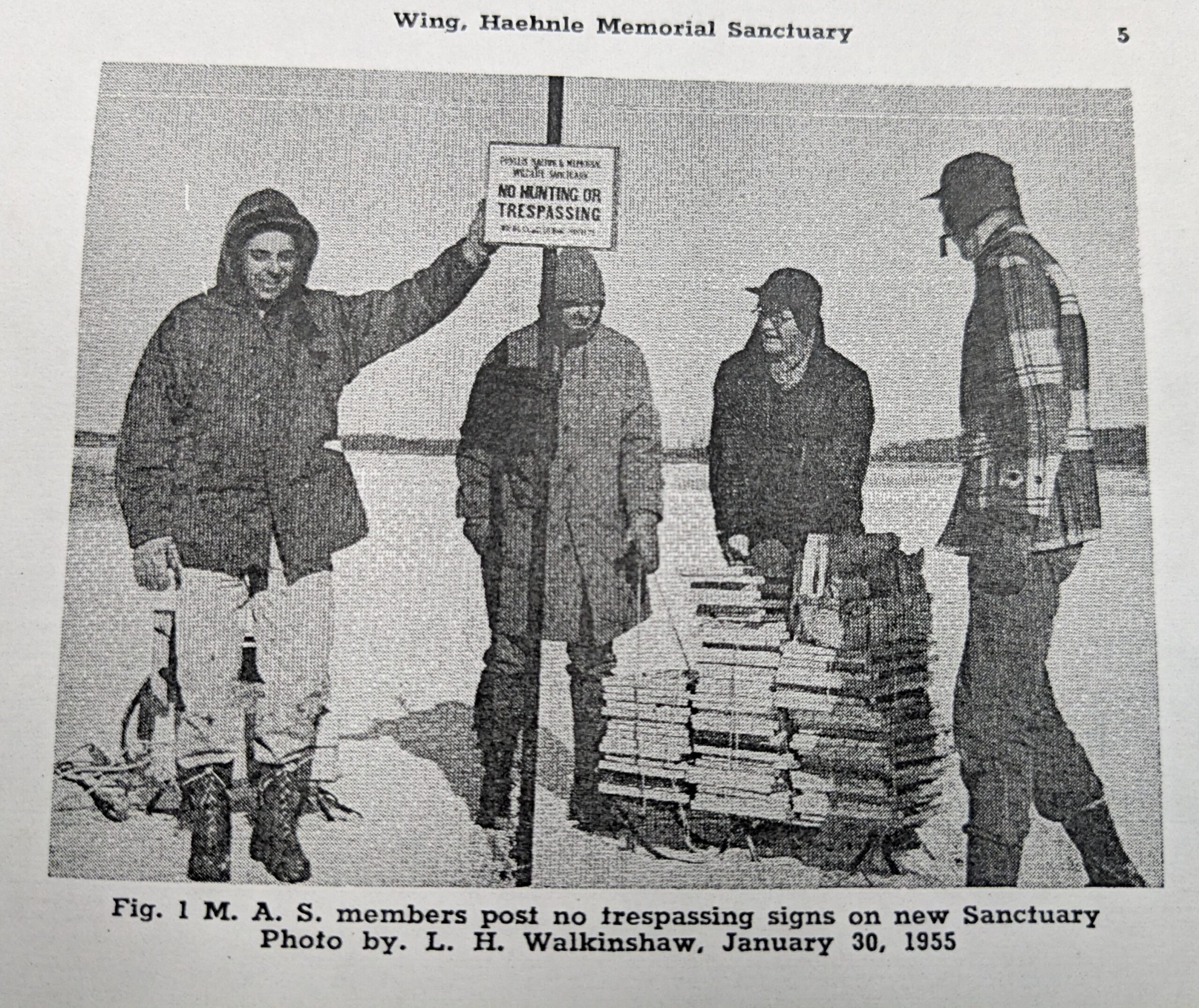
"Fig 1. M.A.S. members post no trespassing signs on new Sanctuary Photo by L.H. Walkinshaw, January 30, 1955"
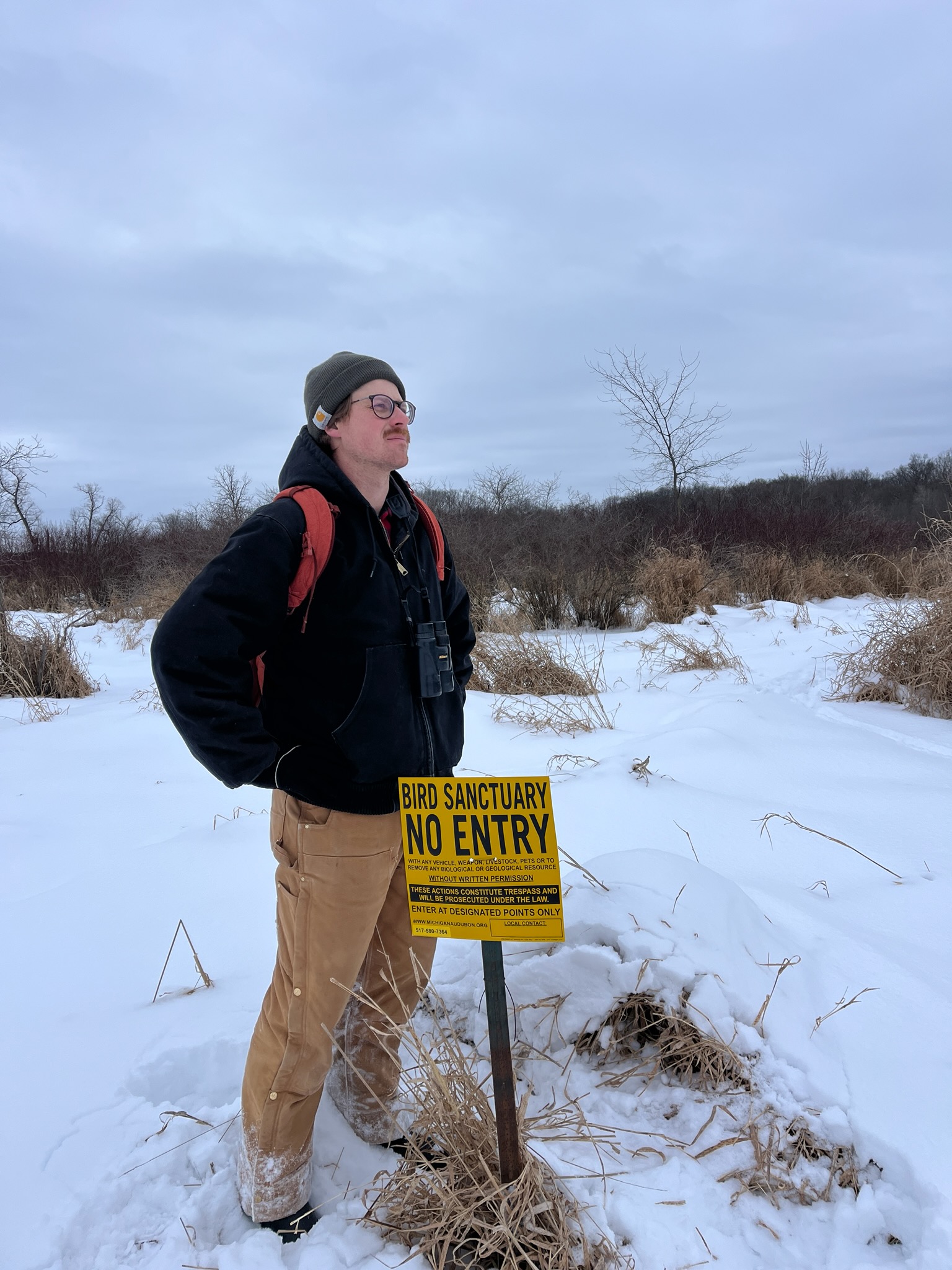
Chad Machinski next to property boundary sign. Photo by Steve Jerant.
Warner
Despite being of near equal size to the Otis Farm Bird Sanctuary, the Ronald H. Warner Sanctuary is probably the less well known and thus less visited Sanctuary in Hastings. Bisected by Glass Creek (which we know as the western border to our Otis Sanctuary), the Sanctuary has two very different sides: west of Glass Creek being a more Dry-mesic Southern Forest, and the east side of Glass Creek being a more Mesic Southern Forest. Both sides contain Pine and Spruce plantations, however the east side is a much more rich, shady forest made up of large diameter Tulip Trees, Red Oaks, Beeches, and Maples. Another difference on the east side is a grove of Hemlock (Tsuga canadensis) trees, a species much more well known in northern Michigan and less common in the southern part of the state. Michigan Flora considers a few occurrences of this species in the southern part of the state to be escapees from cultivation. This grove at Warner certainly is questionable, especially considering the plantations of other conifers throughout, however, the location of this grove leads me to believe that it is likely a natural occurrence. The grove is pretty much exclusively limited to the short, steep slope that leads into Glass Creek. It would not be an ideal place to attempt to plant trees as it quite difficult to stay upright while traversing it (speaking from experience). Regardless of its provenance, the Hemlocks were the reason for my visit to the Sanctuary in early February. Winter is a great time to check Hemlock trees for the invasive Hemlock Woolly Adelgid (HWA), a non-native insect that has been making its way through Michigan. This species is from East Asia and can kill Hemlocks in 4-10 years; it’s considered a watch-list species as it threatens the existence millions of Hemlock trees in the state of Michigan. You can read more about this insect here. Over the past three years no HWA has been detected on this stand of trees. However, I will say that the terrain of the site makes it challenging to complete a thorough survey. Fortunately, there are not many Hemlocks in the area and this Sanctuary is infrequently visited, lessening the chances of HWA making its way to this grove. Nevertheless, we will continue to survey this unique grove of trees.
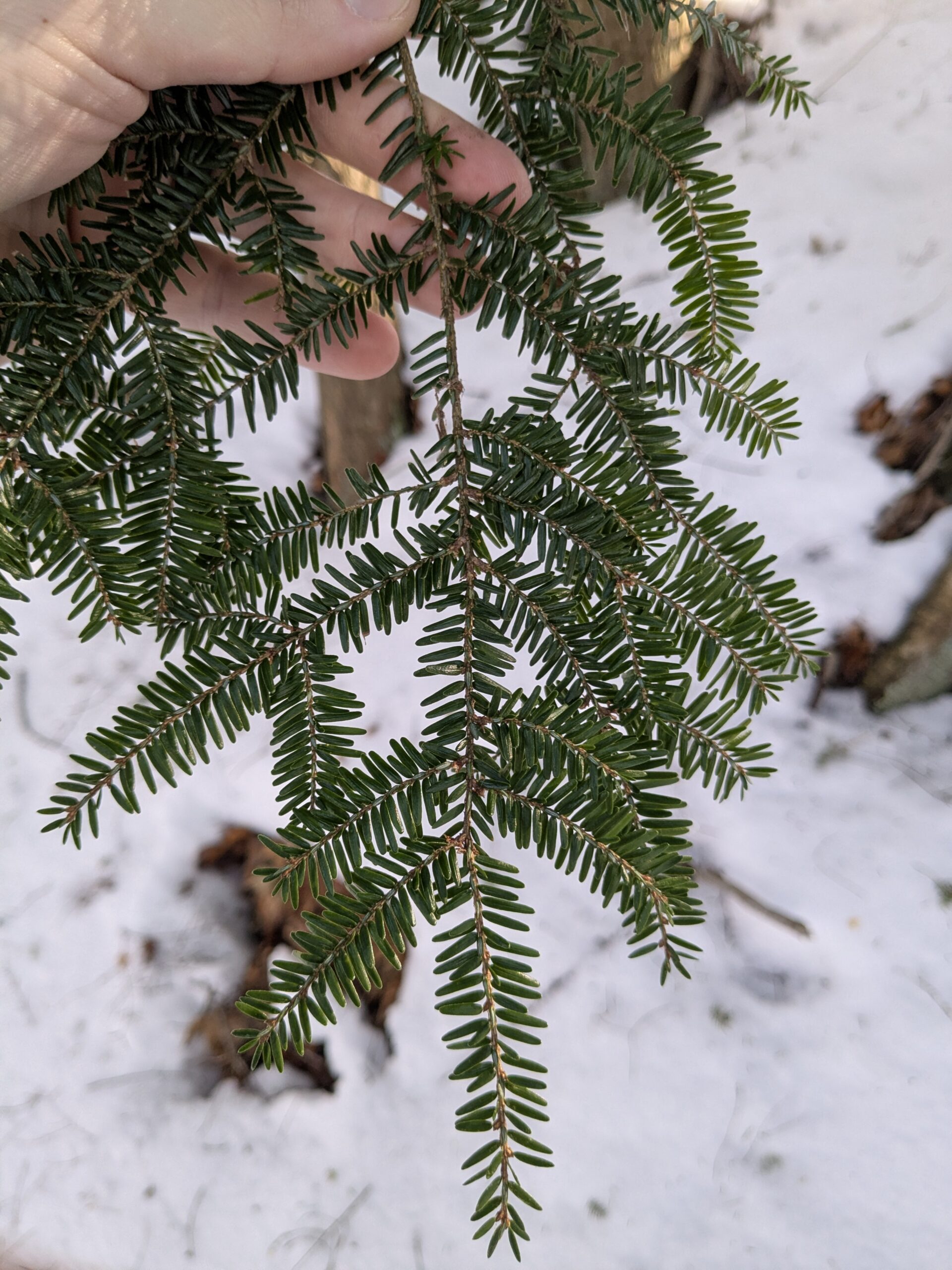
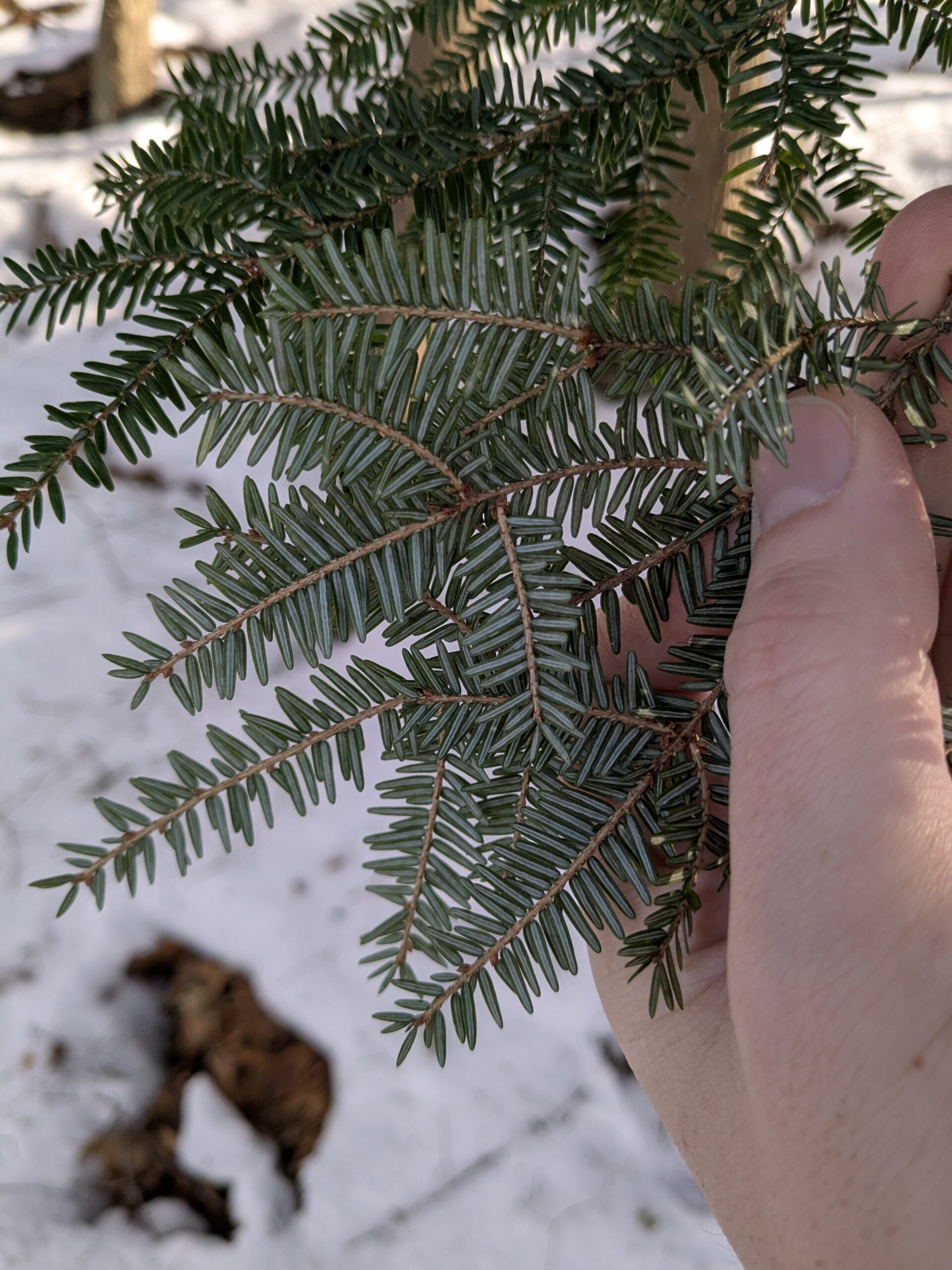
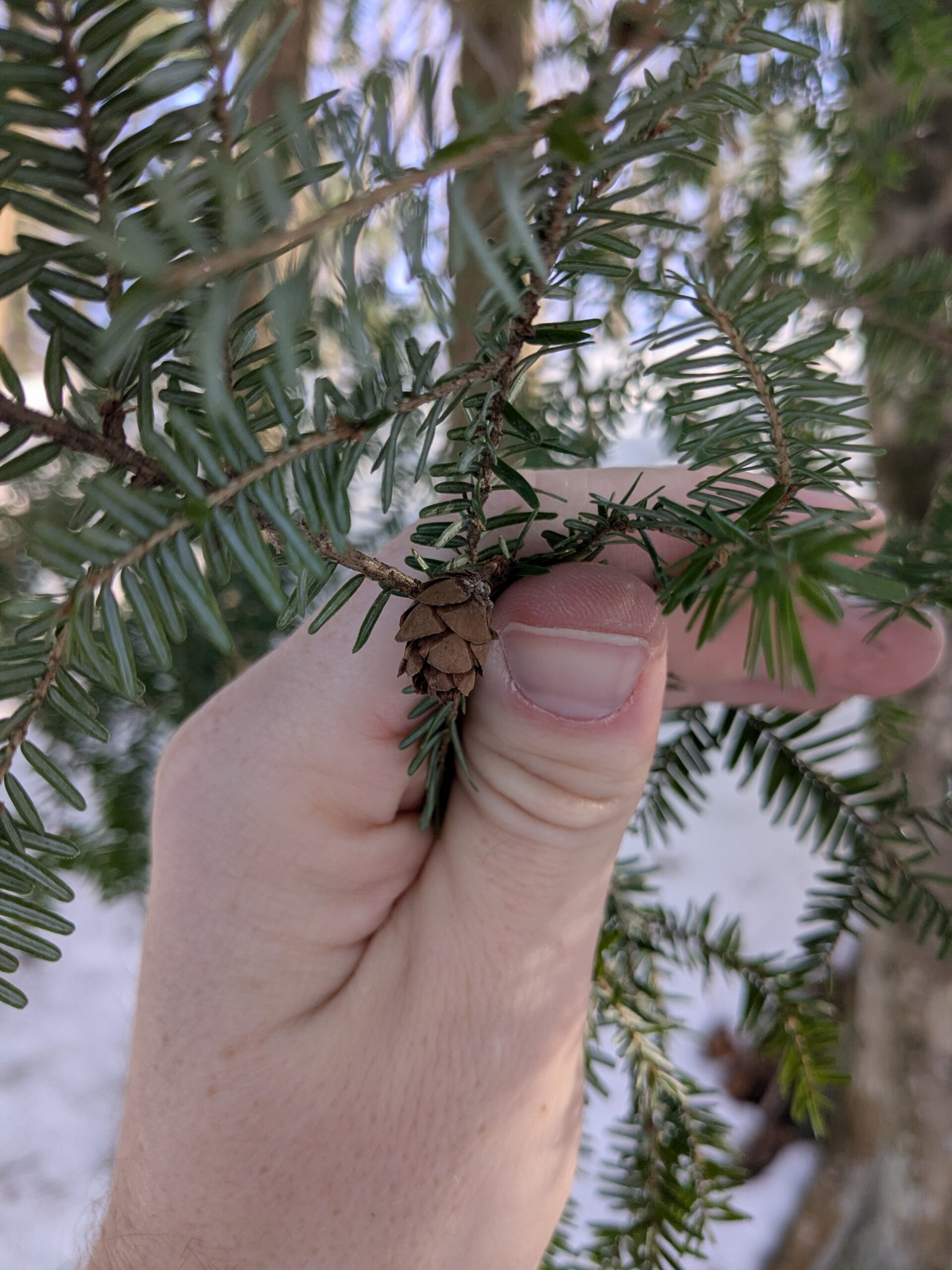
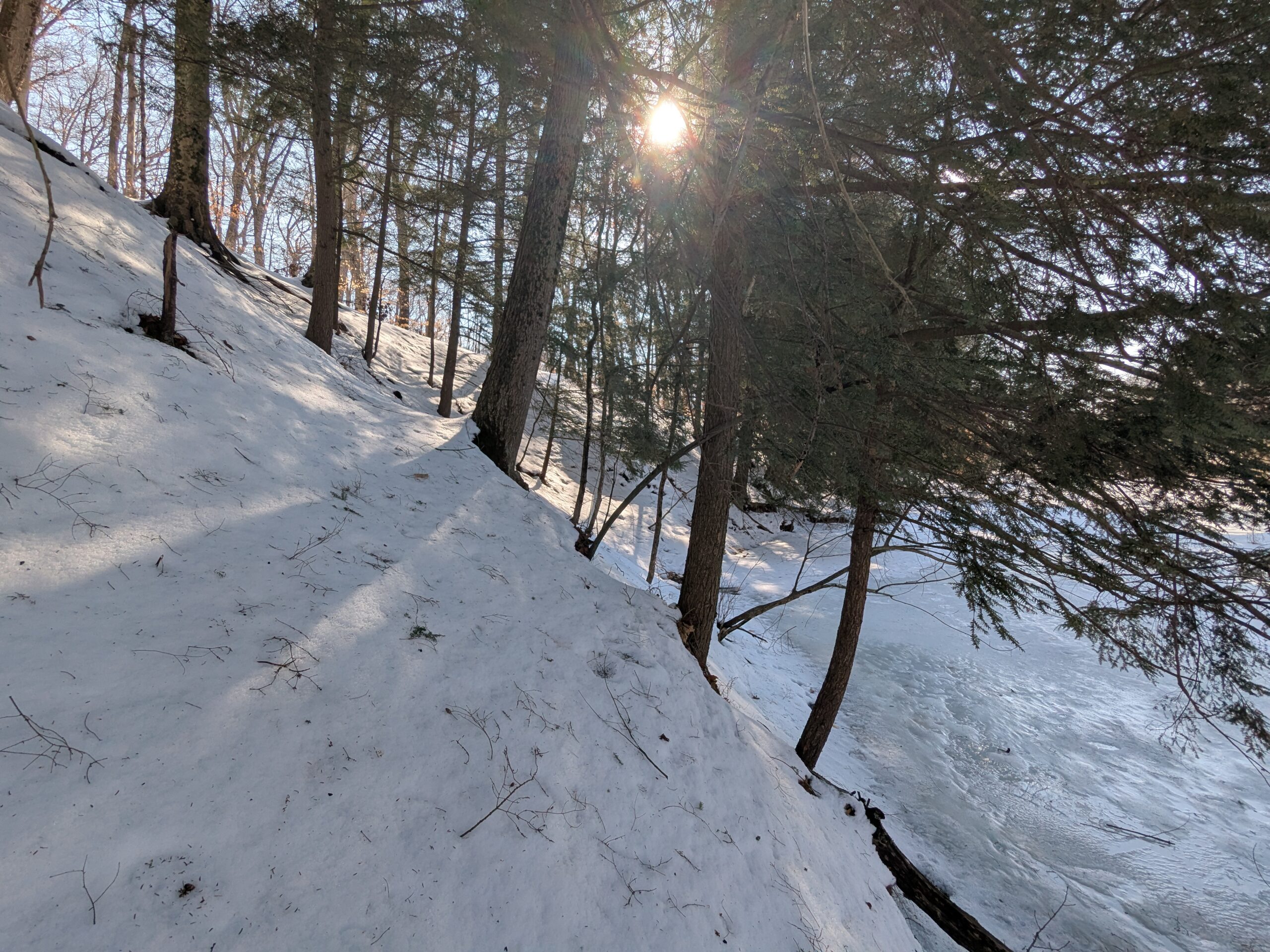
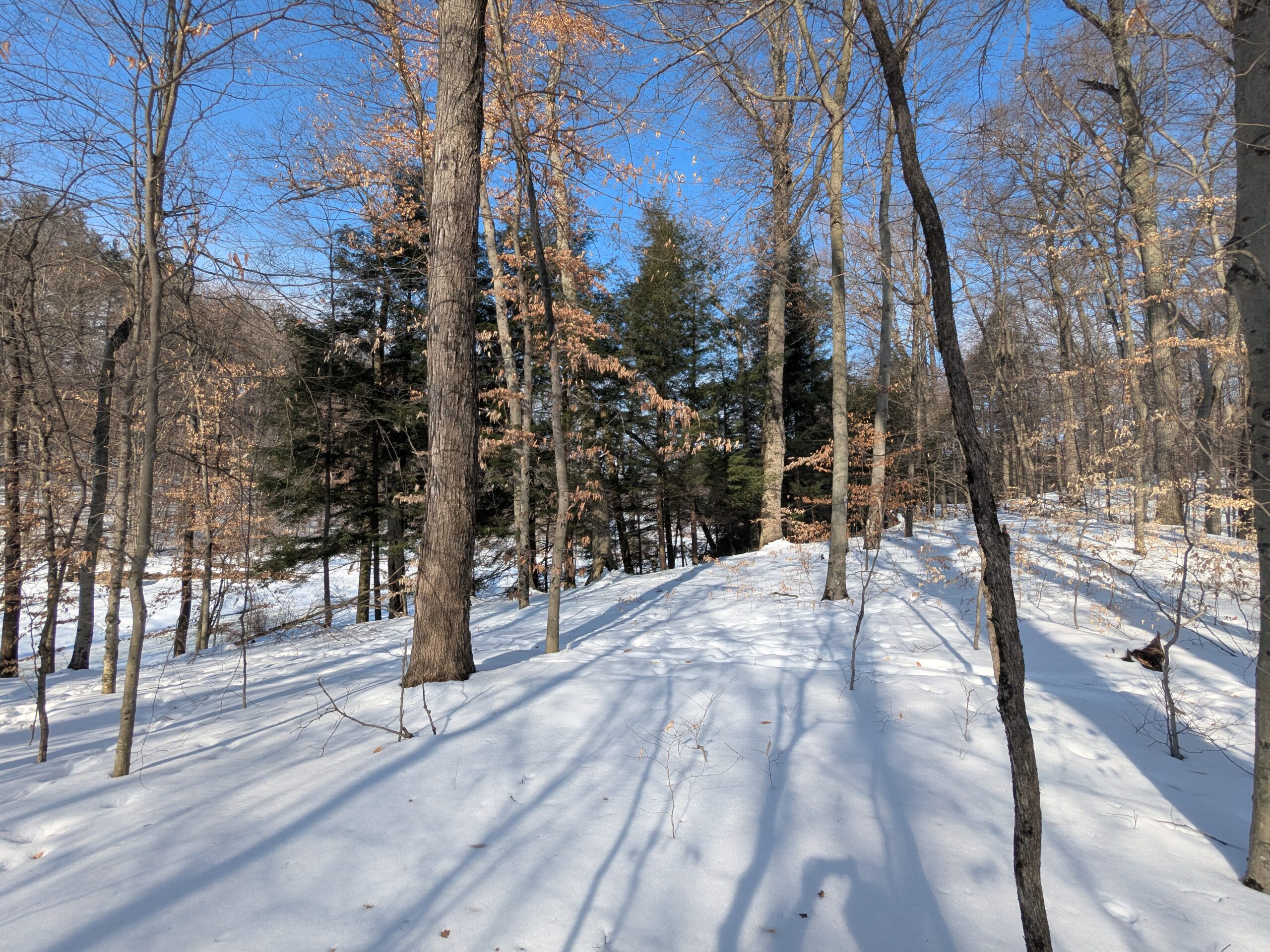
Photos of the Hemlock trees (Tsuga canadensis). Photos and by Chad Machinski
Also on my trek through the Warner Sanctuary, I was greeted by Snow Fleas or Springtails, a possible Otter slide down into Glass Creek, and while I, myself, almost slid into Glass Creek, I found the first signs of spring: a near open Skunk Cabbage flower.
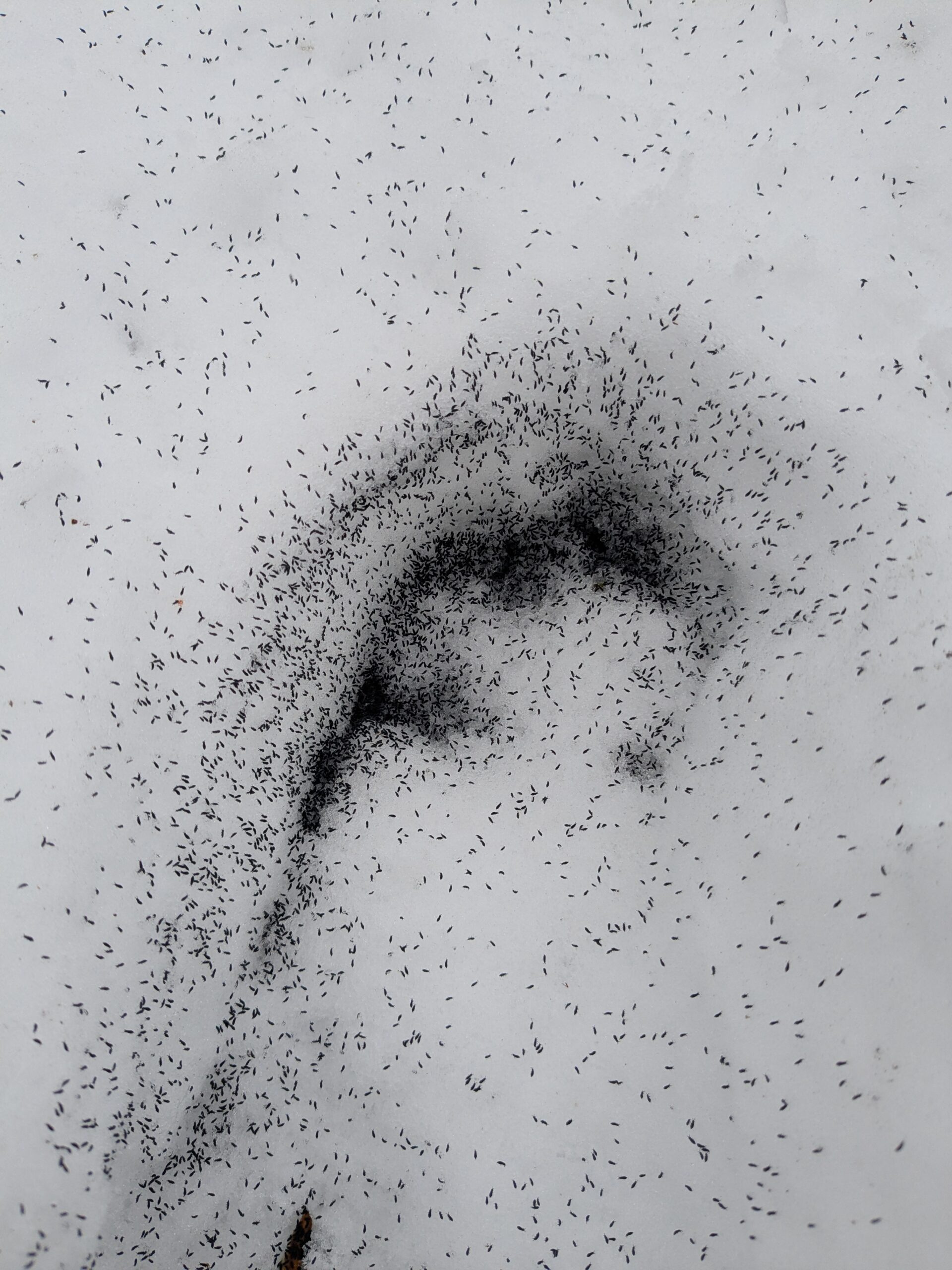
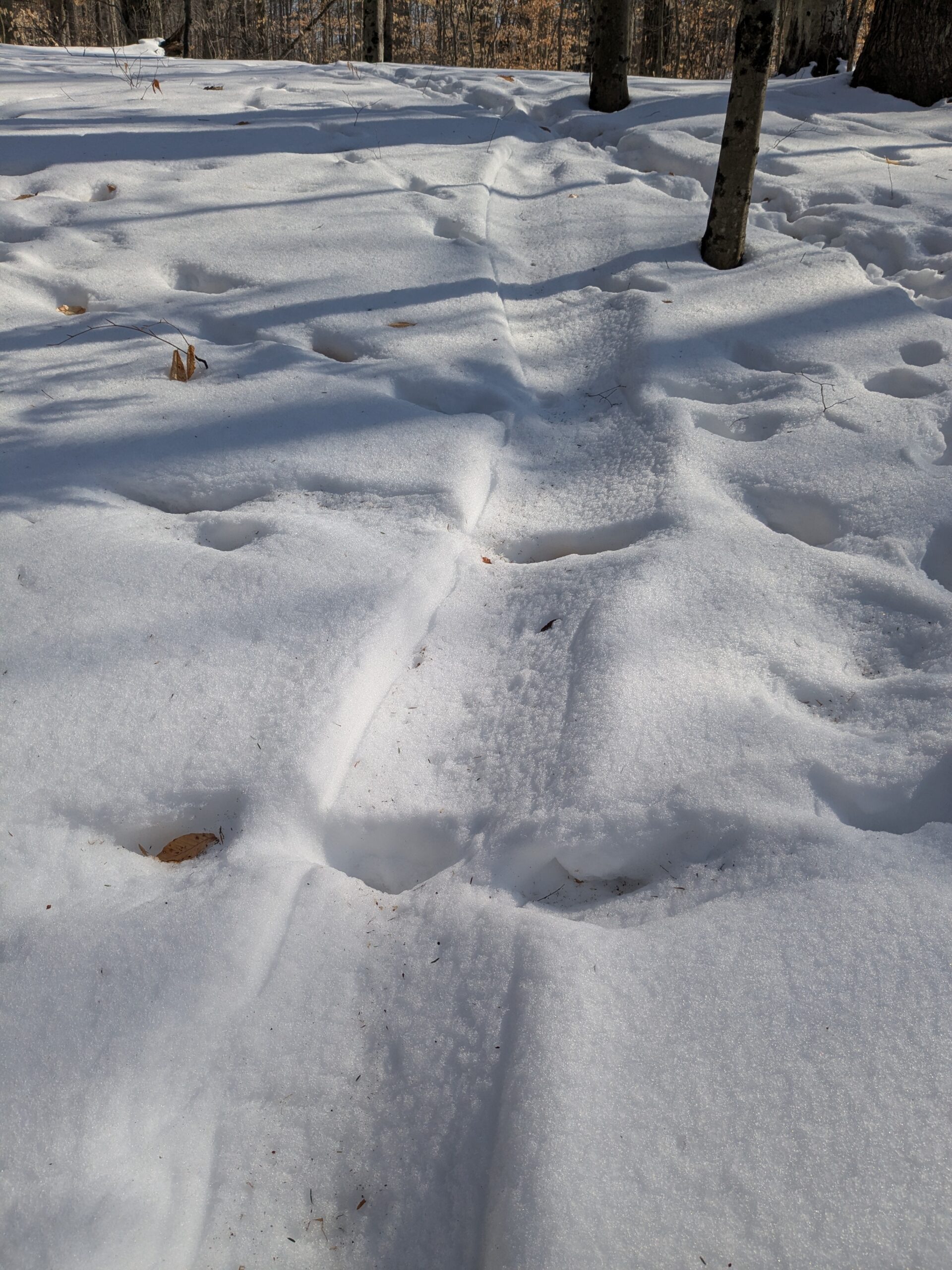
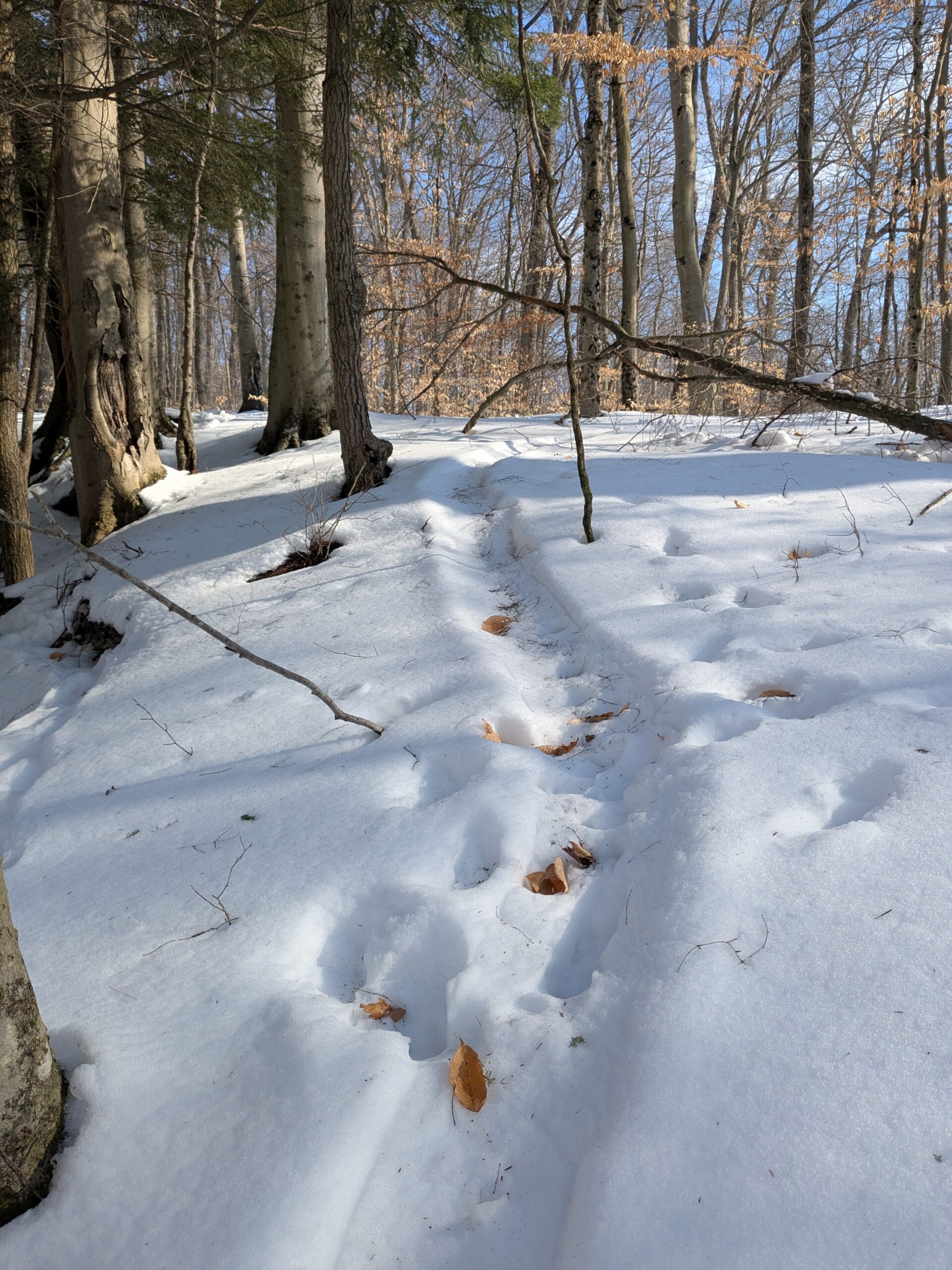
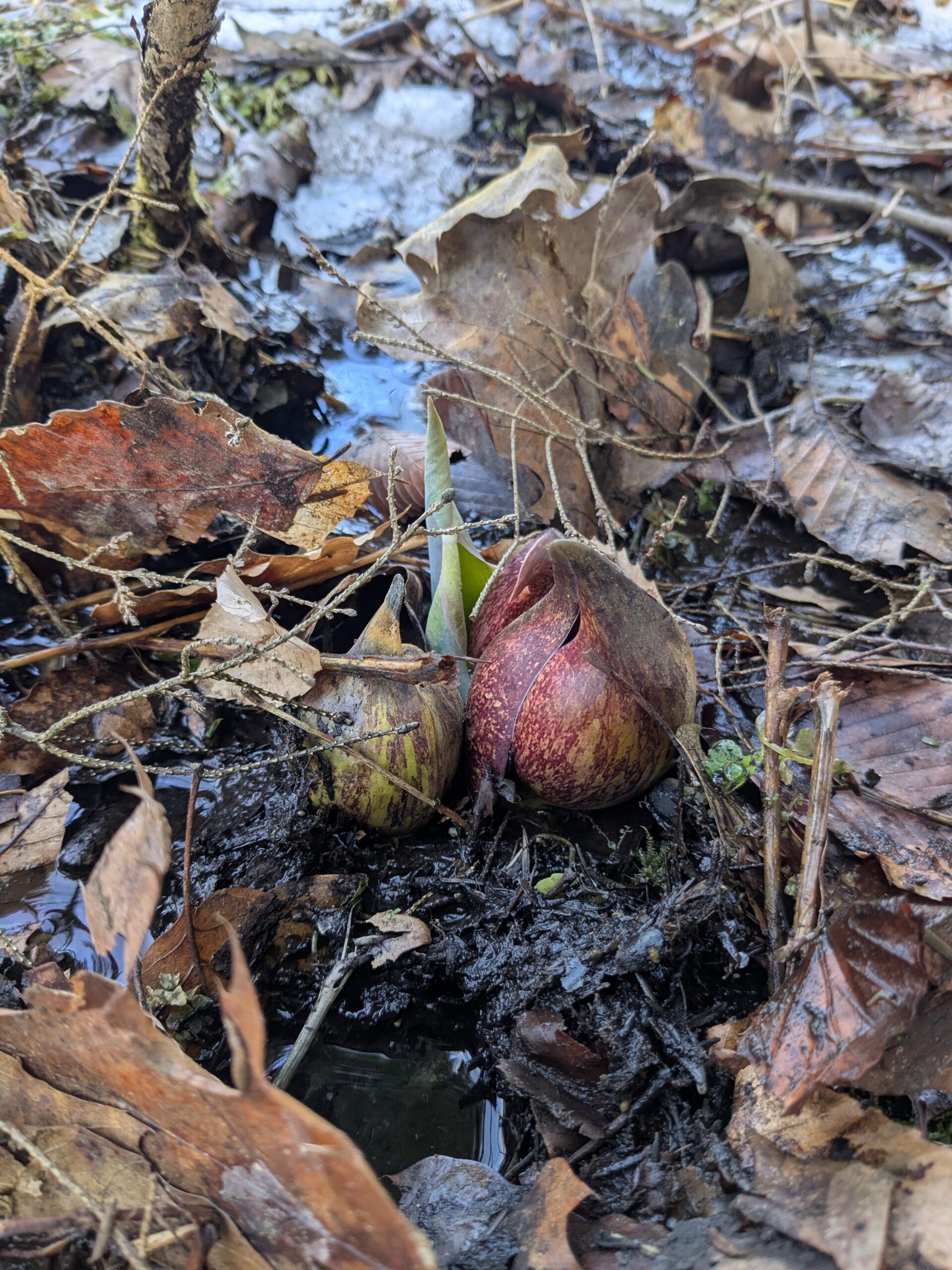
Photos of Snow Fleas, Otter slides, and Skunk Cabbage. Photos by Chad Machinski
To learn more about Michigan Audubon sanctuaries, visit michiganaudubon.org/conservation/bird-sanctuaries. If you want to volunteer at a Michigan Audubon sanctuary, please complete the Sanctuary Volunteer Interest Form.

Chad Machinski, MS
Conservation Manager
While Chad’s first love is botany, he doesn’t deny the intertwining nature of birds, plants, insects, and all other organisms we share the world with. His passion for the natural world began in his undergraduate time at the University of Michigan, taking several different forms along the way. His graduate studies at the University of Michigan allowed him to more closely examine the natural communities of Michigan and further understand the complex nature of ecosystems. His work as a Nichols Arboretum Caretaker while in school further enabled him to be directly involved in conservation work as he led workdays removing invasive plant species, performed trail maintenance, and guided tours. Chad can usually be found out in a park in a few ways: binoculars glued to his face, hunched over looking at plants, or flipping logs looking for snakes and salamanders.