


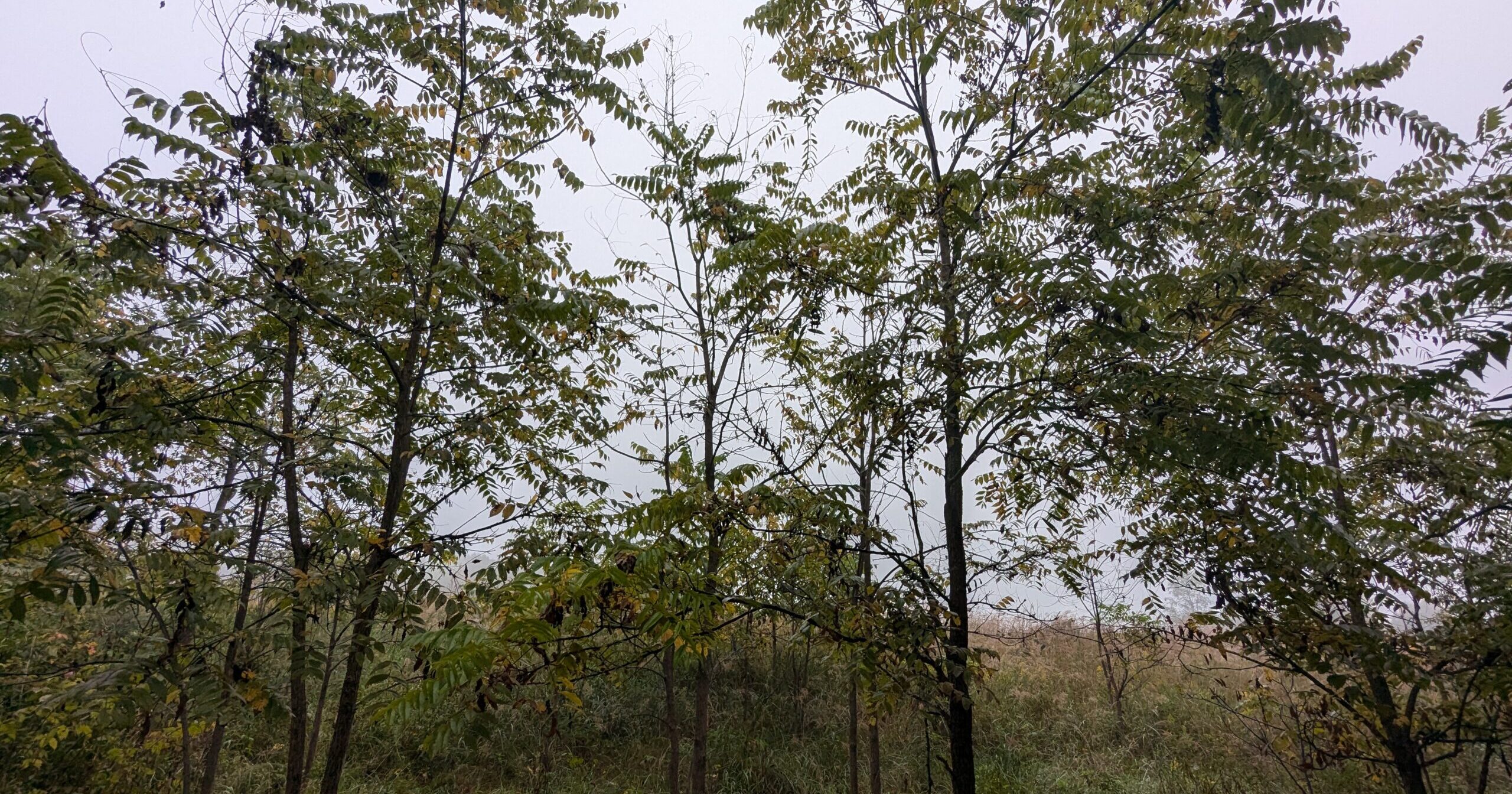
Conservation Manager Chad Machinski, M.S., manages the stewardship of MA’s sanctuaries and engages with our dedicated volunteers. To help you stay connected with the work being done, he will be presenting regular online updates about activities going on at them: birds seen or heard, conservation work, improvements, interesting plants, and more.
Every Thursday a new episode of the American Birding Podcast drops and I tend to listen to it on my way to one of our Bird Sanctuaries. If you don’t listen, it’s a good way to hear about bird rarities, new books, and coverage of bird related topics. At the end of each month, their “This Month in Birding” episode features a small guest panel where they discuss recent research and other topics. The July episode ended on a discussion of the panel’s favorite “bird frenemies”. A discussion ensued about what that meant exactly and I began thinking of it instead as having a “love-hate relationship” with. As I thought about the birds of my life and which ones I have a love-hate relationship, I struggled to think of a bird that matched that description. BUT I was easily able to consider a plant for which my relationship would be described as love-hate: Juglans nigra, Black Walnut.
I really fooled you all; you thought for sure I’d be writing about birds specifically, but you can’t take the botanist out of the boy!
Most people hate the Black Walnut tree. If someone has a Black Walnut tree growing within view of their yard, I’m sure you’ll hear about it. The first thing that people hate about Black Walnut is the purported impacts that the tree has on other plants via the chemical juglone that the tree exudes. For years, people have claimed that juglone damages other plants and prevents other plants from growing in its vicinity, however, more recently, this idea has been challenged. Perhaps, it’s not the possible allelopathy from the juglone, but more so that Black Walnuts cast an immense amount of shade that limits the amount or type of plants that can grow under them. Sugar Maples cast a lot of shade and limit the amount and type of plants that can grow under them, but they do not get the burning hate that Black Walnuts receive.
The other reason Black Walnuts receive hate is their fruit: the walnut. During the fall of a masting year, Black Walnuts will rain down from they sky like bombs. Bouncing off of cars, roofs, heads, potentially damaging all that it hits. Their reign of terror is not over the moment they reach their final resting place however. As they lay in your yard, hidden by the grass you’ve been putting off mowing, they can act as projectiles yet again or just as a way to dull your already dull mower blade. On sidewalks and driveways they’ll trip you, then stain your pavement, reminding you for months of how foolish you looked laying on the ground when you fell. To avoid all of this, homeowners will spend hours raking up Black Walnuts, in addition to the hours that they’ll spend picking up leaves later in the fall.
From a property owner’s perspective, I think that these are understandable complaints and worries regarding Black Walnuts. As a manager of natural areas, I can only really sympathize with fact that these trees cast a lot of shade and fundamentally change certain ecosystems. Black Walnuts readily invade old fields and grasslands thanks to their many nuts. Because these trees can get to be in the neighborhood of 100 ft. tall, they are a nuisance in grasslands and savannas. Oaks of course can also attain large size, however, Oaks were typical associates of grasslands and savannas. Black Walnuts were historically trees of rich forests, in both lowlands and uplands. There’s never just one either; again, because they produce an abundance of fruit, when you have a mature tree around, they sprout up everywhere in the vicinity. This can create a formidable wall of walnuts. Many of the grasslands that exist on our Sanctuaries spent time as ag fields, pastures, and old fields. This has resulted in having Black Walnut in most of our grasslands unfortunately. When they’re young, they can be knocked back by prescribed fire, but will readily resprout from the base. One of the best ways I have found to eradicate them from spaces where they aren’t wanted is through herbicide application via the hack and squirt method, where a hatchet is used around the base of the tree to make several, separate, downward-angled cuts and then herbicide is then squirted into that cut. Does it hurt to kill native trees, of course, but when they can create a change of state of the ecosystem, they need to go.
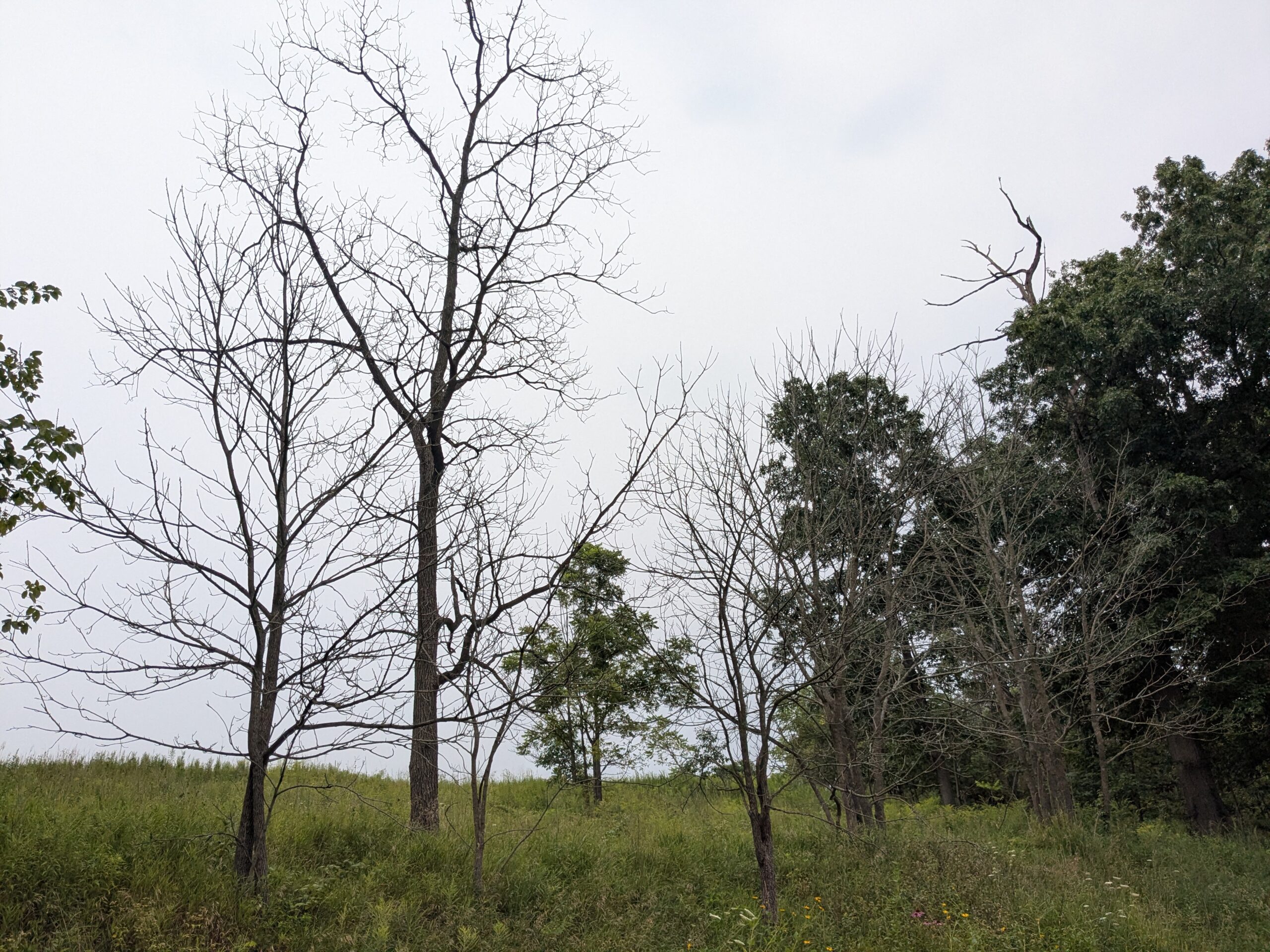
Grouping of dead Black Walnuts. Photo by Chad Machinski
Now, why do I love Black Walnut? Simple: they are an unbelievably useful tree and can be gorgeous when mature. For human usage, their wood is extremely valuable. Black Walnut wood is a dark brown that is absolutely stunning and sought after. Many years before I began with Michigan Audubon, we actually had Black Walnut trees stolen off of our property. Yes, that’s right, people will steal trees! At our own Phyllis Haehnle Memorial Sanctuary, we had several Black Walnut trees that were in an area that we were restoring to Oak Savanna, we chose to sell these trees. Because of their size and straightness many of them were of veneer quality.
You remember those annoying nuts I was just talking about? Well, when you gather them up to throw out, you’re actually throwing away gobs of high quality nutrition. Black Walnuts have the highest amount of protein compared to other tree nuts. They also contain other vitamins and minerals that are beneficial. Why are we using English Walnuts then and not stocking our shelves with Black Walnuts instead if they’re so good for us? Frankly, they are an acquired taste that many people may not want to acquire. I have a crate of Black Walnuts in my basement that I’ll be cracking open in the next few months. Birds certainly appreciate Black Walnut fruits with 18 different species having been documented eating the nut meat.
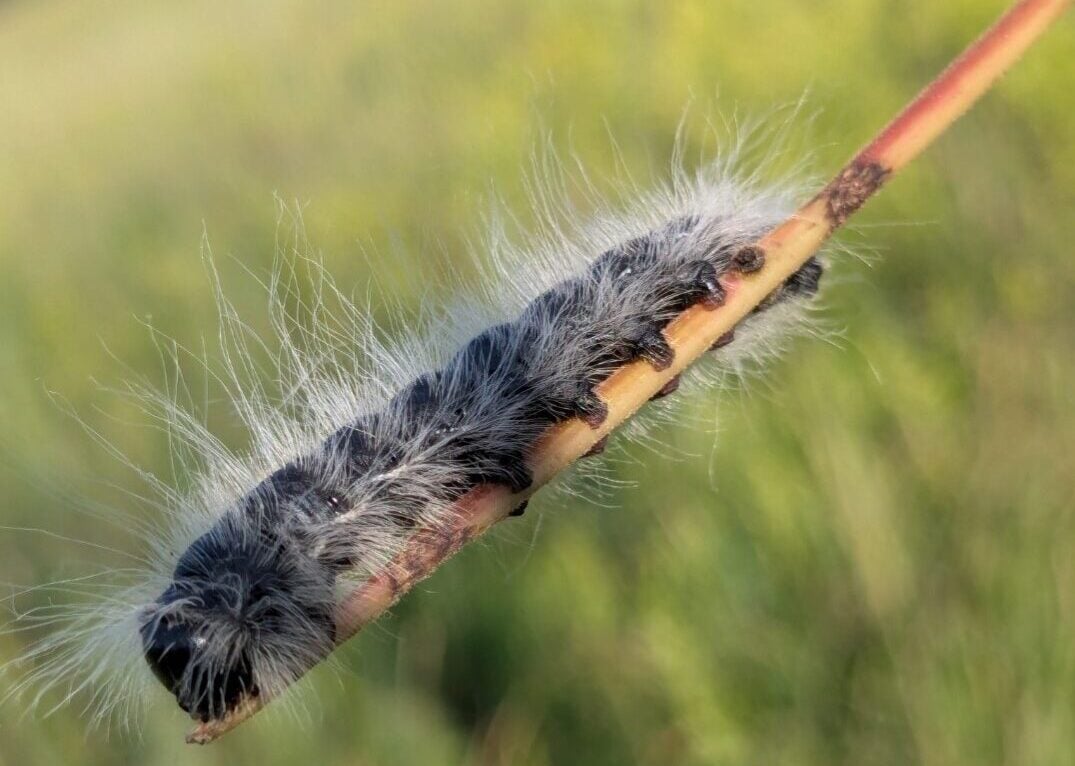
Walnut Caterpillar Moth on Black Walnut at Otis
Insects use the wood, leaves, and fruit of the Black Walnut as well. Illinois Wildflowers lists 41 insects that can be found on Black Walnuts, although that list should at least be 42. The Walnut Caterpillar Moth (Datana integerrima) is one not on the list that feeds on Walnuts, Hickories, and Pecan (all in the Juglandaceae Family). At our Otis Farm Bird Sanctuary in 2025, we had a minor outbreak of this caterpillar which completely defoliated several small Black Walnuts in the grasslands there.
So while I shake my fist and rage at a Walnut in the grassland, I also can stand back and appreciate all that a mature tree gives to the rest of the world.
To learn more about Michigan Audubon sanctuaries, visit michiganaudubon.org/conservation/bird-sanctuaries. If you want to volunteer at a Michigan Audubon sanctuary, please complete the Sanctuary Volunteer Interest Form.

Chad Machinski, MS
Conservation Manager
While Chad’s first love is botany, he doesn’t deny the intertwining nature of birds, plants, insects, and all other organisms we share the world with. His passion for the natural world began in his undergraduate time at the University of Michigan, taking several different forms along the way. His graduate studies at the University of Michigan allowed him to more closely examine the natural communities of Michigan and further understand the complex nature of ecosystems. His work as a Nichols Arboretum Caretaker while in school further enabled him to be directly involved in conservation work as he led workdays removing invasive plant species, performed trail maintenance, and guided tours. Chad can usually be found out in a park in a few ways: binoculars glued to his face, hunched over looking at plants, or flipping logs looking for snakes and salamanders.