


Conservation Manager Chad Machinski, M.S., manages the stewardship of MA’s sanctuaries and engaging with our dedicated volunteers ever since. To help you stay connected with the work being done, he will be presenting regular online updates about activities going on at them: birds seen or heard, conservation work, improvements, interesting plants, and more.
A Tale of Two Chimneys
Although it’s September, these stories have their beginnings in the spring of 2025, but the climax of them was not reached until fairly recently. The title of the blog may give it away, but this month’s highlights will focus on the Chimney Swift.
Most people go out to Michigan Audubon’s Otis Farm Bird Sanctuary in Hastings to check out the 120 acres of wetland, upland prairie, and forest. The farm house and barn located right near the parking lot are difficult to miss, especially if you are going to the boardwalk which requires visitors to walk between the two pre-1950s buildings. One aspect of the house many people probably don’t notice is the brick chimney located on the west side of the house that is overhung by the large Eastern Cottonwood tree. For the relatively short amount of time that I have been with Michigan Audubon, this chimney has had a wire cage over the top of it. This is not a standard cap and spark arrester, this is more of a homemade job; something probably made out of necessity. Despite my preaching of “SWIFTS NOW, CONSEQUENCES LATER, UNCAP YOUR CHIMNEY,” I chose to keep this chimney inaccessible due to stories I had heard of raccoons getting into this particular chimney and that due to the Cottonwood’s canopy extending over the top of the chimney that it wouldn’t be a very accessible site for Chimney Swifts. And this is what I would share with the few people who had questioned me about the chimney cover this year. But, on May 30th out at Otis while working in the vicinity of the parking lot, my ears perked up when I heard the unmistakable chittering calls of Chimney Swifts. This is not a bird that is frequently reported out at Otis; I had only seen them one time between 2023 and 2024. I immediately turned my head towards the direction of the sound and proceeded to watch two Chimney Swifts make passes at the top of the chimney, pulling off to the side of the chimney at the last second upon realizing that they could not enter. In that moment, I knew that the cover of the chimney was coming off that day.
How does one get on the metal roof of a house by yourself? You don’t! I immediately reached out to a few of my local volunteers to see if anyone had a ladder and the availability to spot me while up on the roof. Fortunately, one of them, Gayle, was available. Now, I’m not an expert on roofs, but it turns out that metal roofs are extremely slick when you don’t have the right footwear. What’s the wrong footwear you ask? Well that would be steel-toed, leather work boots, but that was my only option. With a little bit of thinking and reaching with various items such as brooms and garden rakes, we were able to get the metal cage off the top of the chimney! The hope was that after this effort the Chimney Swifts would make another go at the chimney even though it could not be entered previously.
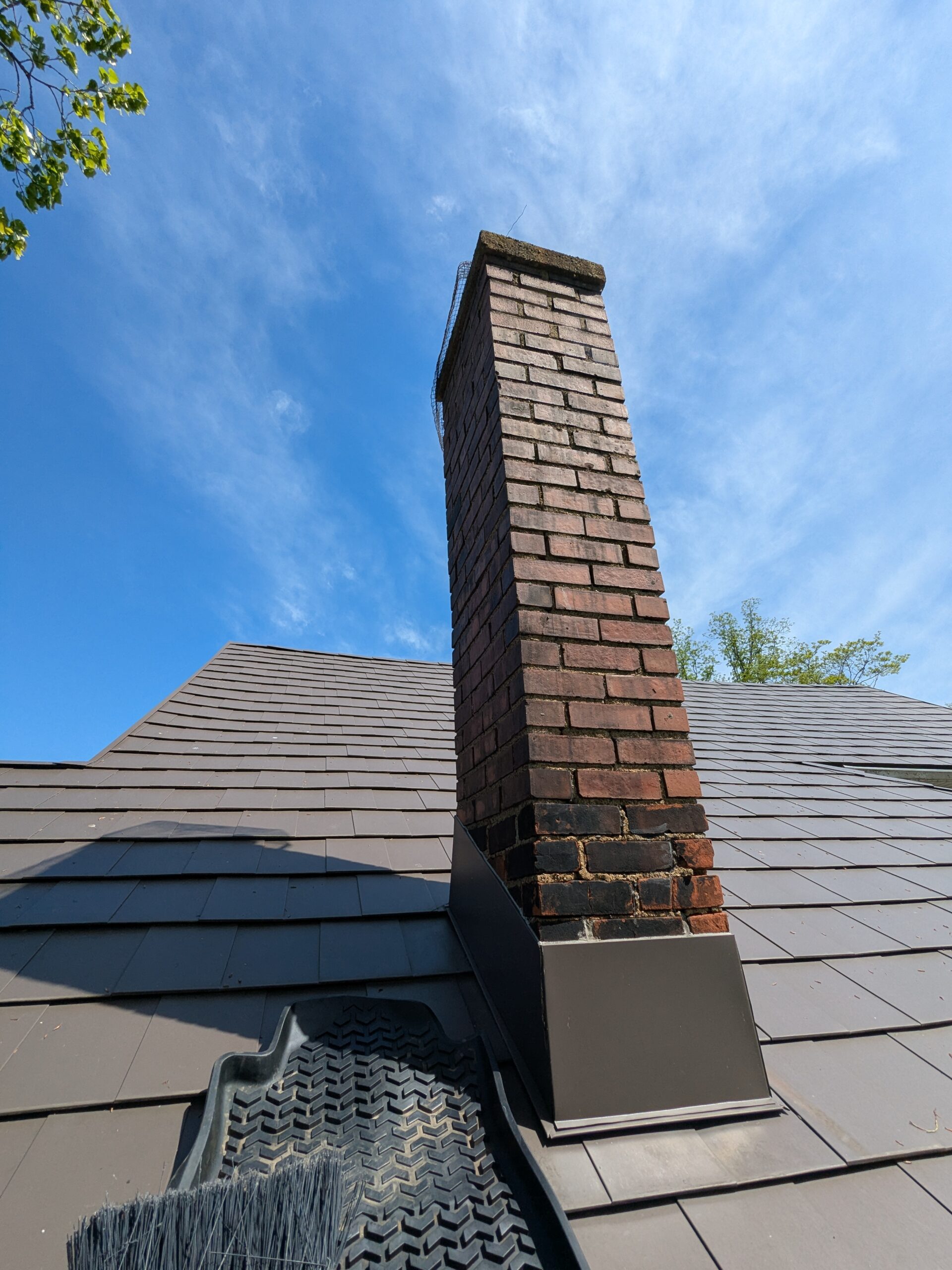
Otis House Chimney cover removal. The cover is half off the chimney in this image. Photo by Chad Machinski
Time passed and a few trips to Otis were made, but I did not have the time dedicated to do a survey for nesting Swifts to confirm whether or not it was being used. See the issue with doing a survey to confirm the presence of nesting Swifts is that it’s a bit time consuming: you must watch the very top of the chimney for one hour during the middle of the day (NOT an evening roost survey) and if you see a Swift going in or out in that period, that is indicative of a nesting pair. The other important aspect of this is that you cannot take your eye off that chimney for one second! It takes no time for a Swift to enter or exit a chimney without a sound and if you look away you very well could miss it. Knowing that I needed to do some amount of surveying, one morning while I was out at the Sanctuary (July 29th to be exact) I decided that I would watch for 10 minutes from the trail just across the street. In this instance, 10 minutes was all I needed to witness a Swift coming out of the chimney! I was absolutely elated to see that it actually worked, that simply taking the top off of the chimney allowed Swifts to use the chimney, just two months after removing it.
Over the next month, I was at the Sanctuary on several occasions and saw Swifts go in and out of the chimney multiple times throughout the day. In addition, I would see the adults foraging, quite low, over the wetland near the boardwalk which was such a treat to see. A wonderful moment occurred on one of these visits where I was working on placing some new window collision stickers on the picture window directly below the chimney. I was actually close enough to hear the begging calls of chicks as one of the parents entered the chimney; while day time entry is indicative enough of nesting behavior, hearing the begging calls really sealed the deal in my mind. However, there was still one thing I wanted to do: see the nest.
Chimney Swift leaving chimney. Video by Chad Machinski
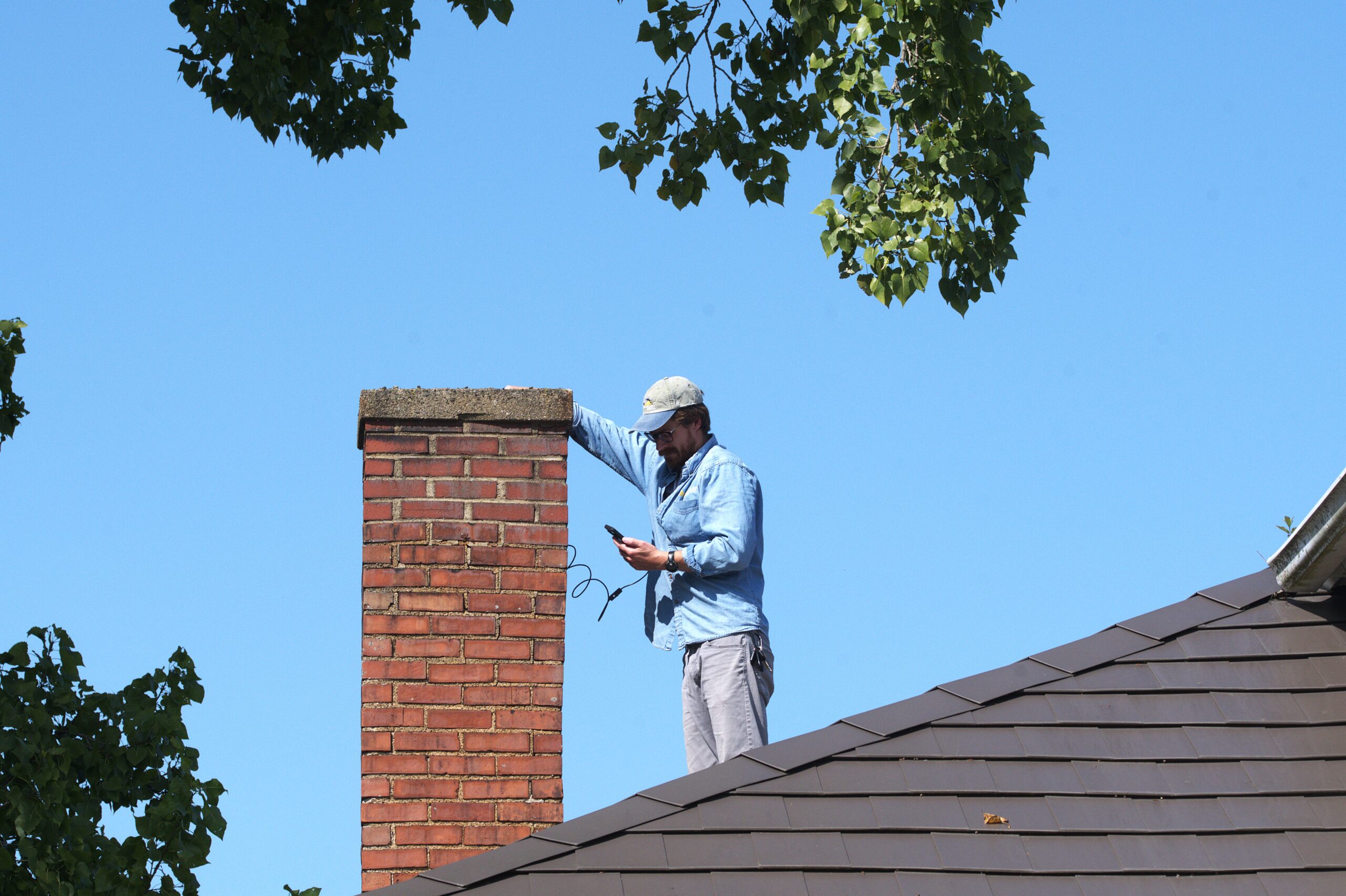
Conservation Manager, Chad Machinski, uses an endoscopic camera to look for the Chimney Swift nest in the Otis House chimney. Photo by Del Bachert
I decided that on my next visit out to Otis (early September) that I would get back on the roof and try to get a look at the nest inside the chimney. At this point in time nesting should be complete and there shouldn’t be any risk of disturbance to the Swifts. So I once again reached out to my volunteers to get someone out to spot me while I got on the roof. Volunteer Del answered the call and came out to ensure my safety while on the roof. This time I came prepared with proper footwear for the metal roof and an endoscopic camera that plugged directly into my phone, which I would feed down into the chimney to take video and pictures.
My hypothesis was that the nest was in the upper six feet of the chimney due to how well I had heard the begging calls, so I anticipated that this would be a quick job. However, feeding an endoscopic camera that has been wound up in a tight circle down a straight chimney is not an easy task. The endoscope kept wanting to rub up against one side of the chimney, making it impossible to see other areas of the chimney. After several attempts and several times taking it back out and straightening the line, I was finally getting a hang of it. On what would be my final attempt, I was frankly getting a little concerned: I wasn’t seeing a nest. The self-doubt was creeping in. Had I imagined the begging calls? Have I found an instance of Swifts entering a chimney during day time and not having a nest? But I kept feeding the camera down, and down, and down…until…I began to see white spotting on the wall…poop! I knew I was close. I fed the camera a little more and then there it was: a Chimney Swift nest, approximately 15 ft down the chimney.
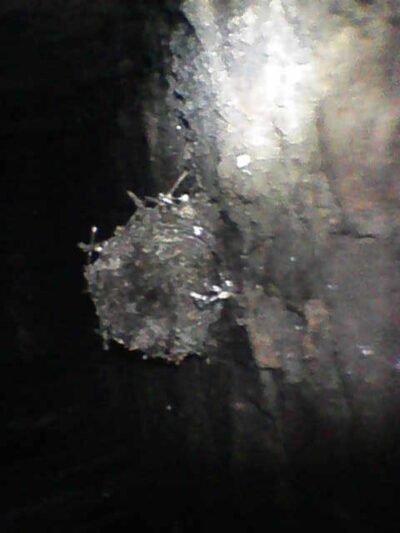
Chimney Swift nest in Otis House chimney. Looking at it from above. Photo by Chad Machinski
Now, Michigan Audubon has had various structures on its Sanctuaries since its first Sanctuary (Bernard Baker) was acquired in the 1940s. Larry Walkinshaw reported a Chimney Swift nest in a building at the Baker Sanctuary in the 40s (since razed), but since then, I am not aware of any record of Chimney Swifts nesting on Michigan Audubon property. Having a nest at such an accessible location is fantastic. So what’s next? Great question. The chimney at Otis is likely in need of some amount of repair to keep it upright and somewhat weatherproofed, but it will need an inspection first, something that will likely come in 2026. We are also considering the possibility of placing a camera inside the chimney to act as a nest cam for 2026. Stay tuned for the updates on both the chimney repair and the camera!
That was the tale of one of the chimneys, now for the other…
Similarly to the previous story, this one begins in spring 2025. Director of Research, Max Henschell was discussing Autonomous Recording Units (ARU) with myself and Manager of Education and School Programs, Lindsay Cain. As we were talking, a thought came about regarding how ARUs might be used for Chimney Swifts. Well, as mentioned in the tale above, confirming the presence of nesting Chimney Swifts takes up to an hour and is a pretty tedious task that many people are not up for, unless of course you have access to the top of the chimney and a long endoscopic camera. In addition, there may be dozens of chimneys in a city that could be checked for Swifts. What if we placed an ARU in the bottom of a chimney? Would it pick up calls/communications from Chimney Swifts as they are making day time entries into chimneys, thus taking out the need for a person to visually confirm Swifts entering/exiting? Max dove into this, looking into ARUs we could get, existing sound recordings of Chimney Swifts, and AI software that could sift through hours of recordings to pick out Swift calls. We decided to move forward with this and began reaching out to a few property owners that had Chimney Swifts, primarily large commercial properties. This was a team effort with Max, Lindsay, and myself all reaching out to the owners. Unfortunately, we began to run into an issue: large chimneys that were no longer in use had their bottom access points sealed shut. But, one property owner came through: Smith Floral & Greenhouses. Maher Mahmoud, owner of Smith Floral, believed we would be able to access the chimney. After an onsite meeting with Maher (who loves having Chimney Swifts in his chimney), he showed Max and I into the old boiler room connected to the chimney. At first, it seemed that there was no access, but the historical point of entry for the exhaust of the boiler into the chimney had only been sealed off with plywood. The most significant issue was that this point was about 15ft off the ground.
Max and I hatched a plan to cut a square opening into the plywood, big enough to stick a head through, and turn that into a door with a latch. The ARU would then be placed on a small platform next to the wall that would be left on for up to two weeks at a time and then collected to have data pulled from it. In early June we made it happen, with Max doing much of the work from the ladder. We really weren’t sure what was behind the plywood and while half of the hole ended up being covered with brick, it was still big enough to stick your head in and enough to place the ARU. Being able to look inside the chimney was a dream come true. For the past two years I have been watching hundreds of Swifts enter the chimney at dusk to roost for the night, and now we were getting a look at the inside. The chimney was much brighter inside than I anticipated, but the best part was being able to see old Swift nests still stuck to the sides of the wall. How long had some of these nests been there?
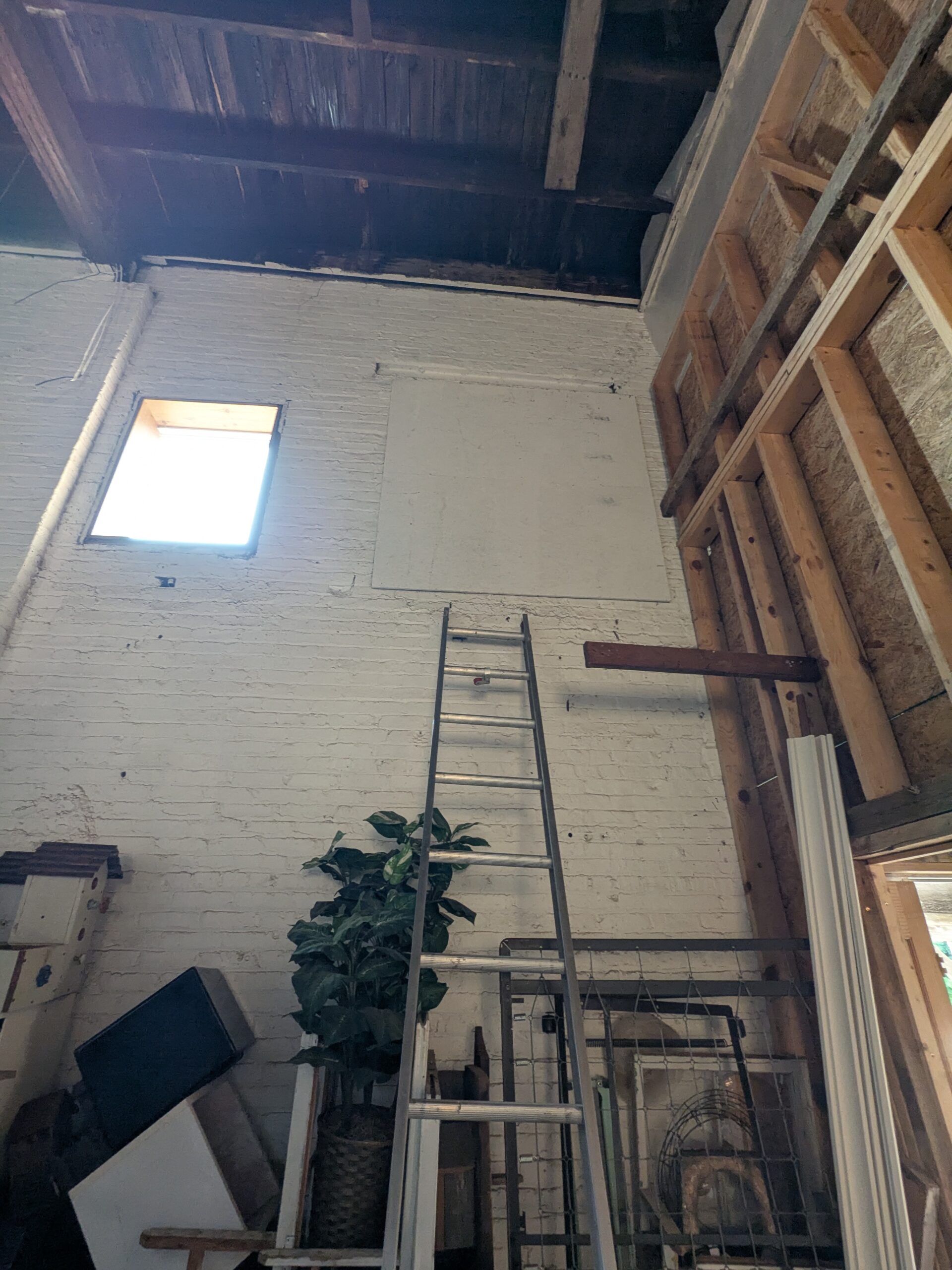
Access to Smith Floral chimney. A small entry door will be cut into the panels where the ladder is leading up to. Photo by Chad Machinski
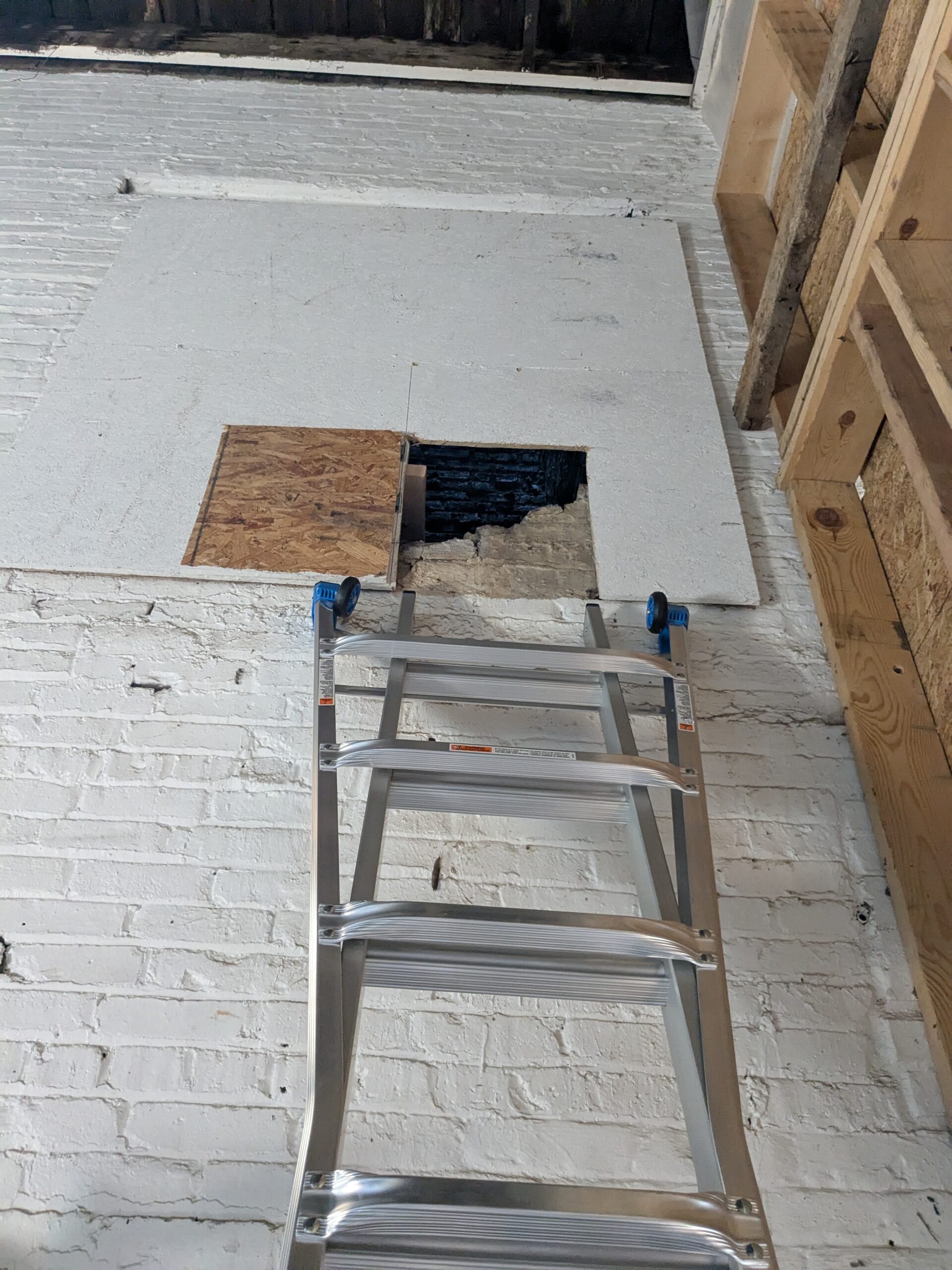
Photo of entry way cut by Max. Juuuust enough space! Photo by Chad Machinski
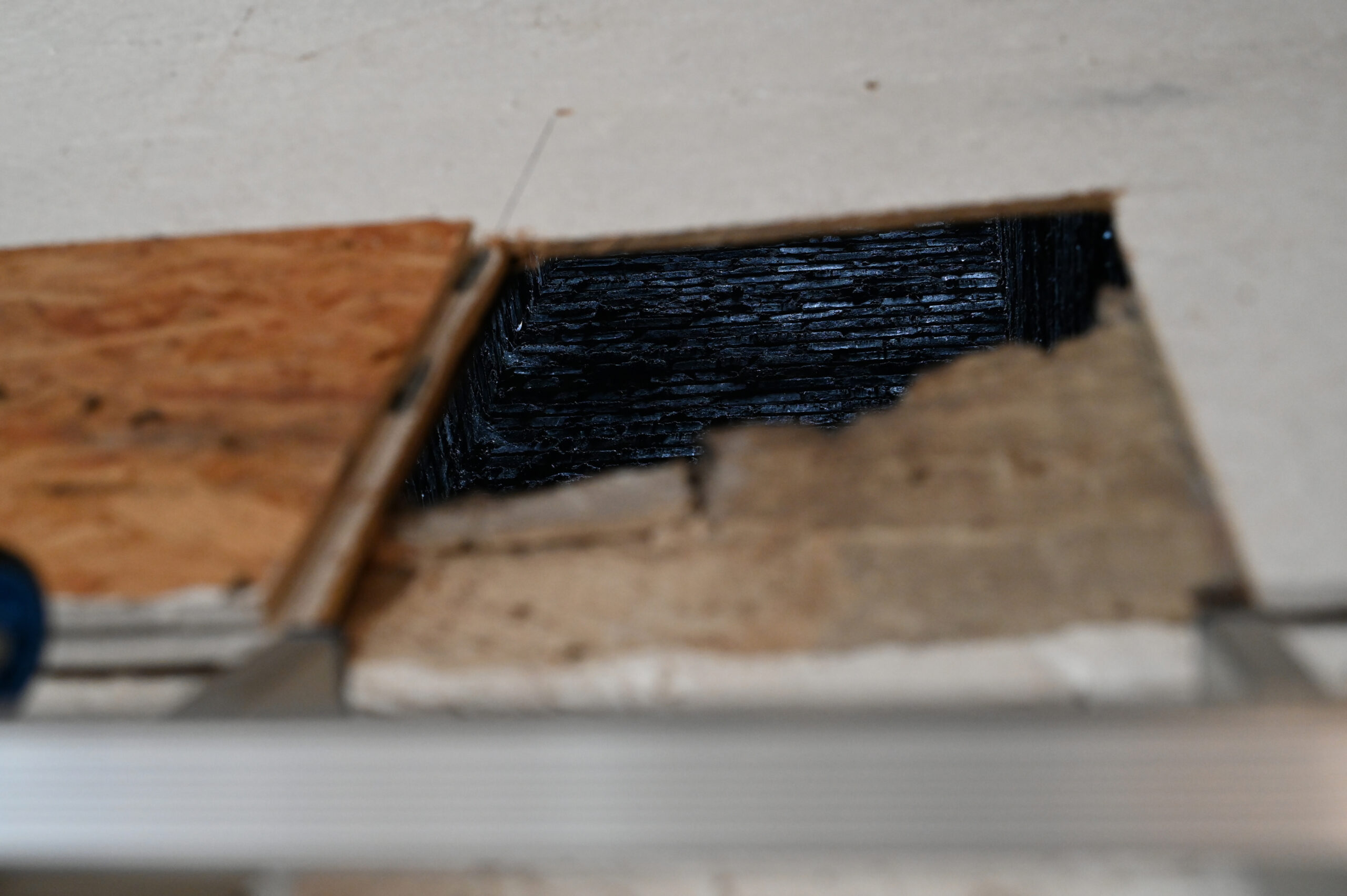
A peek inside the chimney! Photo by Max Henschell
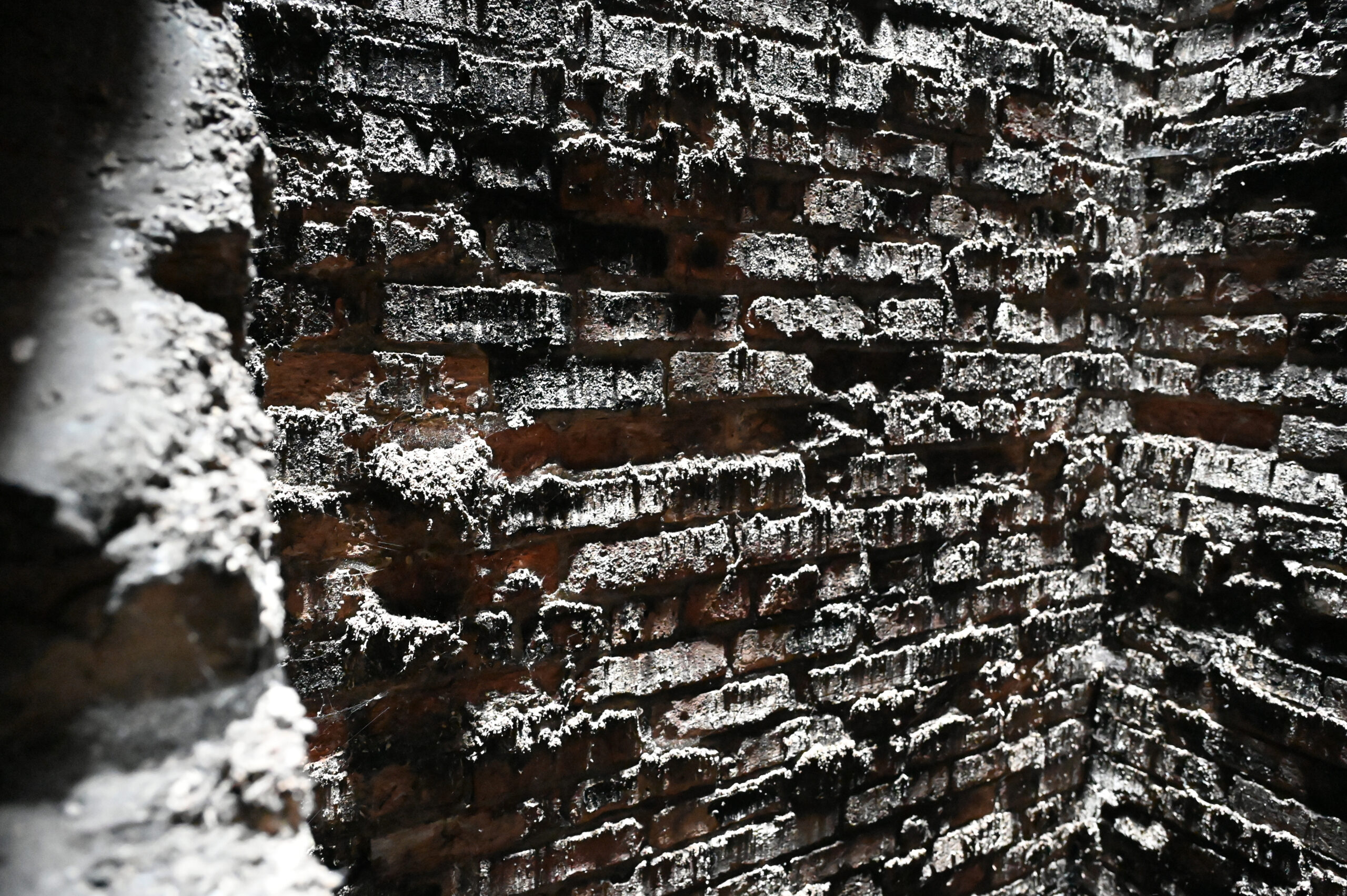
A look inside the chimney. Old nests can be seen on the left side of the photo. Photo by Max Henschell
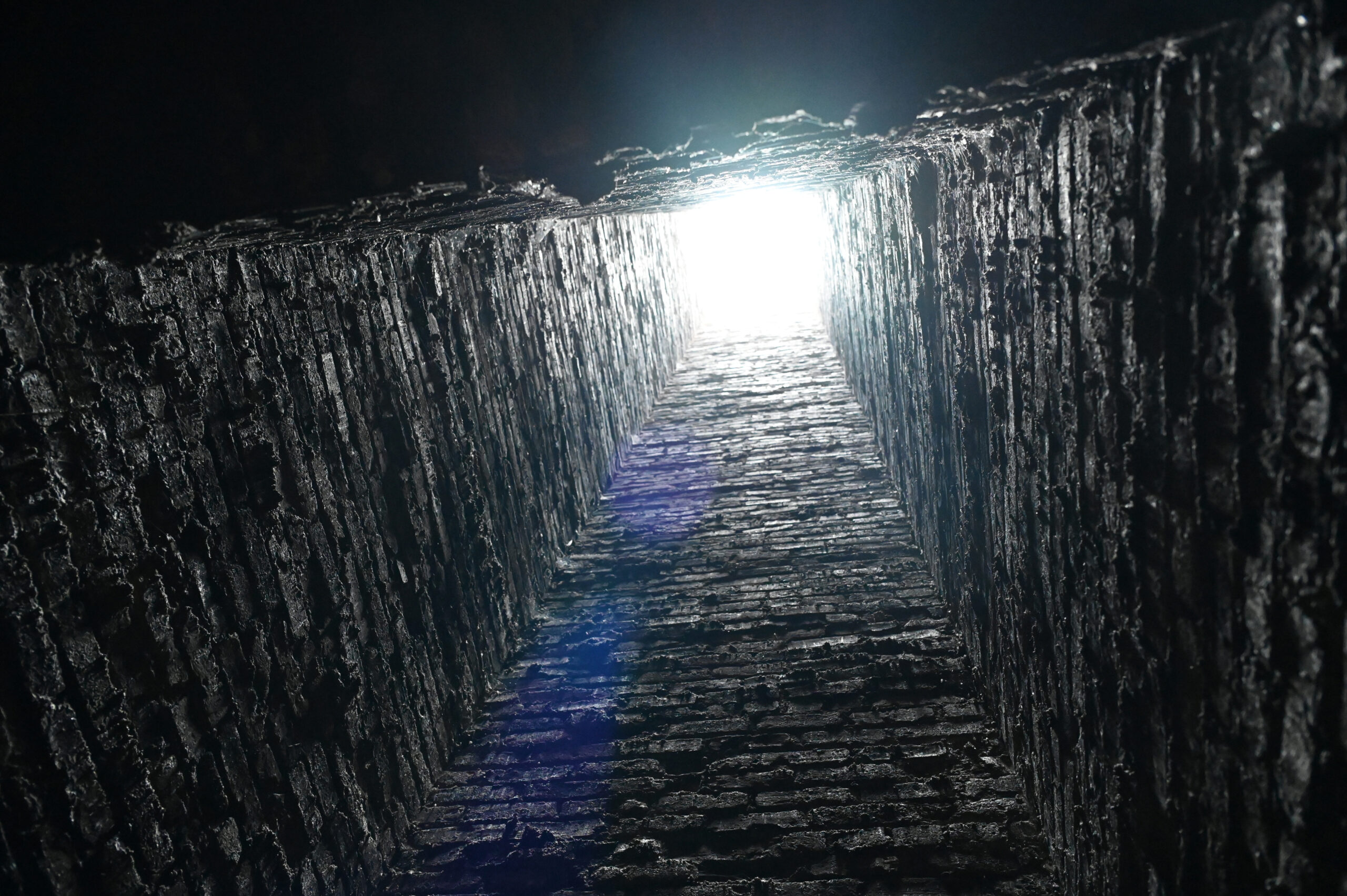
Looking towards the top of the Smith Floral chimney. Photo by Max Henschell
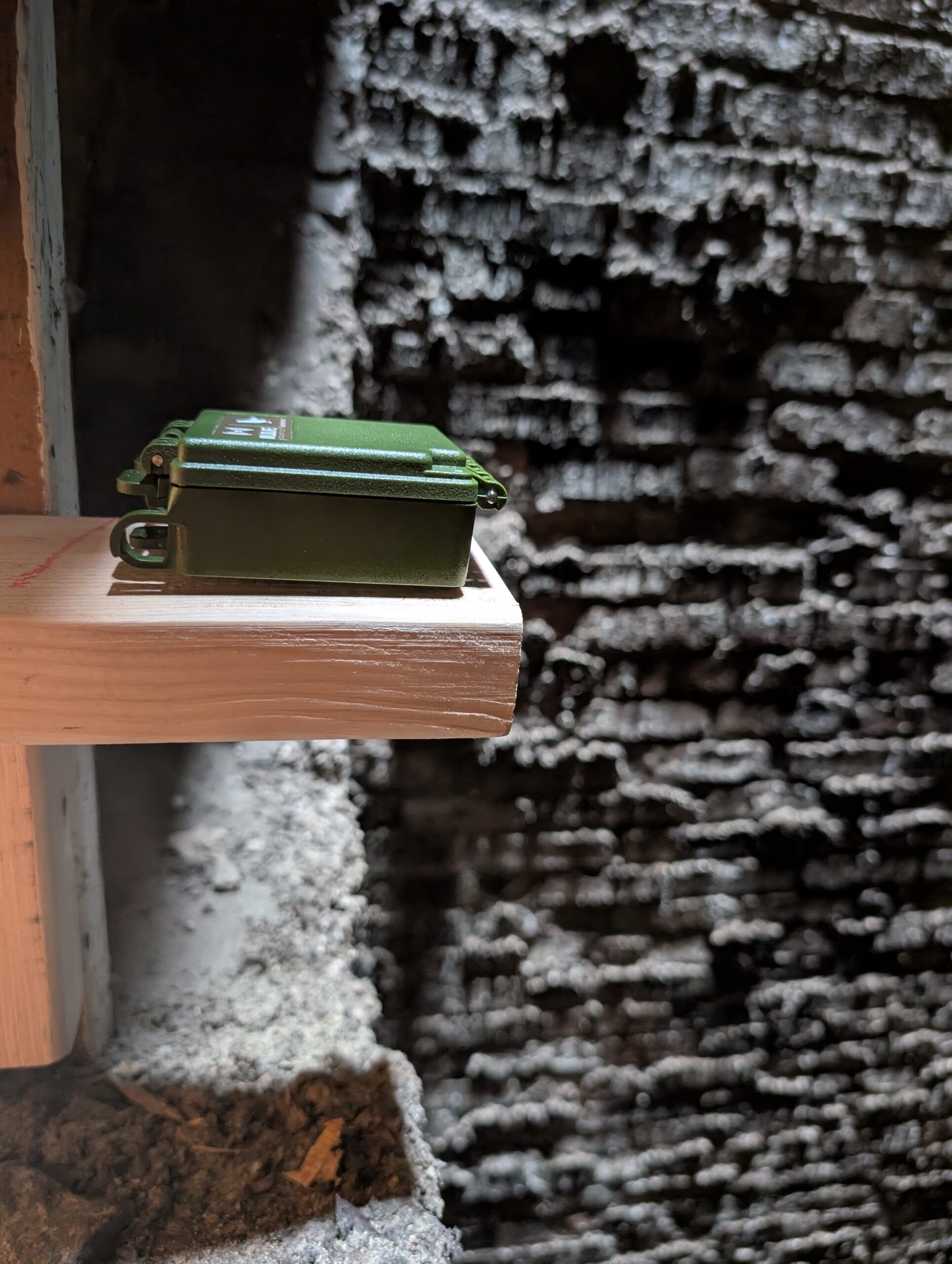
The ARU on and in position at Smith Floral chimney. Photo by Chad Machinski
There the ARU sat for several weeks at time, picking up the secrets of the chimney. Max would process the recordings in time and it became evident that we were picking up daytime entries of Chimney Swifts! Not only that, but we also set the recording to record an hour before sunrise and an hour after sunset. This enabled us catch sounds associated with roosting behavior and showed that not only was the chimney being used for nesting by a pair of Swifts, but it was still being used for roosting by an unknown amount of Swifts. This is evident by a significant build up of Swift calls inside the chimney at sunrise followed by a rapid tapering off of calls, then the reverse around sunset as Swifts came back for the night. Overall, we ended up with 600 hours of sound recordings.
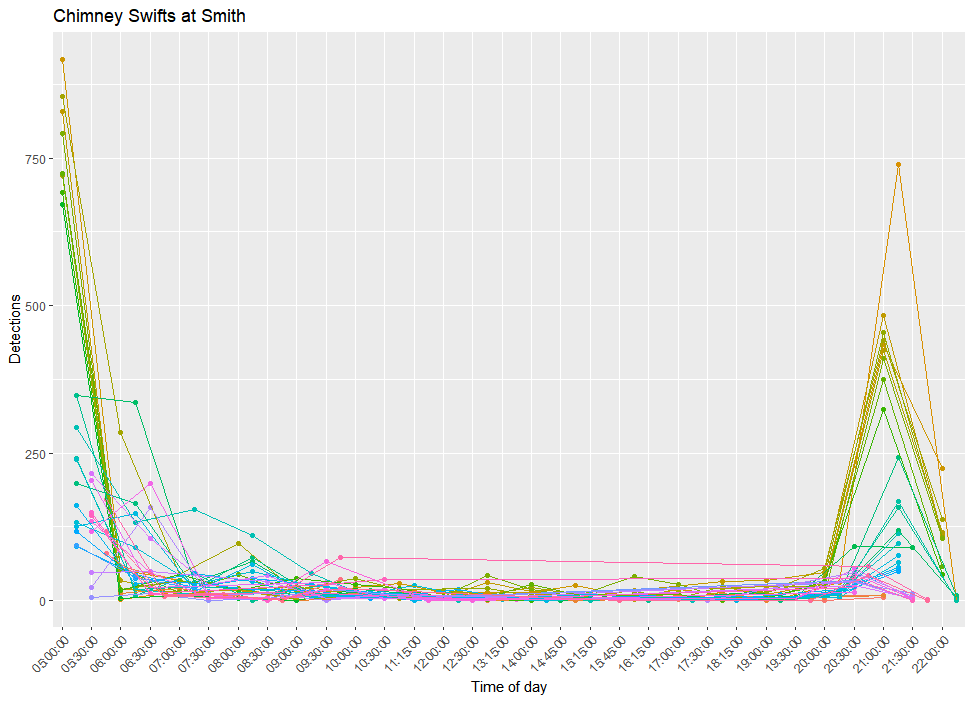
This graph depicts detections of Chimney Swift calls/sounds through the period of 5am-10:30pm. Each line represents a day. We can see high numbers of detections in the morning (as Swifts are about to exit the chimney) and again at dusk (as Swifts are coming back in to roost). While the number of detections between those periods is low, there are detections. This means that Swifts were entering the chimney during the day which is indicative of nesting behavior. Graph made by Max Henschell
These two tales are evidence of great things happening at Michigan Audubon with our work on Chimney Swifts. We are excited to keep this work going into 2026. But Swift season is not over yet! Michigan Audubon held a Swift Night Out at Smith Floral on September 8th which had a tremendous showing of people and a solid count of 168 Chimney Swifts. Swifts will continue to be in Michigan through September. I will be continuing to monitor the roost nearest my home in Lansing through September as often as possible so that this year’s numbers can be compared with 2024. Whether there are 2000 Swifts or 0 Swifts, all data provides insights, so please go check out some chimneys near you for roosting activity and report them!
To learn more about Michigan Audubon sanctuaries, visit michiganaudubon.org/conservation/bird-sanctuaries. If you want to volunteer at a Michigan Audubon sanctuary, please complete the Sanctuary Volunteer Interest Form.

Chad Machinski, MS
Conservation Manager
While Chad’s first love is botany, he doesn’t deny the intertwining nature of birds, plants, insects, and all other organisms we share the world with. His passion for the natural world began in his undergraduate time at the University of Michigan, taking several different forms along the way. His graduate studies at the University of Michigan allowed him to more closely examine the natural communities of Michigan and further understand the complex nature of ecosystems. His work as a Nichols Arboretum Caretaker while in school further enabled him to be directly involved in conservation work as he led workdays removing invasive plant species, performed trail maintenance, and guided tours. Chad can usually be found out in a park in a few ways: binoculars glued to his face, hunched over looking at plants, or flipping logs looking for snakes and salamanders.