


Conservation Manager Chad Machinski, M.S., manages the stewardship of MA’s sanctuaries and engaging with our dedicated volunteers ever since. To help you stay connected with the work being done, he will be presenting regular online updates about activities going on at them: birds seen or heard, conservation work, improvements, interesting plants, and more.
Burning Baker
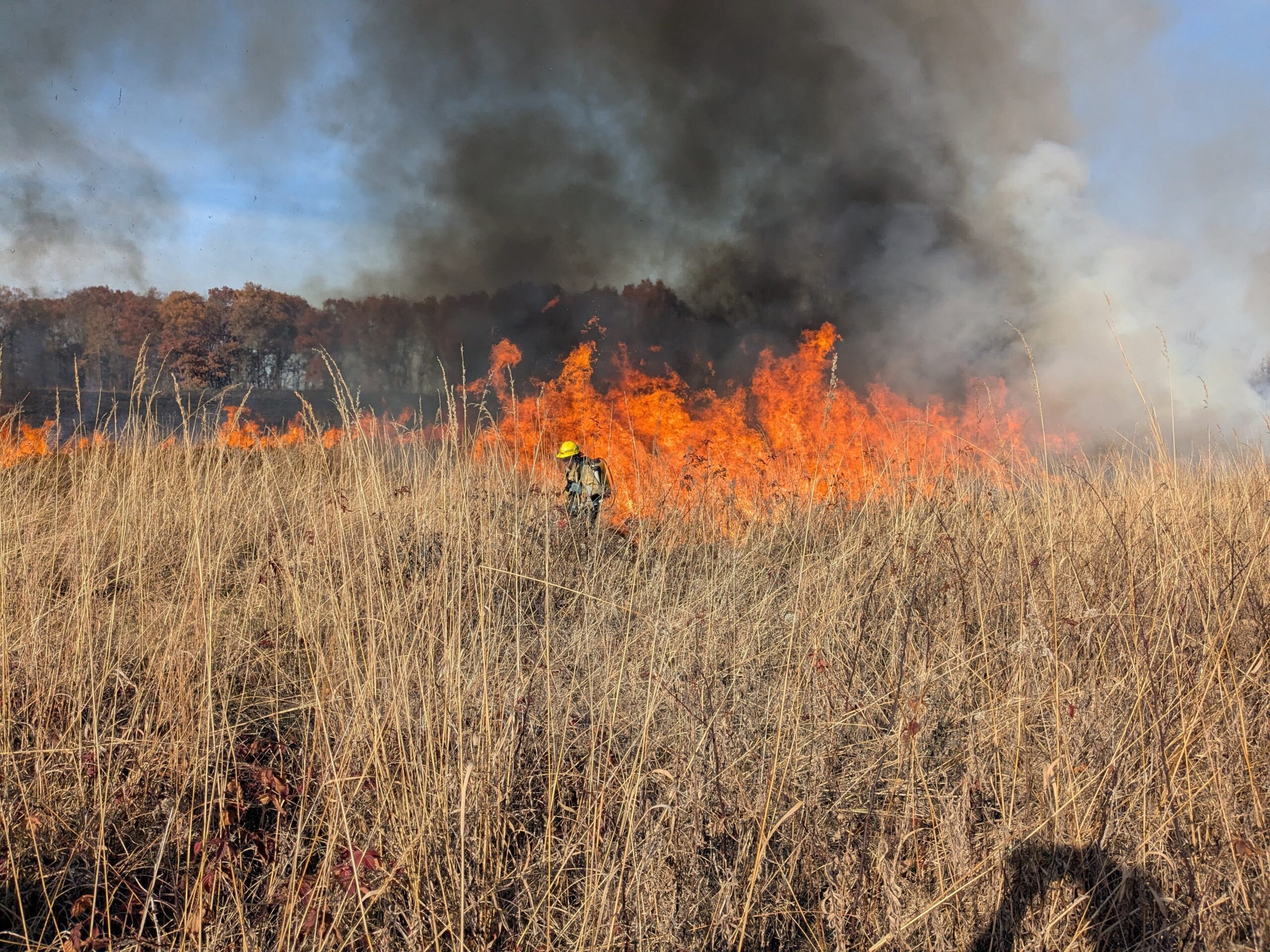
This month’s blog will be short, sweet, and HOT as we look at a prescribed burn completed at the Bernard Baker Bird Sanctuary just last week.
This fall burn season has been the briefest season we’ve had in terms of number of burns, with just a single one scheduled for the Bernard Baker Bird Sanctuary in Bellevue, MI. Conditions were just right on Friday, November 14th for the burning of the roughly 9.5 acre grassland. As you know by now, prescribed burns are a management tool to knock back woody plants encroaching upon a grassland, but they also increase plant diversity and cycle nutrients. The unit burned was the northern grassland of what is known as the Meadows and Marshlands Trails and is almost fully encapsulated by the Walkinshaw Trail, named in honor of the late Dr. Larry Walkinshaw, who dedicated his life to the study of Sandhill Cranes.
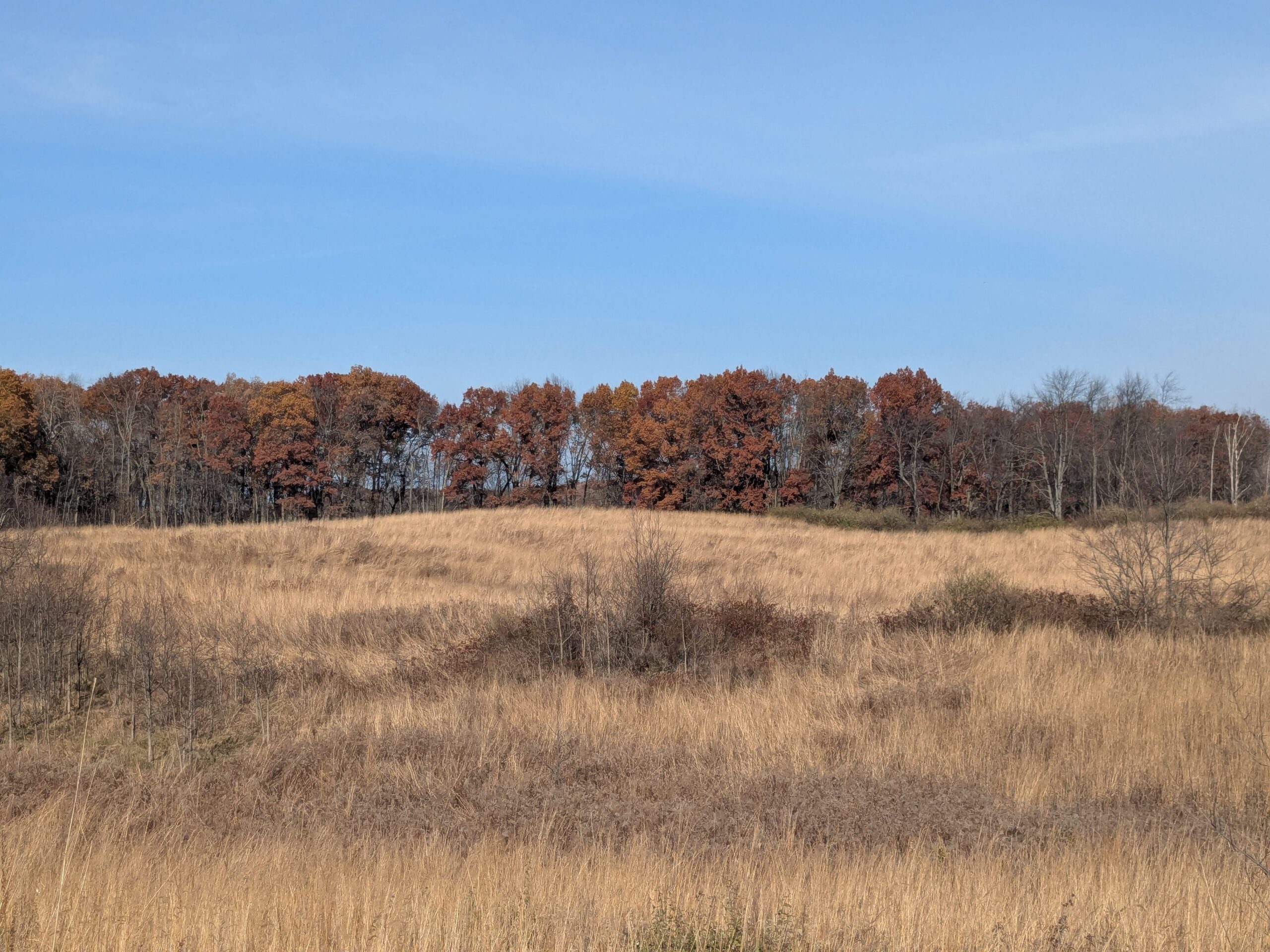
For those of you who pay close attention to my blog over the past three years or who frequent the Baker Sanctuary, you’ll recognize that part of this unit was burned in 2023. This unit is one of the “cleanest” areas of the Sanctuary, meaning there aren’t many woody invasive in it, which is why it was burned. While fire is used as a management tool to keep woody plants at bay, this really only works well if the woody plants are relatively young, small, and do not cover a large area and create a shaded, damp microclimate. So despite it being one of the grasslands with the least amount of woody plants in it, I have still spent many hours in there tackling them. There were clumps of Autumn Olive that were roughly five years old, and at this age, they are large enough to withstand a prescribed fire, and while there are some areas where they still exist along the perimeter of the unit, all of the Autumn Olive in the main section of the unit has been eliminated.
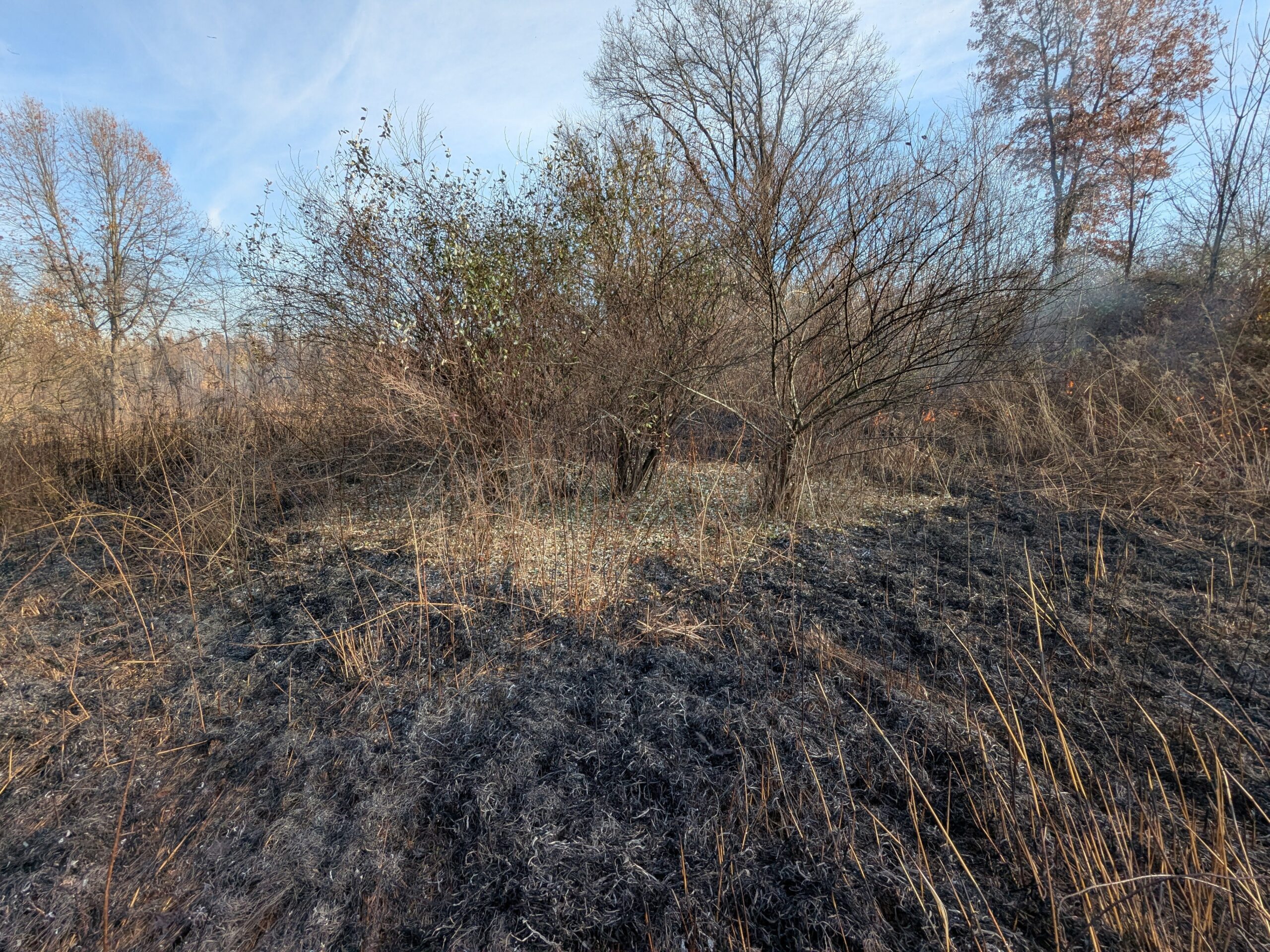
A clump of Autumn Olive shrubs in the burn unit post burn. Notice the leaves under the shrubs are not burnt; the freshly fallen leaves do not burn well and prevent fires from reaching the main stems of the shrubs. Photo by Chad Machinski
Autumn Olive has not been the only woody plant invading this grassland, the native Black Walnut is also creeping in along the entire length of the west side of this unit. However, efforts to control them using the herbicide via the “hack & squirt” method seem to be knocking them back. Combined with the prescribed burn, these saplings should be reduced to micro-snags along the edge by next growing season.
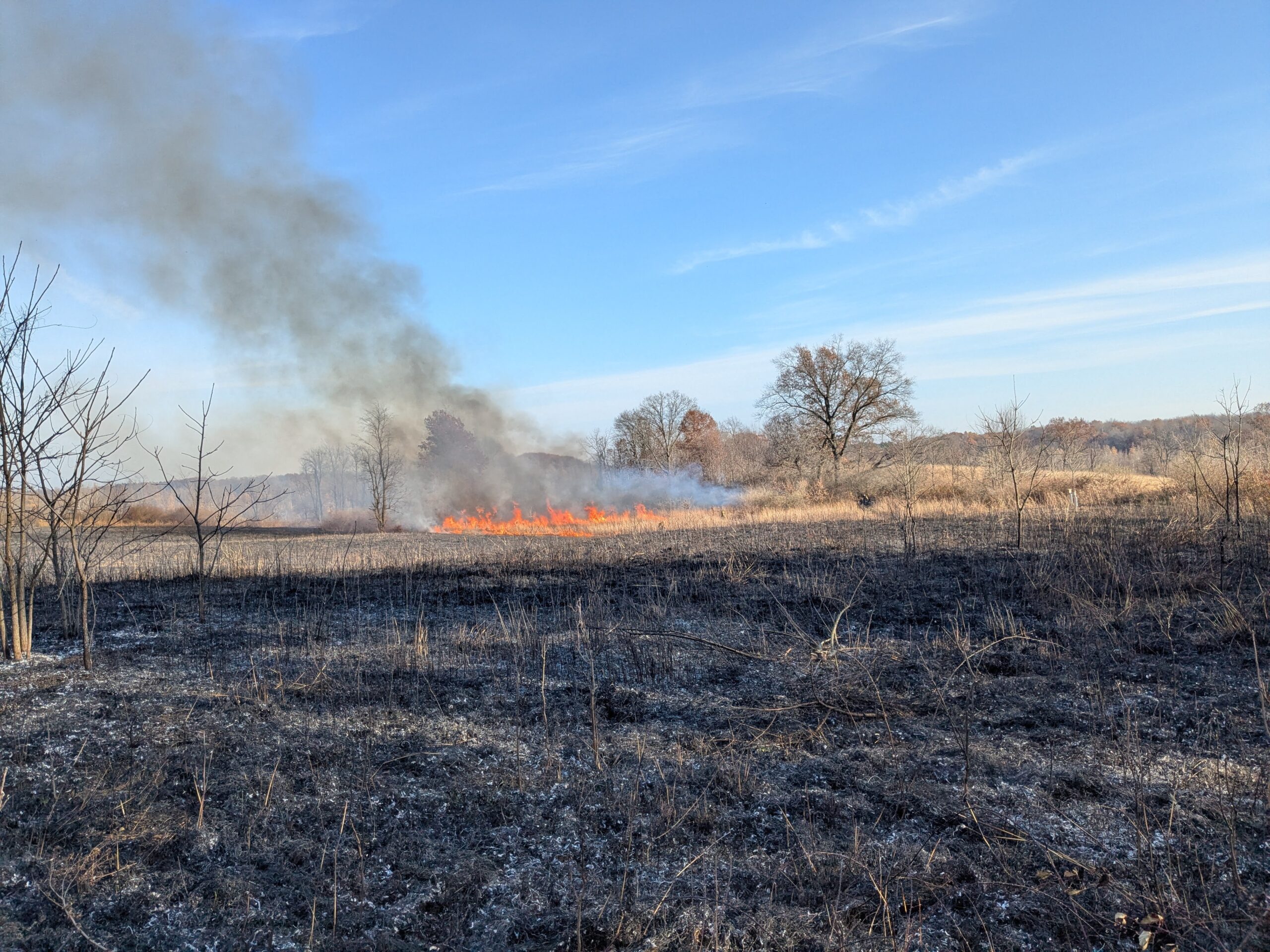
View of burn from the west side of the unit. Saplings in foreground and sides of image are Black Walnut. Photo by Chad Machinski
Now that the burn is done, some Autumn Olive is more accessible and will be cut down yet this winter and we will be inputting some native seed mix as well. I look forward to seeing the regrowth next spring of Big Bluestem, White False Indigo (a non-natural occurrence, but a state Threatened plant), Pasture Thistle, Wild-bergamot, and more. I also look forward to the Bluebirds and Tree Swallows using the nest boxes, the possibility of Sedge Wrens, Song-sparrows, and others. I encourage everyone to swing by take a look at it now, and come back this spring and summer to see what fire can do to a space.
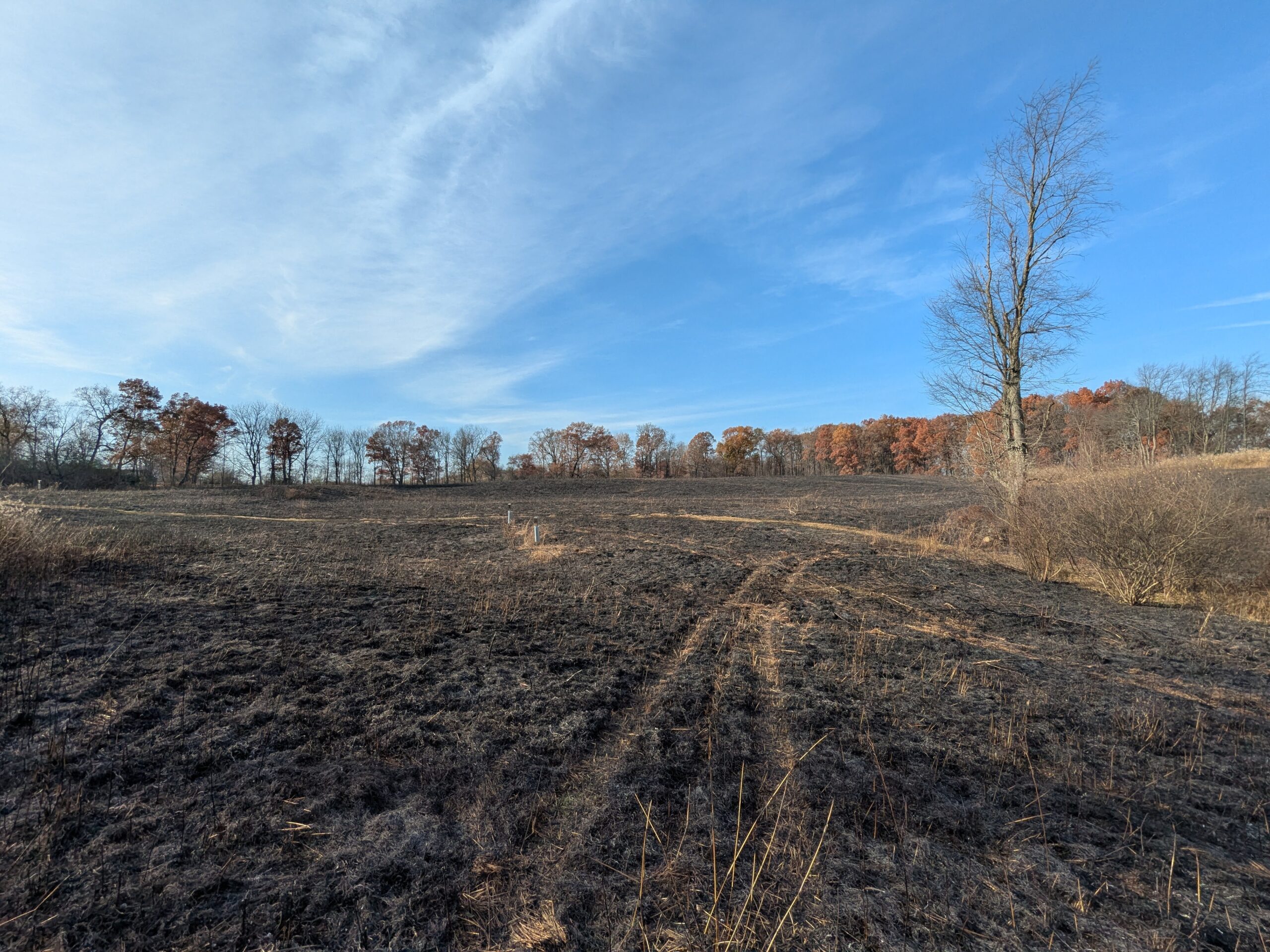
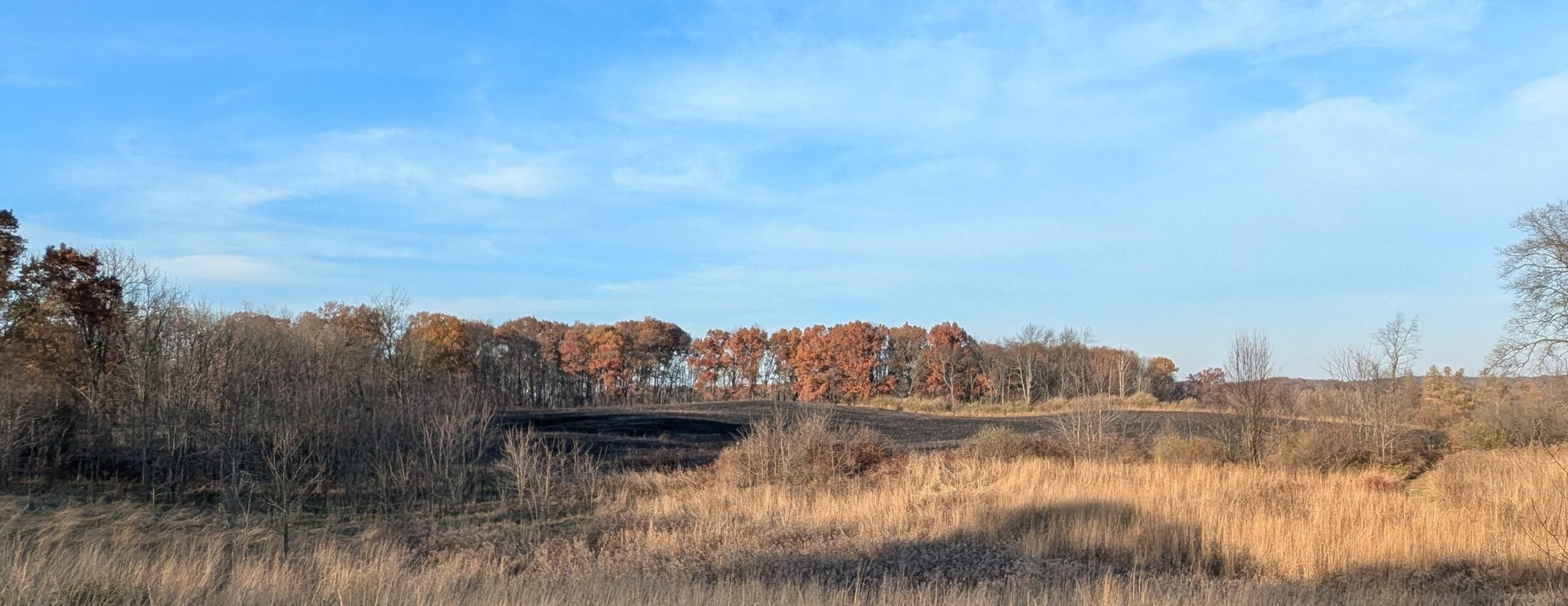
View of the unit looking north after the burn. Photo by Chad Machinski
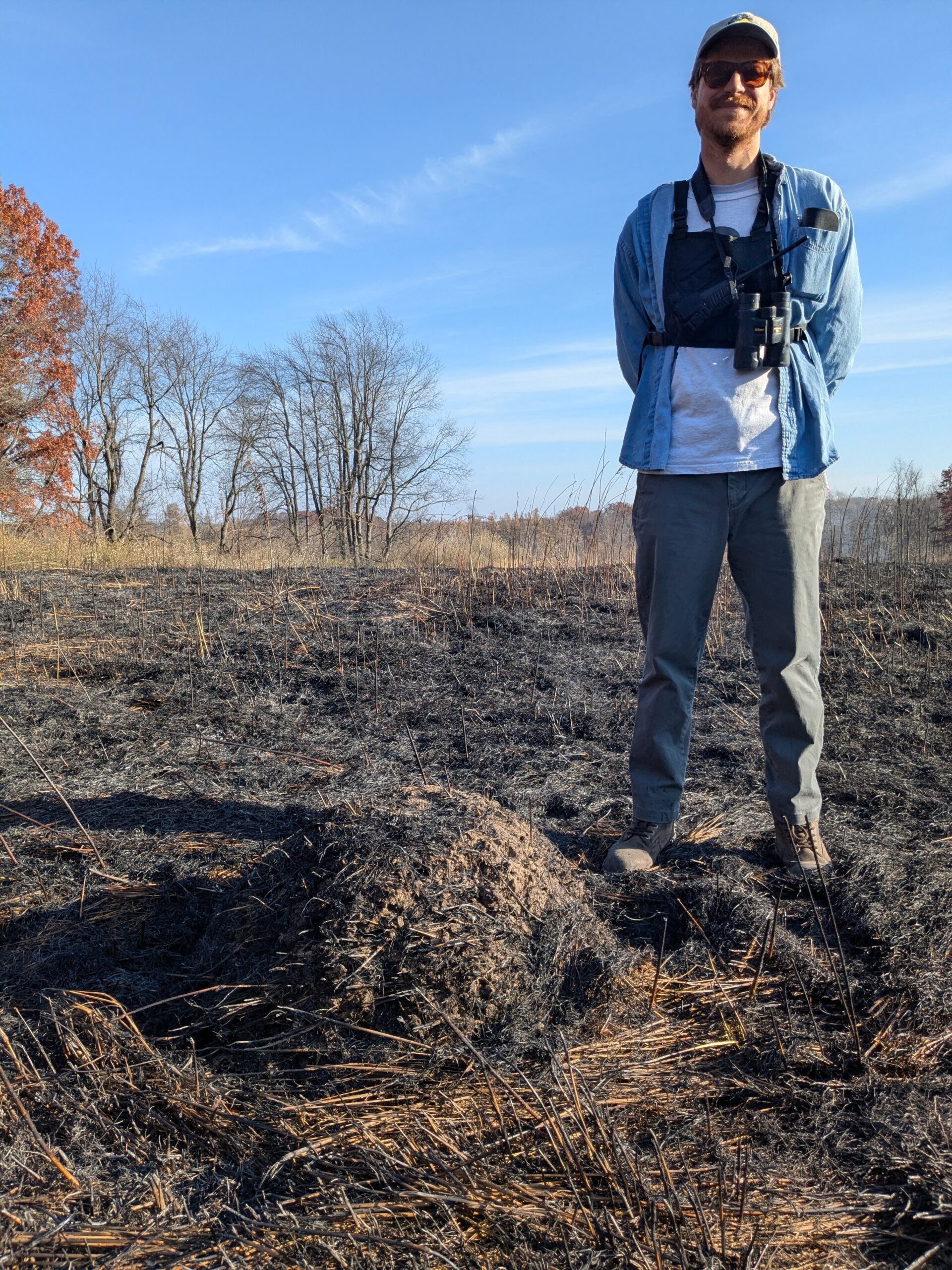
One of my favorite activities after a burn is walking through the unit to look for ant mounds and of course pose with them. Photo by Steve Jerant
To learn more about Michigan Audubon sanctuaries, visit michiganaudubon.org/conservation/bird-sanctuaries. If you want to volunteer at a Michigan Audubon sanctuary, please complete the Sanctuary Volunteer Interest Form.
Chad Machinski, MS
Conservation Manager
While Chad’s first love is botany, he doesn’t deny the intertwining nature of birds, plants, insects, and all other organisms we share the world with. His passion for the natural world began in his undergraduate time at the University of Michigan, taking several different forms along the way. His graduate studies at the University of Michigan allowed him to more closely examine the natural communities of Michigan and further understand the complex nature of ecosystems. His work as a Nichols Arboretum Caretaker while in school further enabled him to be directly involved in conservation work as he led workdays removing invasive plant species, performed trail maintenance, and guided tours. Chad can usually be found out in a park in a few ways: binoculars glued to his face, hunched over looking at plants, or flipping logs looking for snakes and salamanders.