


Conservation Manager Chad Machinski, M.S., manages the stewardship of MA’s sanctuaries and engages with our dedicated volunteers. To help you stay connected with the work being done, he will be presenting regular online updates about activities going on at them: birds seen or heard, conservation work, improvements, interesting plants, and more.
We are in the middle of summer, which means my job consists primarily of me pretending like I have some control over the vegetation of our Sanctuaries. This constant battle takes just a couple forms. The one that impacts our visitors the most is trail trimming. I do my best to try and keep the branches out of your way while you are walking down our paths, but often times I get behind!
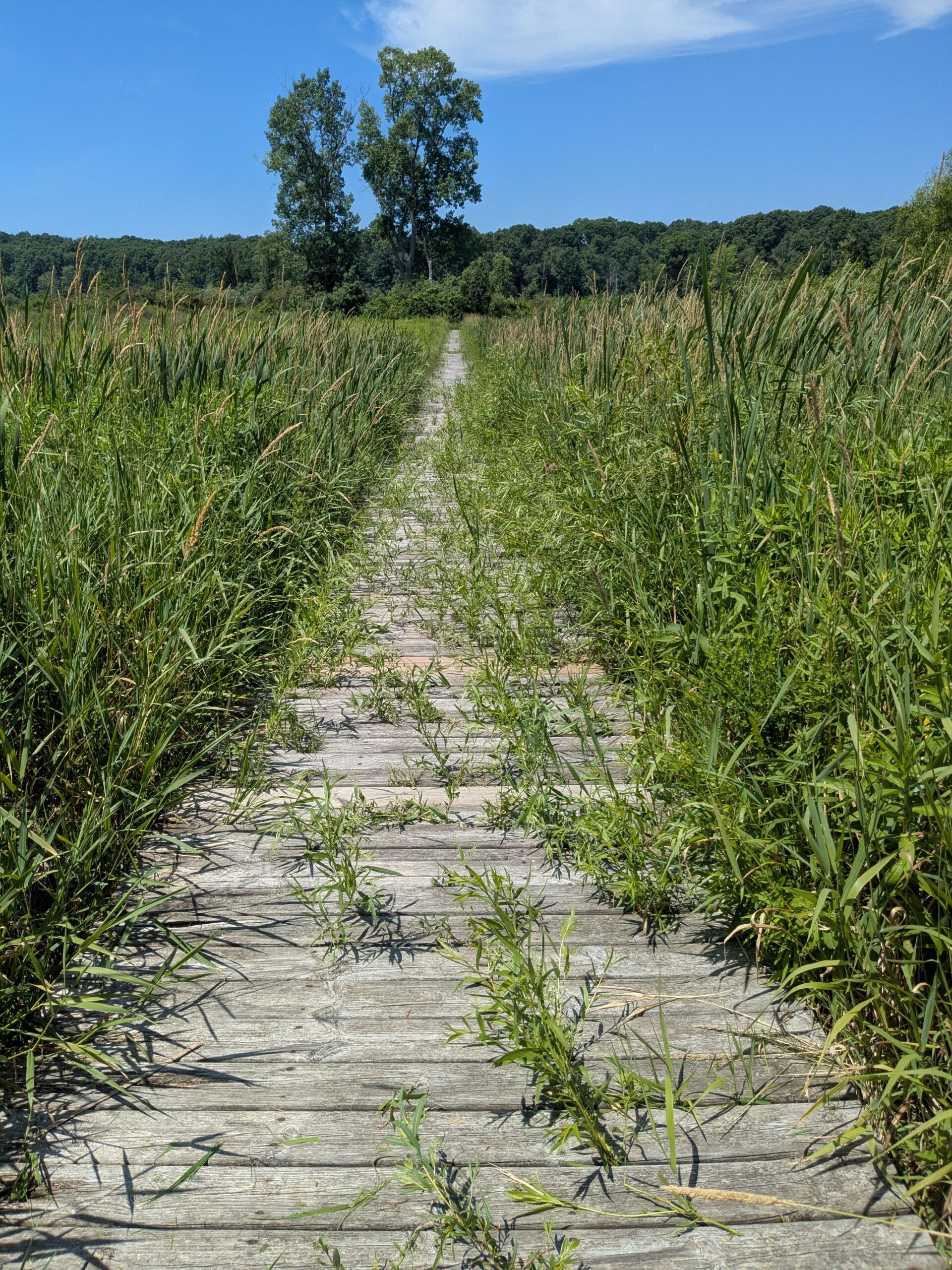
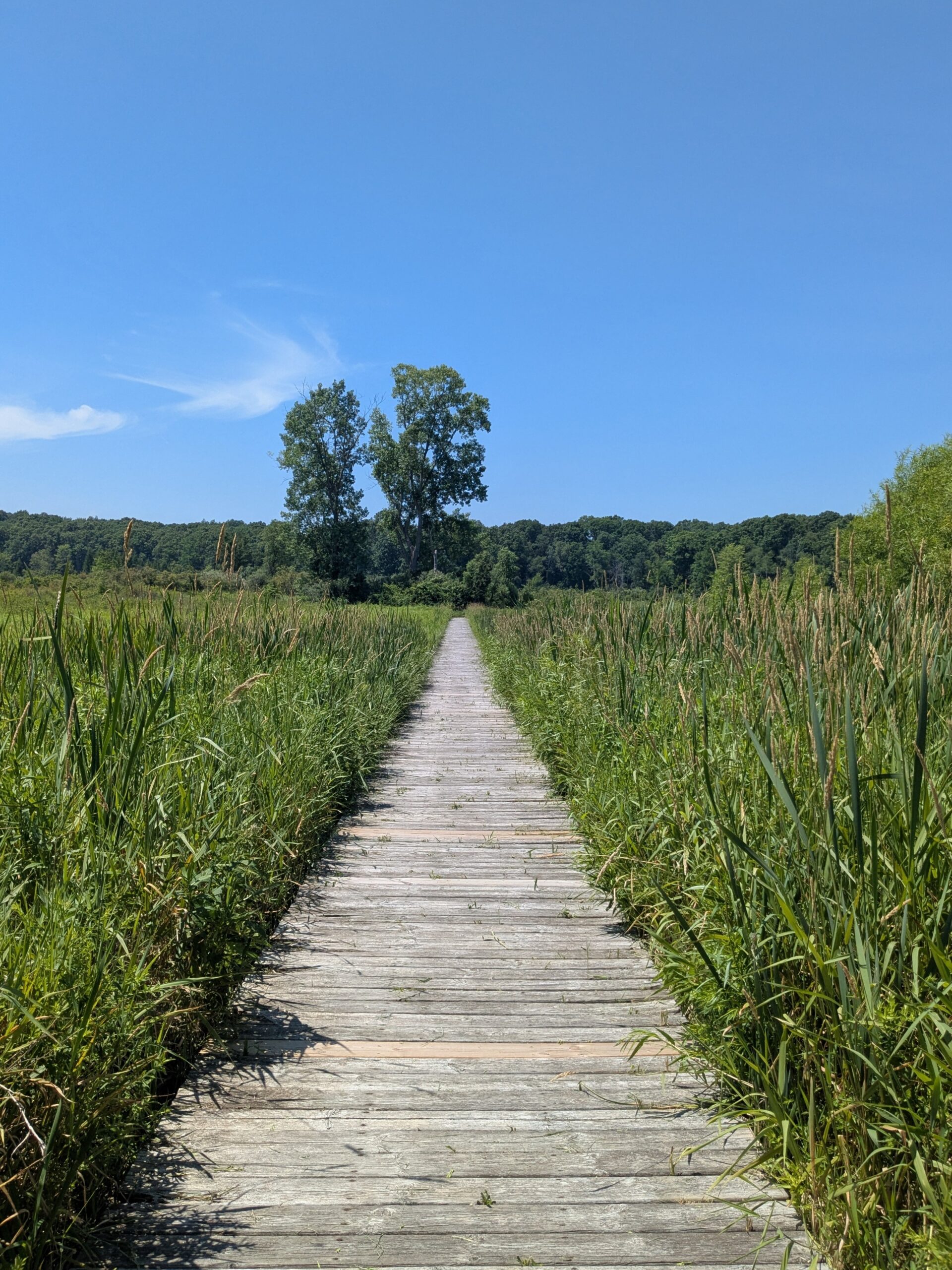
With some Sanctuaries, such as Martha Mott Bird Sanctuary, the trail trimming is relatively simple. The trails there are single track and in the “big meadow” trimming it can be accomplished with just a weed whip and a couple of passes each way. Similarly, the boardwalk at the Otis Farm Bird Sanctuary is in need of a monthly trim (twice a month would be perfect!). Again, this is relatively simple, but it is time consuming to trim things growing through the boardwalk, to knock back vegetation that falls into the boardwalk, and then to clear the boardwalk of the cut vegetation. I try my best to spare some of the stars of the wetland there such as Swamp Milkweed, Joe Pye Weed, and Smooth Swamp Aster. I swear by the time I’m walking back down the boardwalk, things have started growing back through (and don’t get me started on the boards that need to be replaced!).
At other Sanctuaries or trail sections, the vegetation is not as generous as above. It seems to me that the meanest of plants seem to grow right next to and into the trail at our Bernard Baker Bird Sanctuary. For three seasons now, I have battled the Autumn Olive, the Multiflora Rose, and the native Black Raspberry that reaches out to grab unsuspecting visitors, tearing at their clothing trying with all their might to get to their flesh. They’re blood thirsty, I tell ya! I’ve had dreams of brambles pulling me into the darkness!
In the case of the Baker Sanctuary, we are making incremental improvements in both getting rid of the invasive shrubs such as Autumn Olive and Multiflora Rose, but also reducing the Black Raspberry near the trail. Specifically, Autumn Olive has more or less been extirpated from the inside of the northern most prairie with most of it left growing on the outside of the trail. Just south of that, what once was a tunnel and wall of Autumn Olive has been knocked back thanks to some herbicide application completed in 2024 and prescribed fire. The southern portion of the Sanctuary still needs significant work, but it needs to be paired with restoration activities that align with the schedule of prescribed fire that we have established there. Until then, these shrubs will just get trimmed back, but their days are certainly numbered.
The other vegetation control is a year round one and that is the control of invasive species for restoration purposes. Whether it is hand pulling herbaceous invasive plants or foliar application of herbicide to invasive plants, summer is the best, and sometimes only, time to do this task. While foliar treatment is not my favorite way to dispatch some of these plants, it is sometimes the only way, or just another tool in the toolbox. A few species that I have been tackling include Teasel (Dipsacus fullonum), Crown Vetch (Securigera varia), Wine Raspberry (Rubus phoenicolasius), and then woody shrubs and vines resprouting from mowing or fire such as Honeysuckle, Autumn Olive, and Asian Bittersweet.
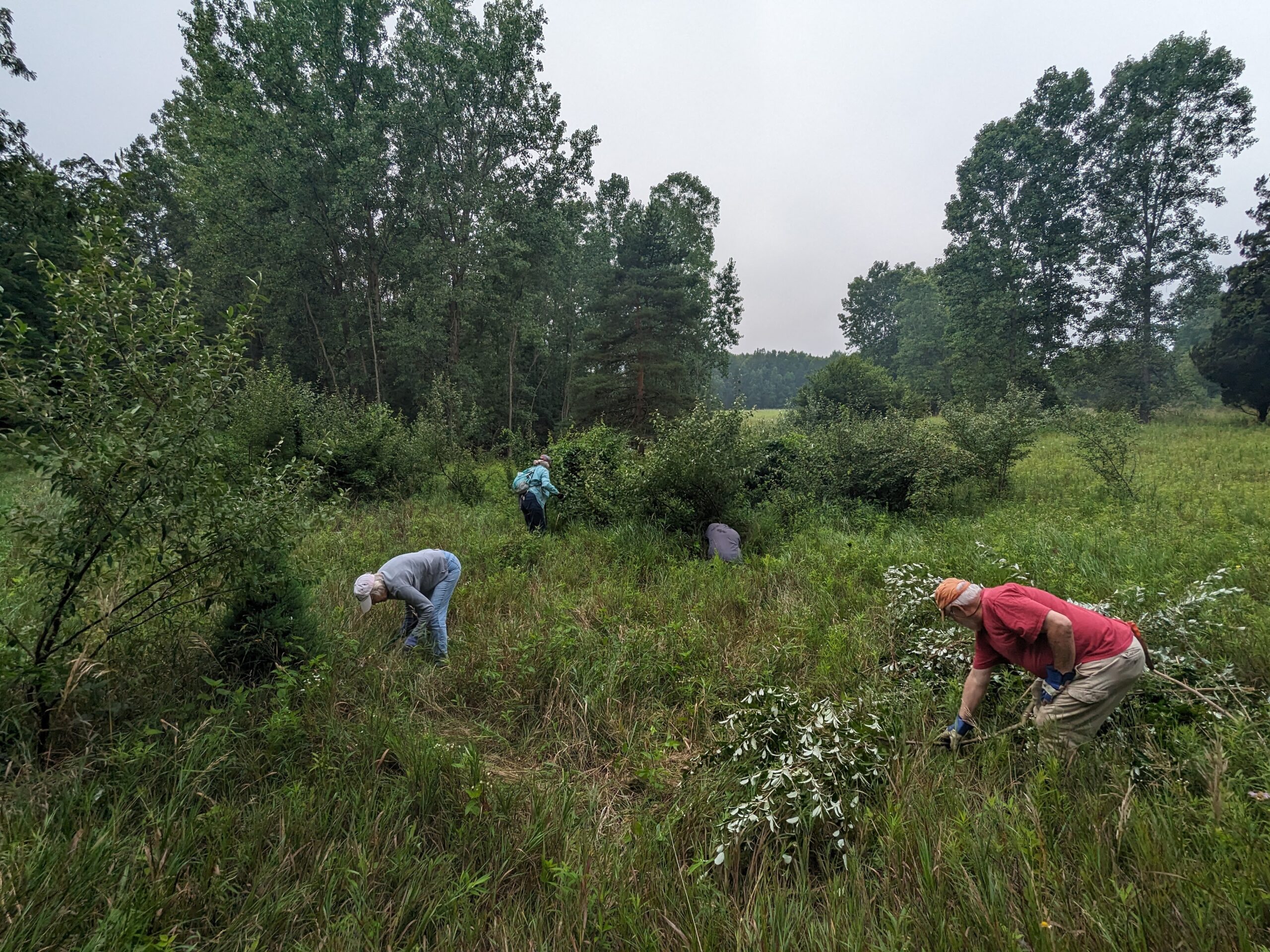
Volunteers at Capital City Bird Sanctuary cutting Autumn Olive. Front to back: Sam Febba, Charlene Avery, Eric Hanson, Charlene Vanacker. Photo by Chad Machinski
Impacting the ability to do all of the above work is of course the weather. Rain, wind, and heat can prevent some of the above work from happening. Wind doesn’t affect trail trimming, and while trimming can still happen in rain or heat, it certainly slows me down. If it’s thunder storming, then certainly there goes that task! All of those things, however, determine whether or not herbicide application can happen. Rain too soon after an application of course renders the application useless. Winds over 10 miles an hour create conditions for drift, resulting in a higher potential for non-target kill or damage. Excessive heat can cause the herbicide to atomize, thus evaporating quicker and/or moving to non-target plants. Weather forecasting sites are probably my most viewed websites! And that’s just the typical weather. As I type this, a blanket of smoke sits over the Great Lakes Region, creating unsafe air quality levels. This has so far resulted in the cancellation of two workdays at two different Sanctuaries, reducing my ability to maintain Sanctuaries for accessibility and for habitat quality. I’m hoping, not just for my sake, but for anyone impacted by the current fires in Minnesota and Canada, that a respite from the fires and smoke is coming.
Until then, stay safe from the air quality and the heat!
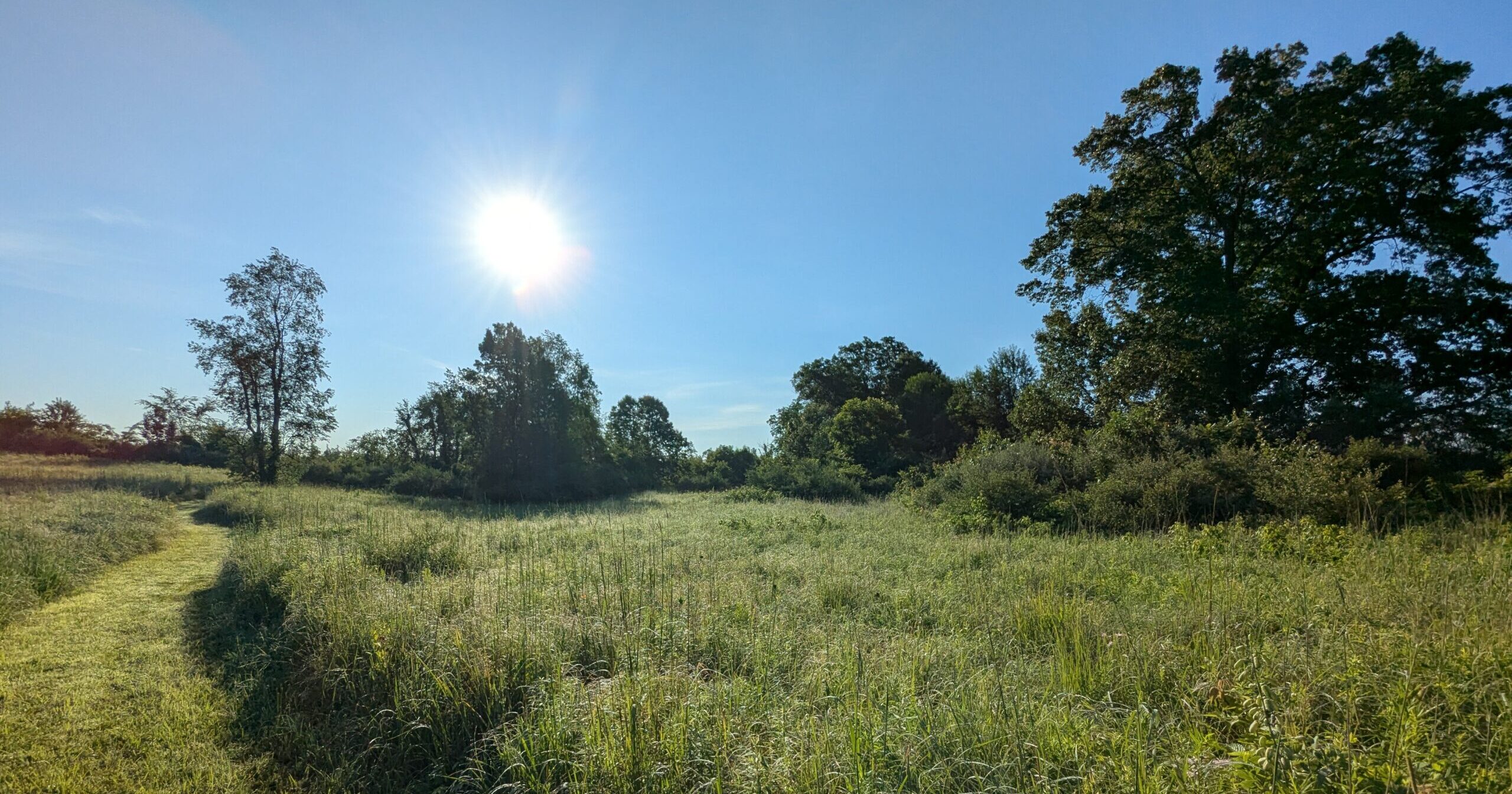
Featured Photo: Bernard Baker Bird Sanctuary. Photo by Chad Machinski
To learn more about Michigan Audubon sanctuaries, visit michiganaudubon.org/conservation/bird-sanctuaries. If you want to volunteer at a Michigan Audubon sanctuary, please complete the Sanctuary Volunteer Interest Form.
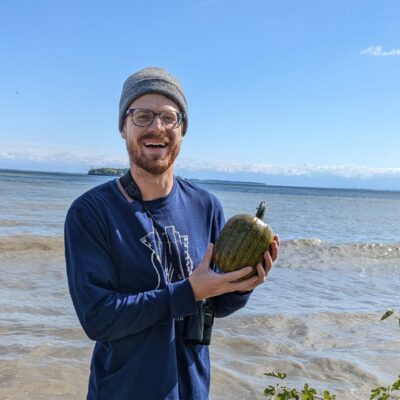
Chad Machinski, MS
Conservation Manager
While Chad’s first love is botany, he doesn’t deny the intertwining nature of birds, plants, insects, and all other organisms we share the world with. His passion for the natural world began in his undergraduate time at the University of Michigan, taking several different forms along the way. His graduate studies at the University of Michigan allowed him to more closely examine the natural communities of Michigan and further understand the complex nature of ecosystems. His work as a Nichols Arboretum Caretaker while in school further enabled him to be directly involved in conservation work as he led workdays removing invasive plant species, performed trail maintenance, and guided tours. Chad can usually be found out in a park in a few ways: binoculars glued to his face, hunched over looking at plants, or flipping logs looking for snakes and salamanders.