


Conservation Manager Chad Machinski, M.S., manages the stewardship of MA’s sanctuaries and engaging with our dedicated volunteers ever since. To help you stay connected with the work being done, he will be presenting regular online updates about activities going on at them: birds seen or heard, conservation work, improvements, interesting plants, and more.
June was my last conservation update and I left everyone on a mild cliffhanger regarding the Purple Martin colonies Michigan Audubon manages on Lake Lansing. I’ll pick up near where I left off.
Purple Martins
Hatching day for the first batch of Purple Martins at the Lake Lansing Boat Launch was on June 24th. I came to the colony that day to check to see if hatching had taken place or if there were any complications. At the time of my visit there were two young Purple Martins, naked and eyes closed next to three eggs that had yet to hatch. I noticed that in the process of hatching, the egg shell of one of the hatched young had become capped onto one of the other eggs. I very delicately was able to pull off the half shell so that this egg had a better chance of hatching. I won’t ever know if removing that half shell helped in any way as two eggs never hatched and I don’t know which one had the extra shell on it.
The second batch of Purple Martins still had an estimated two more days left before hatching day and sure enough by the next check on June 29th, all five eggs had hatched! If you recall from my last conservation blog, the other colony on Lake Lansing had not yet laid eggs, but just a few days after the blog was published, the lone nest there produced three eggs that were due to hatch on July 4th.
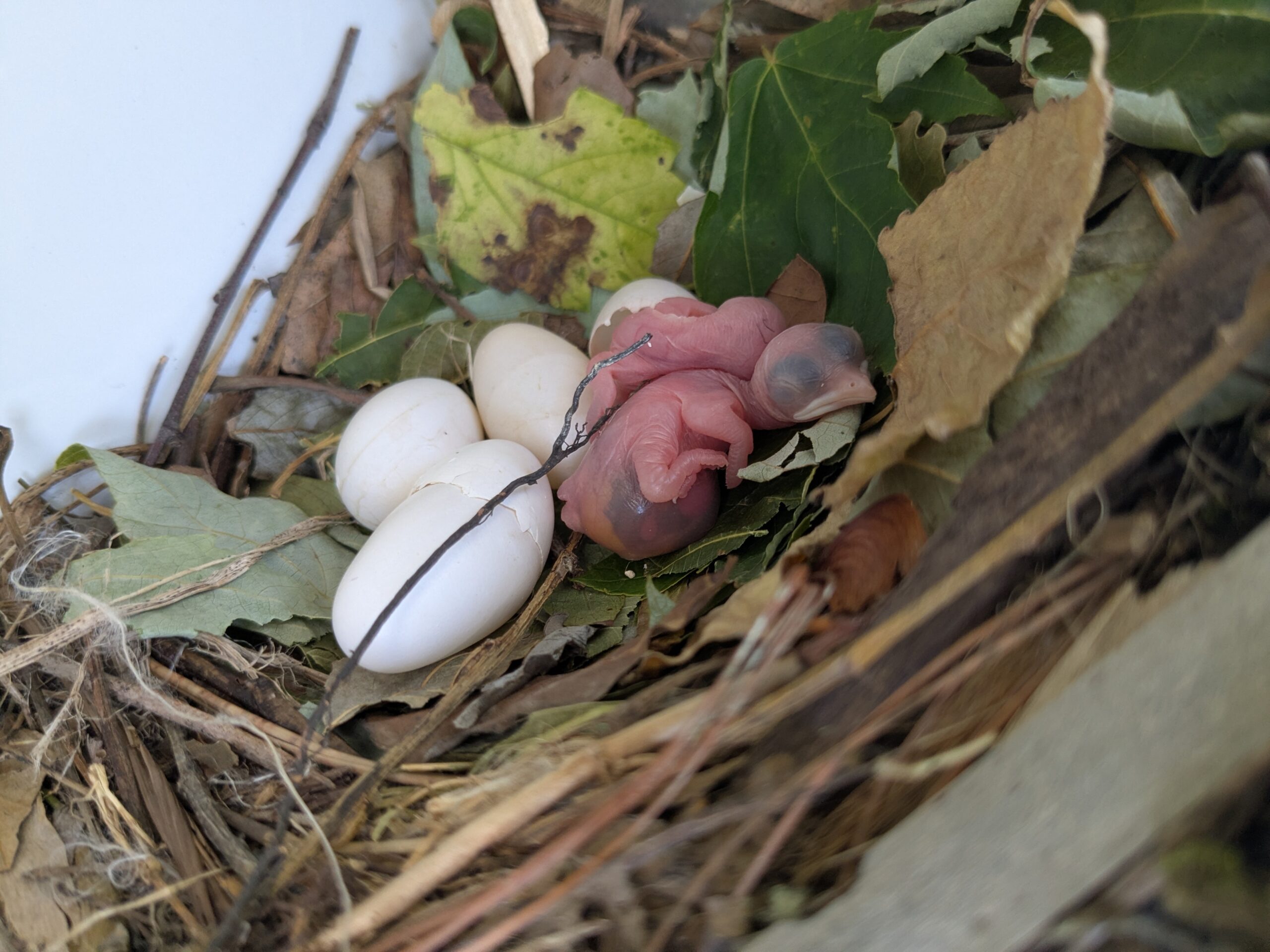
Hatching day for the first batch of Purple Martins! Click through to see them grow.
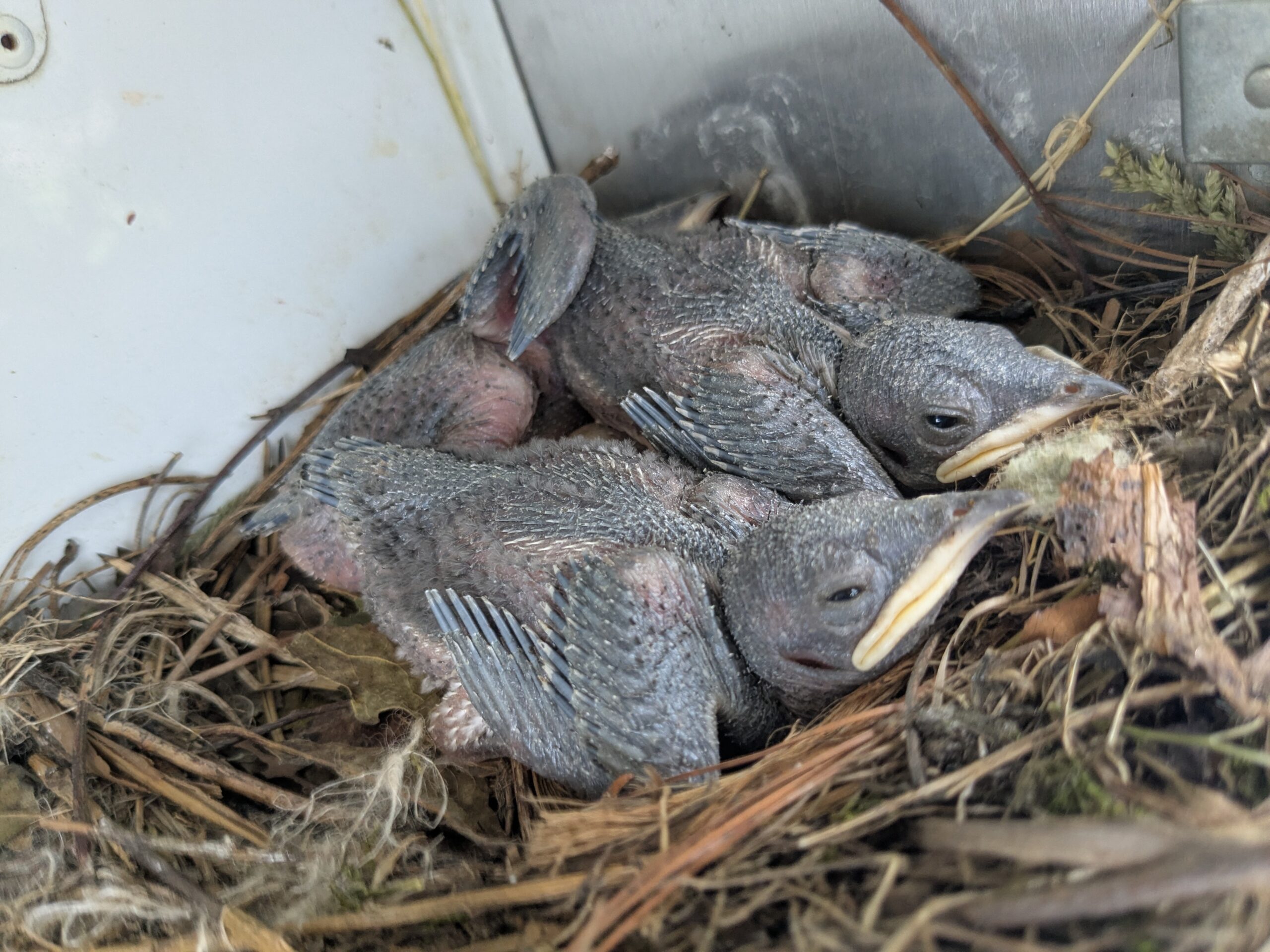
10 day old Purple Martins
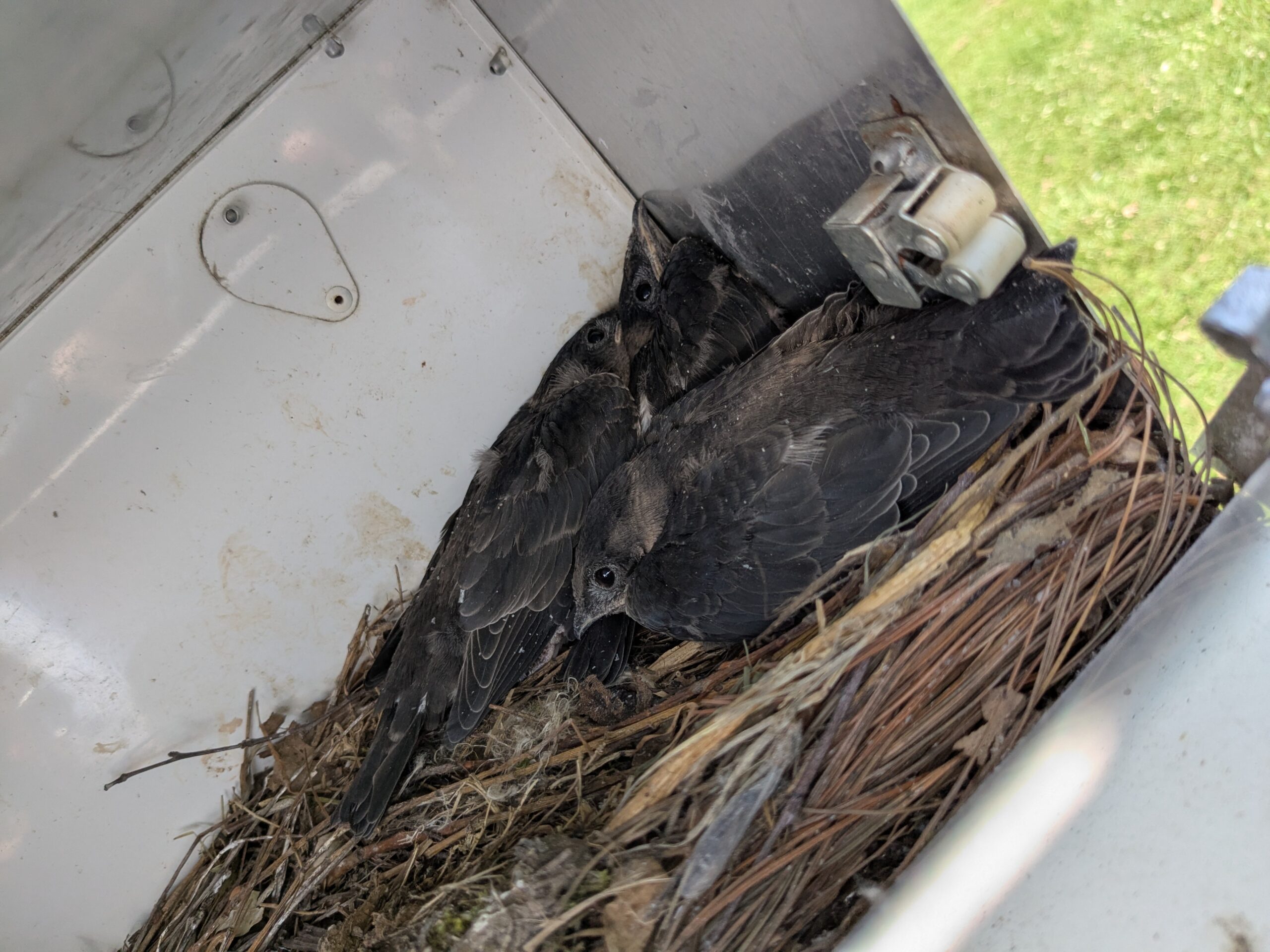
20 day old Purple Martins
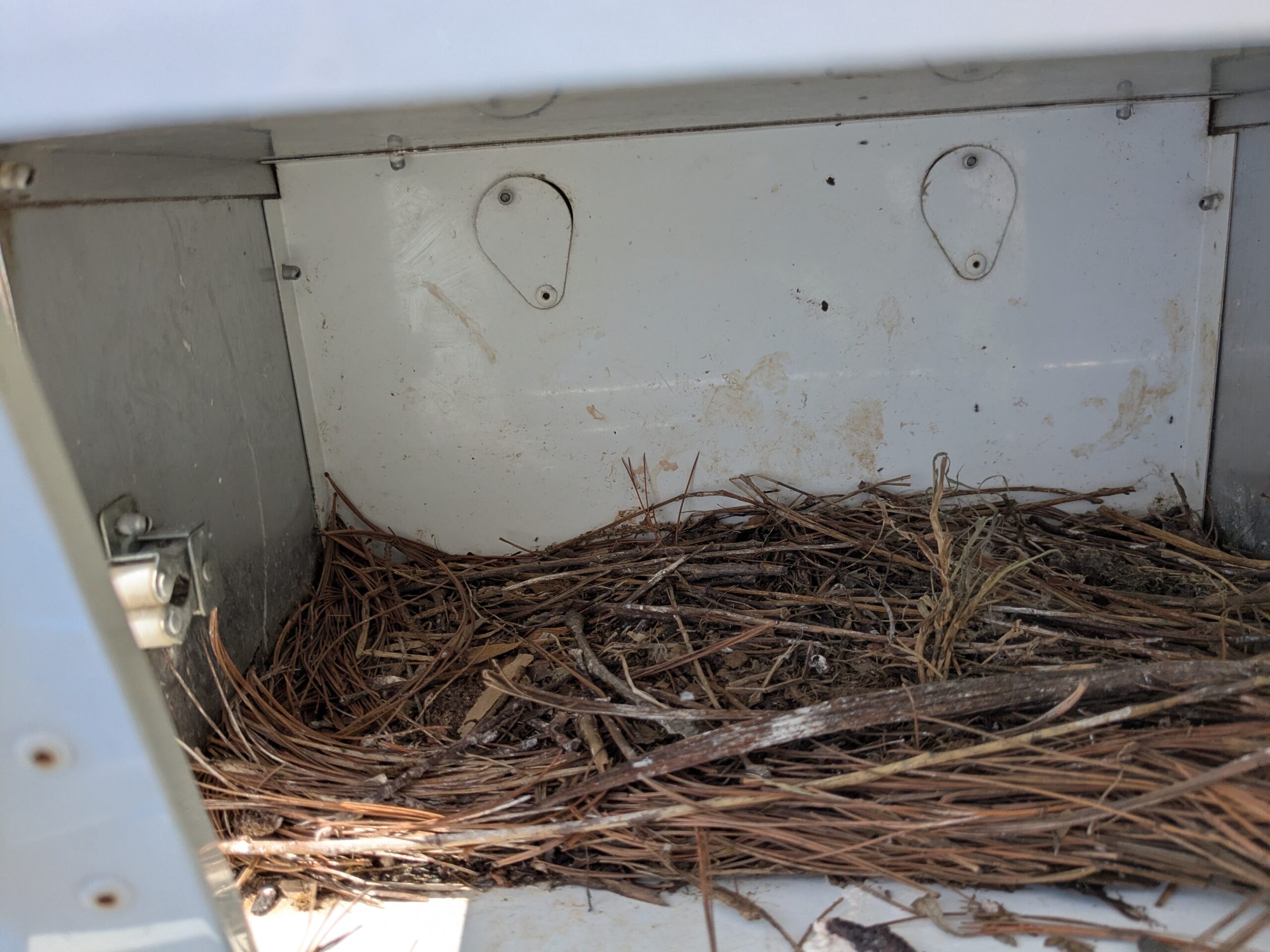
An empty nest after 31 days
Purple Martins take at least 26 days from hatching to fledging, sometimes even longer, so every 5 days a check was made over the next month at these two colonies to record the presence of young and their status in NestWatch and on the forms provided by the Purple Martin Conservation Association (PMCA). While plenty of folks can keep Purple Martins without doing nest checks, it is recommended because nests that are checked tend to do better than unmanaged nests. Particularly regarding parasites or House Sparrows, like I mentioned in my last blog. I continued to remove House Sparrow nests until about mid-July, then they seemed to have given up and nests were no longer being found at the colonies. I was concerned about an overload of parasites, but during checks I did not notice anything out of the ordinary. Parasites are a natural part of the Purple Martin life, but sometimes a colony or nest can completely fail due to an overload of parasites. The best way to combat such potential issues is to perform nest changes when the young are over 10 days old, but well before their potential first fledge date. This involves removing the young from the nest, discarding all nesting material in the compartment, and adding new pine straw and a lining of green leaves. PMCA does not recommend using insecticides in the nest and neither do we!
Over this month, I watched the Purple Martin chicks grow from small, naked and helpless chicks to large, fully feathered birds. It was truly unbelievable to see them all grow so quickly and that in one of the small compartments five chicks were raised! The parents, while tolerant of nest checks, were often not thrilled at my presence giving out alarm calls that usually brought in other Purple Martins to circle and see what was going on.
On July 24th, both compartments at the boat launch were empty and no Purple Martins were heard. Although I knew they might be gone, you still expect them to be there. About a week later, the other colony’s chicks fledged as well. On one of my last visits to that colony, I watched two young take many cautious steps out onto the porch of their gourd, getting more than half their body out before pulling it back in, something telling them that they just weren’t ready yet. The parents were coming by, screaming at them and refusing to feed them. I hoped to see their first flight, but I couldn’t stay long enough. On my last visit, I was shocked to see near 20 Purple Martins flying up high over the colony, making a significant amount of noise. I looked up and up and up at them. Then I saw what they were doing: harassing a bird of prey that I could not identify, that had a singular dark object in its talons. Likely a Purple Martin, and likely a hatch year bird. A twinge of sadness struck, but dissipated; so it goes.
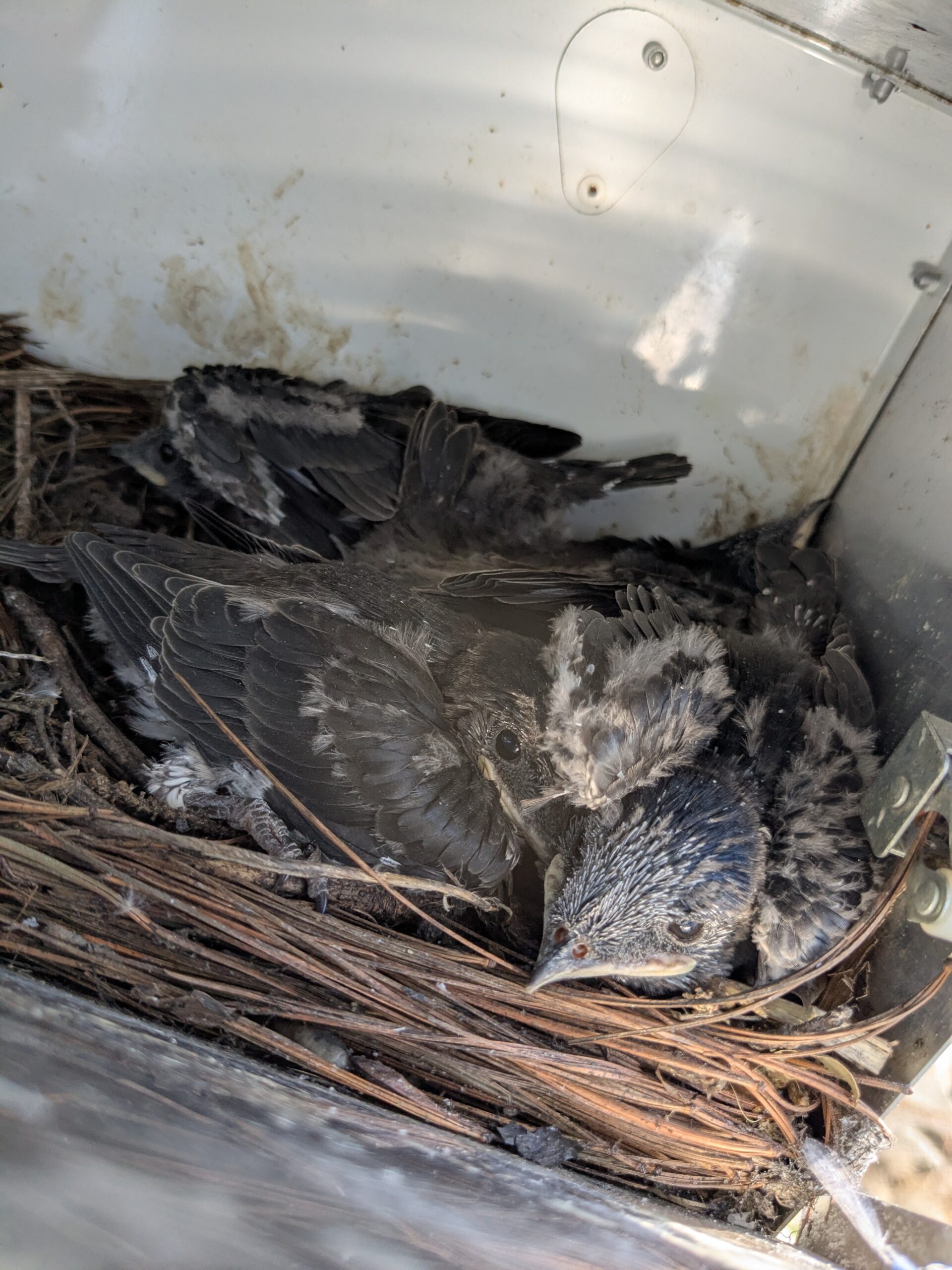
And just like that Purple Martin season is coming to a close, with many landlords looking upon their empty and quite colonies. They are headed to South America, but will make many stops along the way showing up in large roosts in trees in the country, in towns, and in cities. I loved every minute of checking those nests and enjoyed my conversations with neighbors and other visitors about what was going on in the colonies. I am very much looking forward to next season and hoping that these colonies continue to be successful. Also, a big thank you to Volunteer Alex for checking on these colonies a couple of times while I was unable to!
Michigan Audubon is in its second year of collecting nesting summaries from landlords around the state. So far we have 15 submissions, of those, 13 have reported the number of fledglings their colony produced: 369. If you are a Purple Martin landlord and would like to report to us on how your colony did, please do so here! It’s a quick and easy online form that should just take a few minutes.
Swift Night Out
Everyday this summer Chimney Swifts have graced the skies over my house, at least four and at times upwards of 15 are a regular occurrence. But, like the Purple Martins, their time in Michigan is coming to a close. While they will hang around a little while longer, some cities will begin to see large roosting aggregations of them as they start to move on. To try and catch a view of one of these spectacular roosting events, please join us for a Swift Night Out in Lansing at Smith Floral and Greenhouse on Monday, September 8th from 7:30pm-9pm. For those of you who joined us this past Spring for our week-long Swift Night Out, you’ll know what a treat it is to see hundreds of Swifts come in to roost near sunset. We will hope to capture that same magic this fall! For more details and information, please check out the event on our calendar.
To learn more about Michigan Audubon sanctuaries, visit michiganaudubon.org/conservation/bird-sanctuaries. If you want to volunteer at a Michigan Audubon sanctuary, please complete the Sanctuary Volunteer Interest Form.

Chad Machinski, MS
Conservation Manager
While Chad’s first love is botany, he doesn’t deny the intertwining nature of birds, plants, insects, and all other organisms we share the world with. His passion for the natural world began in his undergraduate time at the University of Michigan, taking several different forms along the way. His graduate studies at the University of Michigan allowed him to more closely examine the natural communities of Michigan and further understand the complex nature of ecosystems. His work as a Nichols Arboretum Caretaker while in school further enabled him to be directly involved in conservation work as he led workdays removing invasive plant species, performed trail maintenance, and guided tours. Chad can usually be found out in a park in a few ways: binoculars glued to his face, hunched over looking at plants, or flipping logs looking for snakes and salamanders.